









Humanoid Robotics: Unitree Founder Cautions Against Hype, Forecasts "ChatGPT Moment" Up to a Decade Away
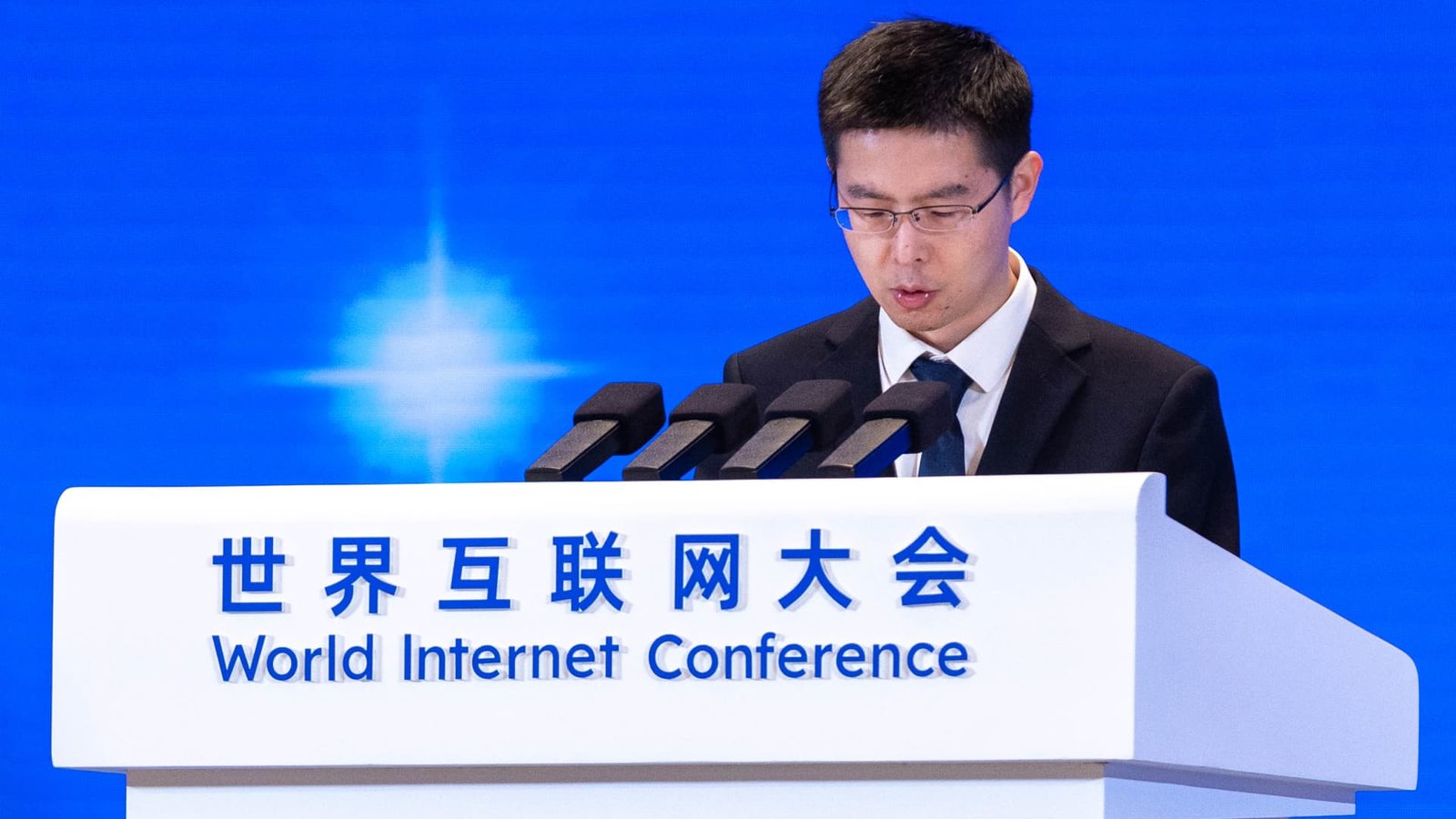
XI’AN, CHINA – July 22, 2026 – Following a spectacular market debut that saw its shares soar by 460%, Unitree Robotics founder Wang Xingxing has tempered expectations for the burgeoning humanoid robot sector, suggesting that a true "ChatGPT moment" for the industry may still be five to ten years away. His remarks, made at the World Robot Conference in Beijing, highlight the significant gap between current investor enthusiasm and the commercial realities of advanced robotics.
Unitree, a Chinese robotics firm, made its Shanghai debut on Wednesday, with its stock price surging to 460% above its initial offer of 150.80 yuan. This remarkable performance, which saw the company’s valuation quintuple from its $905 million initial public offering, underscores the intense investor interest in humanoid robotics as a transformative emerging technology.
However, speaking just a day after the IPO, Wang Xingxing offered a more cautious outlook on the immediate future of humanoid robots. He defined the industry’s "ChatGPT moment" – a breakthrough akin to the generative AI revolution – as the point when a robot can be placed in an unfamiliar home and autonomously complete approximately 80% of tasks using only text or voice commands.
"That could arrive in two to three years if things move fast, or five to 10 years if they move slowly," Wang stated, according to CNBC’s translation of his Mandarin speech. This projection represents a more conservative stance than his previous forecast at the same conference last year, where he hinted at such a moment arriving in less than five years. The unexpected rapidity of ChatGPT’s impact on the tech landscape in November 2022 has undoubtedly shaped these industry discussions, fueling a bull run in tech stocks and a massive data-center buildout.
Wang’s candid assessment serves as a crucial reality check amidst the fervent investment climate. He emphasized that current Unitree robots remain less efficient than human workers and require extensive retraining for each new task. This fundamental inability to generalize across diverse tasks and environments, he noted, represents the central obstacle for the entire humanoid robotics industry. This sentiment was reflected in Unitree’s stock performance on Thursday, which dropped nearly 19% to close at 687 yuan, according to LSEG data.
Founded in 2016, Unitree gained global recognition through viral videos showcasing its robots performing intricate dances and impressive kung fu kicks. However, the critical question remains whether the underlying technology can scale commercially and overcome existing AI and software limitations.
Wang further elaborated on the core technical challenge, identifying it as the meticulous precision of robot movements. While robots can effectively plan broad movements, they frequently falter in executing "the last few centimeters or millimeters." To address this, Unitree is actively pursuing a "self-evolving development loop." This innovative approach involves AI models autonomously writing and testing robot control code, with each iteration’s results being scored and fed back into the system to refine subsequent versions.
China Dominates Booming Humanoid Shipments
Despite the developmental hurdles, the humanoid robotics market is experiencing exponential growth, with China at its forefront. Global shipments of humanoid robots reached approximately 19,000 units in the first half of 2026, marking a staggering 272% increase year-over-year. Chinese manufacturers accounted for an overwhelming 97% of these sales, according to Morgan Stanley. The investment bank forecasts China’s humanoid shipments to reach 50,000 units this year, a significant jump from 12,000 in 2025.
"Unitree’s IPO puts the commercial potential of China’s robotics boom in the spotlight," commented Ying Zhang from the Economist Intelligence Unit. Zhang stressed that the next crucial test for embodied AI will be whether technological advancements translate into tangible productivity gains and economic returns that justify large-scale deployment.
Nomura initiated coverage of Unitree on Wednesday with a "buy" rating and a 370-yuan price target. Their positive outlook stems from Unitree’s strong hardware cost advantage and its rapid product iteration. Nomura estimates that outsourced components constitute less than one-fifth of Unitree’s total cost, contributing to an expansion of its gross margin from 44% in 2022 to an projected 60% in 2025. Analysts at Nomura also highlighted Unitree’s "first-mover advantage" in reaching new application scenarios ahead of competitors, allowing it to capitalize on emerging pockets of demand.
Tether CEO Praises Unitree’s Advancements
Paolo Ardoino, CEO of stablecoin firm Tether, a significant investor in the robotics industry, publicly lauded Unitree. In an interview with CNBC, Ardoino declared Unitree as "definitely the company to watch when it comes to the advancement in robotics." Tether recently participated in a $1.4 billion fundraising round for Germany’s NEURA Robotics in June, alongside industry giants like Nvidia, Amazon, and Qualcomm.
Ardoino further emphasized Unitree’s achievements, stating on "Squawk Box Europe" that the company "had incredible shows of skills over the last couple of years to showcase the precision, the ability, the dexterity of these robots. It’s definitely a defining moment."
While the road to widespread commercial deployment of humanoid robots remains complex, Unitree Robotics, despite its founder’s cautious outlook, is clearly positioned as a key player in shaping the future of this transformative technology. The industry awaits to see if these technological marvels can bridge the gap between impressive demonstrations and practical, everyday utility.
— CNBC’s Evelyn Cheng contributed to this report.