







US Advisory Body Calls for Sanctions Against RSS, Urges Diplomatic Snub Ahead of Bhagwat’s Visit
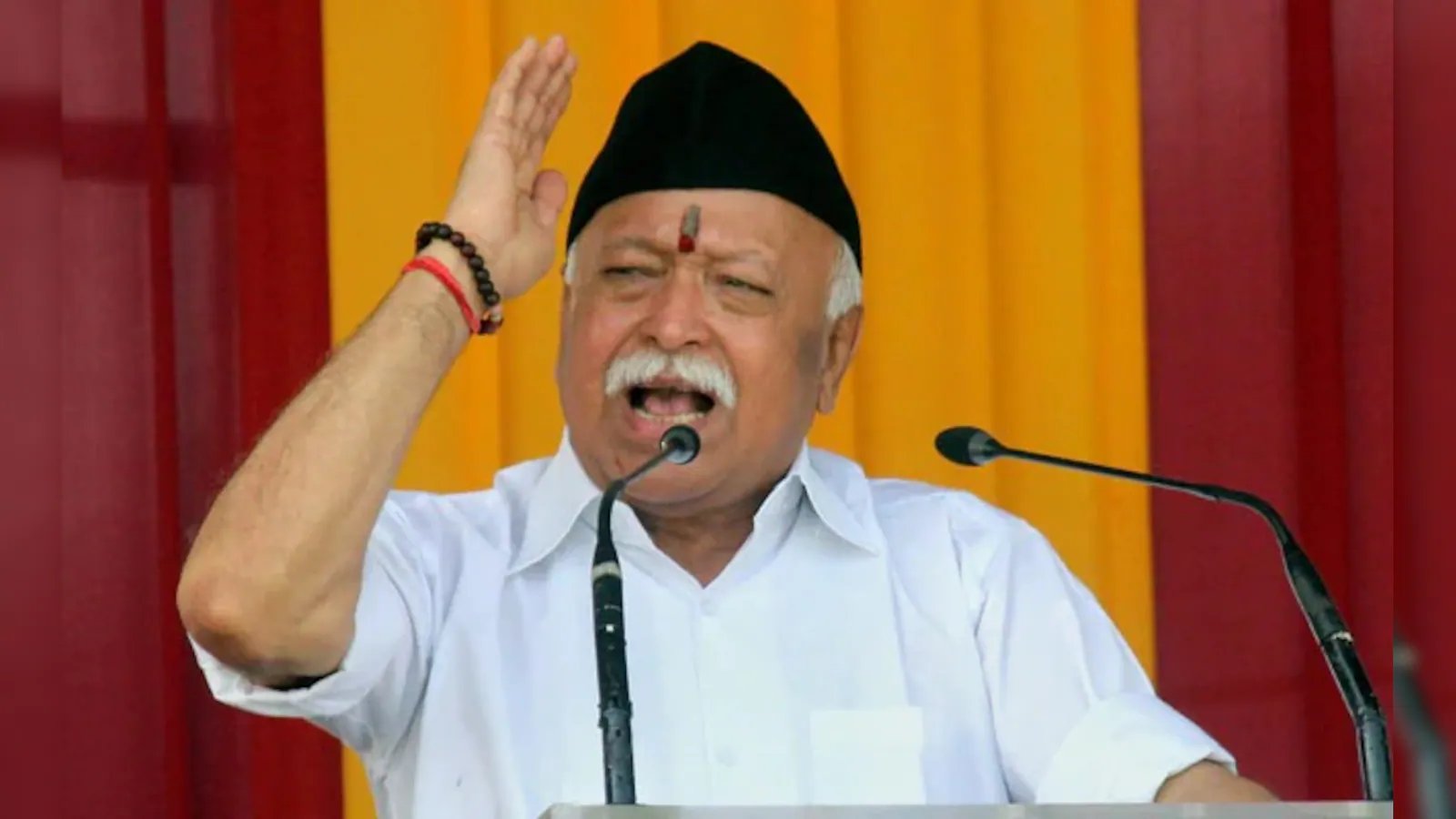
Washington D.C. – A prominent US advisory body on religious freedom has ignited a diplomatic firestorm, calling for sanctions against India’s Rashtriya Swayamsevak Sangh (RSS) and urging the American government to withhold diplomatic courtesies from its leaders. This comes just weeks before RSS Chief Mohan Bhagwat is slated to visit the US for a significant event in New York.
The US Commission on International Religious Freedom (USCIRF) has publicly expressed its concerns, with its Chair, Asif Mahmood, identifying Indian Prime Minister Narendra Modi as a member of the RSS. Mahmood described the RSS as an "umbrella organisation whose sub-groups have perpetrated attacks on religious minorities, incl. Christians & Muslims."
These strong remarks from USCIRF officials were made public via their X (formerly Twitter) account and are particularly noteworthy as Bhagwat prepares to attend the ‘Universal Oneness Celebrations’ organized by American Hindus for Engagement and Dialogue (AHEAD) on August 29th.
USCIRF Commissioner Gene Mills further amplified the commission’s stance, stating that "RSS leaders, even when affiliated with the Indian government, should not be honoured with high-level meetings or diplomatic courtesies." Mills explicitly called for the US government to "focus on imposing sanctions on RSS members found responsible for FoRB (freedom of religious belief) violations."
The advocacy group Hindus for Human Rights echoed these concerns, asserting that Bhagwat’s visit cannot be separated from the "RSS network’s violence against Muslims and Christians." The group’s statement on X critically remarked, "A celebration of ‘oneness’ cannot conceal the politics of religious supremacy."
This is not the first time USCIRF has voiced strong opinions regarding the RSS and India’s religious freedom landscape. In its annual report in March, the commission criticized India for alleged violations of religious freedom and advocated for "targeted sanctions" on individuals and entities like the RSS and the Research and Analysis Wing. The report also recommended designating India as a "country of particular concern" (CPC) for "tolerating systematic, ongoing, and egregious religious freedom violations, as defined by the International Religious Freedom Act (IRFA)."
The Indian government has vehemently rejected USCIRF’s reports and recommendations. In a statement released in March, External Affairs Ministry spokesman Randhir Jaiswal dismissed the USCIRF’s portrayal of India as "distorted and selective," relying on "questionable sources and ideological narratives." Jaiswal even suggested that USCIRF itself should be designated as an "entity of concern," accusing it of having a "deliberate agenda rather than a genuine concern for religious freedom."
Jaiswal further stated, "We have no expectation that the USCIRF will engage with the reality of India’s pluralistic framework or acknowledge the harmonious coexistence of its diverse communities." He also urged the USCIRF to reflect on "disturbing incidents of vandalism and attacks on Hindu temples in the US, selective targeting of India, and growing intolerance and intimidation of members of the Indian diaspora in the US, which merit serious attention," instead of engaging in "selective criticism" of India.
The USCIRF is an independent, bipartisan US federal government agency tasked with making policy recommendations to the US President, Secretary of State, and Congress regarding international religious freedom and tracking the implementation of these recommendations. The latest pronouncements from the commission signal a continued strain in the dialogue surrounding religious freedom between the two nations, particularly in light of high-profile visits and ongoing debates about human rights.