







PM Modi Champions Next-Gen Reforms, Positions India as a ‘Bright Spot’ for Global Growth
NEW DELHI – Prime Minister Narendra Modi declared on Friday that his government remains steadfast in its commitment to sweeping economic reforms, asserting that India has successfully positioned itself as a "bright spot of growth and hope" amidst global uncertainty.
Speaking at the prestigious Economic Times World Leaders Forum, the Prime Minister emphasized that political stability and policy continuity have become the cornerstones of India’s development trajectory. As the world grapples with the weaponization of resources and economic volatility, India continues to chart a steady path forward, driven by a clear roadmap for governance.
A Shift in Regulatory Philosophy
Central to the Prime Minister’s address was the structural transformation of India’s regulatory framework. PM Modi contrasted his administration’s forward-looking approach with the "licence raj" of previous regimes, which he argued fostered scarcity and reliance on the state for basic needs.
"We are not just changing regulations; we are changing the entire policy of regulations," Modi stated. He highlighted a fundamental paradigm shift from a "prohibited-unless-permitted" model to a "permitted-unless-prohibited" framework. By ensuring that no activity is restricted unless explicitly banned by law, the government aims to unleash the entrepreneurial spirit of the nation.
From ‘Production Linked Punishment’ to ‘Incentives’
A hallmark of the current administration’s economic strategy is the shift toward the Production Linked Incentive (PLI) model. The Prime Minister noted that while previous governments effectively imposed "Production Linked Punishment" through bureaucratic hurdles, his administration is actively rewarding manufacturers.
"Our government is rewarding higher production with incentives," the PM said, highlighting that this model is already generating significant employment and growth opportunities across various sectors.
Modernizing Infrastructure and Sovereignty
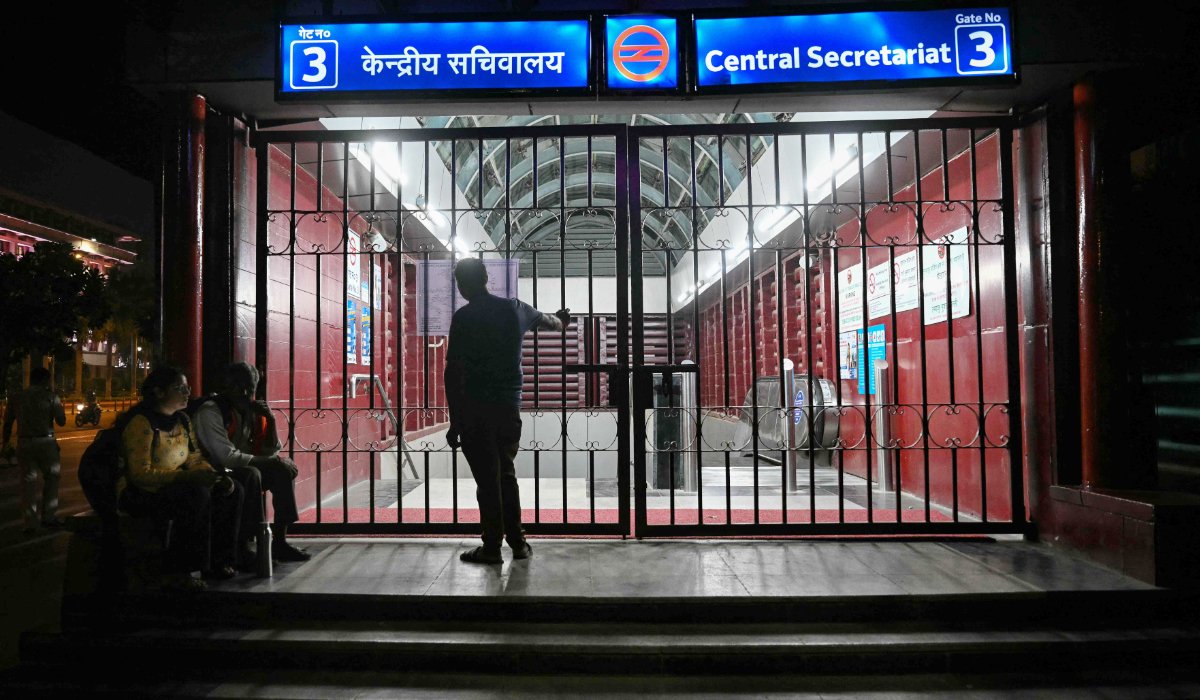
Beyond economic policy, the Prime Minister pointed to visible improvements in infrastructure as proof of the country’s modernization. He cited advancements in Indian Railways, the Delhi Metro, and the Namo Rapid Rail as evidence that India is evolving rapidly.
Furthermore, the Prime Minister addressed long-standing bureaucratic barriers, specifically regarding geographical mapping. He noted that while previous systems required complex permissions to map India—even as foreign satellites did so freely—his government has streamlined these processes. He also reaffirmed that border infrastructure is viewed as a strategic strength, marking a departure from past defensive postures.
A Resilient Future
Concluding his address, the Prime Minister pointed to the digital and technological strides India has made, noting that the country now boasts some of the world’s most affordable data and is emerging as a global hub for high-quality, cost-effective mobile phone manufacturing.
With a firm focus on "ease of living" and the implementation of next-generation policy reforms, PM Modi projected confidence in India’s role as a cornerstone of the global economy. "India is pushing ahead with reforms across sectors," he affirmed, underscoring that these reforms are not merely adjustments, but a core commitment to ensuring sustained growth.