





Titans of the Tartan: The Legendary Strongmen of the Highland Games
Highland folklore tells a story of Queen Victoria, deeply dismayed upon her arrival at the Braemar Gathering to discover she had missed her favourite sporting spectacle: the stone-throwing competition. According to the tale, a royal official was swiftly dispatched to locate the legendary Donald Dinnie, a strapping Aberdeenshire stonemason, and ask him to repeat his performance. Dinnie, never one to undersell his talents, reportedly replied, "Aye. For £2 and not a penny less."
It is a fitting, if likely apocryphal, anecdote. The “Widow of Windsor” and the brawny son of a stonemason were instrumental in transforming the Highland Games from a banned relic—outlawed for over 30 years following the 1746 Act of Proscription—into a fashionable and respectable institution.
The Rise of a Global Superstar
Queen Victoria’s enthusiasm for the Games, which she began patronizing in 1867, helped cement their status, but it was men like Donald Dinnie who gave them their soul. Born in 1837, Dinnie was arguably the UK’s first true international sporting superstar.
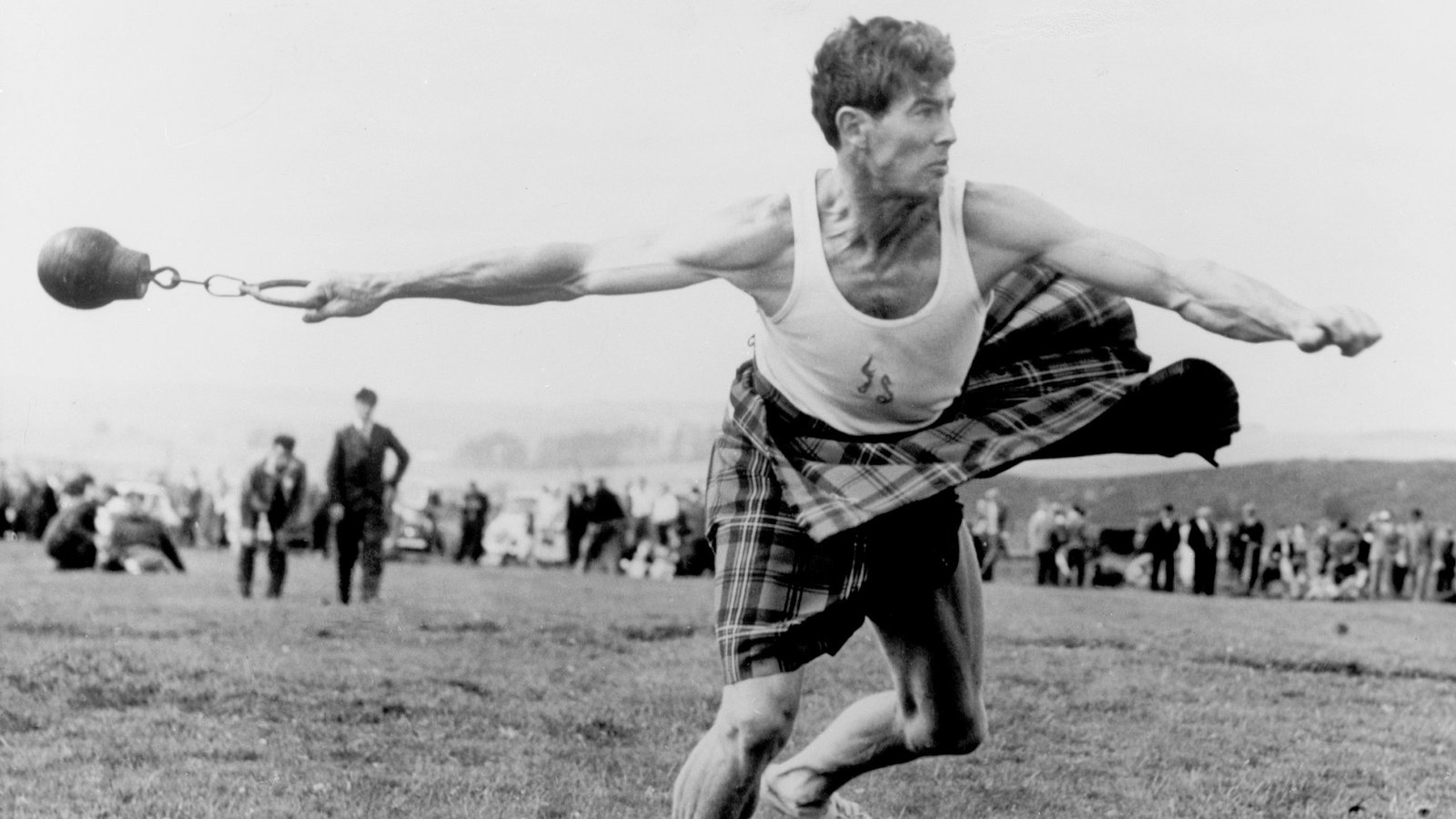
Standing six feet tall with 15-inch biceps, Dinnie dominated the "heavy events"—the cornerstone of the Games, involving the hammer, stone, weight, and caber. His prowess was not merely local; he embarked on world tours that saw him celebrated by sports fans from New Zealand to San Francisco. By the time of his death in 1916, his legacy was set in stone, though his personal finances had suffered a decline that saw him spend his final days in relative obscurity in Croydon.
From Hollywood Romances to Pit-Work Grit
The annals of the Highland Games are filled with characters as vibrant as the tartans they wore. In the 1950s, the "Highland Adonis," Jay Scott, captivated spectators with his all-around athletic dominance. A rugged farmer from Loch Lomond, Scott became a cultural icon—it is widely believed he served as the inspiration for the burly hunk featured on boxes of Scott’s Porage Oats. His life was the stuff of tabloid legend, including a near-tryst with Hollywood starlet Jayne Mansfield that ended abruptly when he was tossed into a swimming pool by the actress’s security detail.
As the 20th century progressed, the Games began to draw professional athletes from south of the border. Among them was the formidable Geoff Capes, a Cambridgeshire policeman who, despite his quiet hobby of breeding budgerigars, looked every bit the mythical chieftain when clad in a kilt and vest.
A Legacy of Strength
Before Capes, there was Arthur Rowe, a coal miner from Barnsley who trained using wheels salvaged from pit wagons. After a disappointing turn at the 1960 Rome Olympics, the disillusioned Yorkshireman turned to the Highland circuit, where he found success and a lucrative career. He soon struck up a fierce, yet deeply affectionate, rivalry with the local legend Bill “Big” Bill” Anderson.
Their friendship is best captured by a moment at Lochearnhead when, during a torrential downpour, the two giants allegedly lifted a car stuck in the mud as easily as "popping a cork from a bottle." It is a testament to the enduring, raw power of the Highland Games—a sport where, amidst the simplicity of stones and timber, legends are forged and royal favor is bought for a crisp two-pound note.