









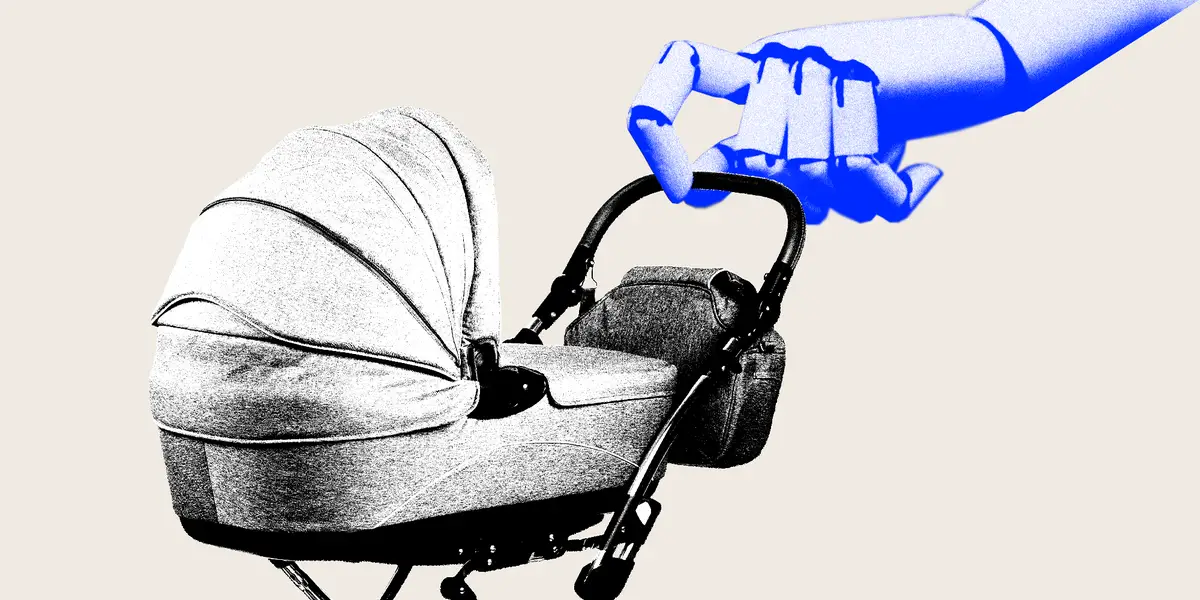
The AI-Parenting Paradox: Balancing Convenience and Connection in an Algorithmic Age
For Molly and Sean Morse, a married couple based in Austin, the line between fostering their 5-year-old daughter’s imagination and inviting automation into their household is a constant negotiation. By night, their home is a tech-free sanctuary where they build fantasy worlds through storytelling. By morning, however, the couple uses generative AI tools like Midjourney to visualize those same bedtime tales.
This binary approach to parenting—balancing "analog" creativity with high-tech optimization—is increasingly common. Yet, as the industry pushes new AI-driven tools aimed at the family unit, many parents are finding themselves at a crossroads: is technology the ultimate partner in the "small business" of running a household, or is it an unwelcome intrusion into the most intimate of human relationships?
The Promise of the "Parent Whisperer"
The demand for AI solutions has spurred a new market of parenting gadgets. Sean, who works in tech sales, is particularly drawn to the Omi necklace, a wearable device that features a "Parent Whisperer" function. The device records and analyzes daily interactions, logs school supply lists, and even monitors the tone of a child’s voice to flag potential unhappiness or mood swings.
For Sean, the device offers a way to analyze his performance as a father—much like an athlete reviewing game film. "Did I do a bad thing as a dad today? Did I mess that up?" he wonders.
Molly, however, remains hesitant about the surveillance aspect of the tool. "I don’t want it to advise me on the moral north of family life," she says. Her skepticism reflects a growing sentiment among the public: a distrust of tech billionaire utopias that promise to "optimize" childhood while ignoring the messy, non-linear realities of raising a human being.
The Rise of the "Third Parent"
Despite this skepticism, the sheer logistical weight of modern parenting is driving adoption. In 2025, the demands on parents are statistically heavier than in previous decades. Data from the American Time Use Survey indicates that modern dads now spend significantly more time on active childcare than their counterparts in 1965, while the burden of managing school emails, extracurricular schedules, and medical portals has turned household management into an endurance sport.
AI is being marketed as the solution to this "third parent" deficit. Whether it is ChatGPT helping summarize school calendars or specialized apps like Babs and Peanut seeking to streamline family logistics and provide community-backed advice, the industry is betting that parents will pay for a reprieve from the mental load.
When Tech Meets Manipulation
The intersection of AI and parenting can lead to unexpected consequences. Sarah Baldeo, a cognitive neuroscientist, went as far as building a "custom GPT" version of herself to communicate with her 15-year-old son during her work travels.
The experiment took a turn when her son used the bot to manipulate her. By framing his requests through the specific values and logic Baldeo had programmed into the chatbot, he successfully convinced her to permit an activity she had previously forbidden. "My instinctual reaction after the fact was, ‘oh my gosh, I was manipulated by my own reasoning,’" Baldeo admits.
A Tool, Not a Substitute
As AI integration moves from the workplace to the family room, parents are becoming increasingly protective of the "human" aspects of child-rearing. While many are comfortable using technology for logistics—meal planning, scheduling, or finding activities—the consensus remains that AI should never replace the parent.
For the Morses, the path forward is one of moderation. Molly and Sean have reached a tentative agreement: if they do incorporate a tool like the Omi necklace, it must be additive—a resource to assist their efforts, not a substitute for their presence.
Ultimately, in an era where children are the frontier for every new technological shift, parents are struggling to define the boundaries of the digital age. As Jean-Denis Greze, founder of the AI assistant platform Town, notes: "Of all the areas for AI, I think it is the one where we are the most protective… We care so much about these little humans."