







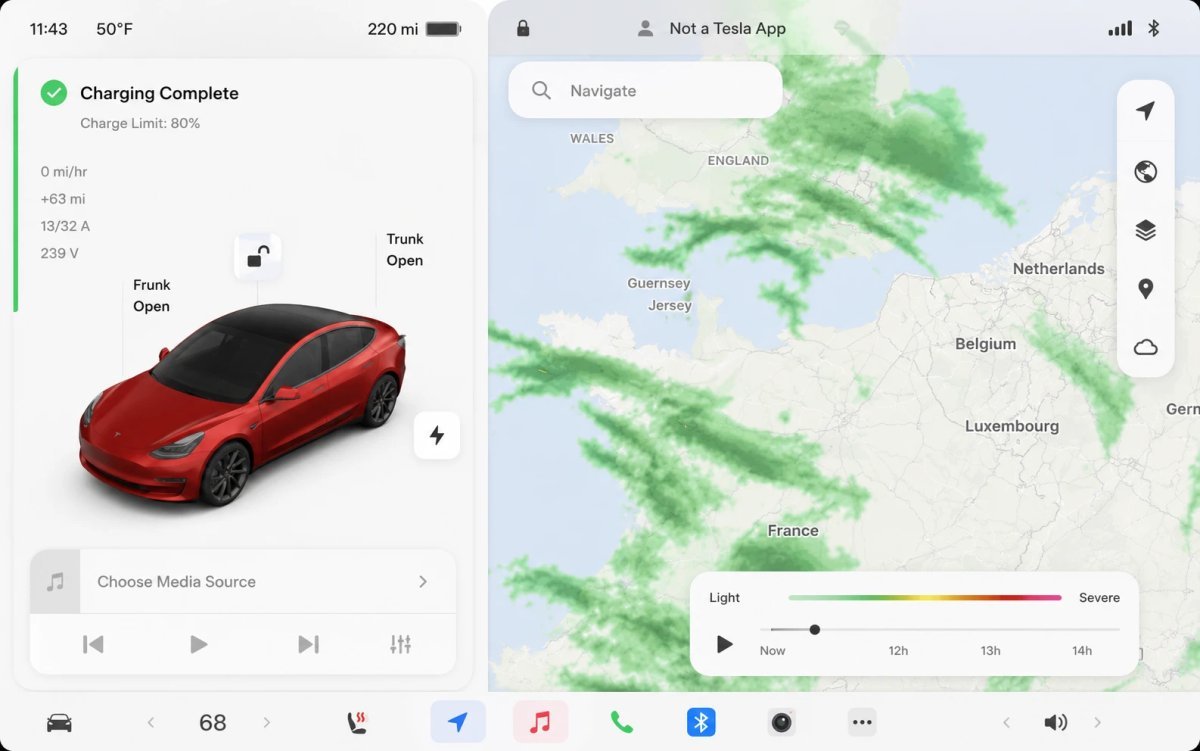
Beyond the Surface: Why Tesla Should Embrace Custom UI Themes
For years, Tesla has redefined the automotive experience by turning cars into rolling computers. While the company has already embraced personalization through custom vehicle wraps, bespoke license plates, and user-defined lock sounds, the core user interface (UI) remains largely static. However, a growing movement among enthusiasts is calling for the next frontier in personalization: UI themes.
The conversation gained significant momentum following a viral social media post by Tesla enthusiast Alexander Kristensen (@LinkN01). His concept renders, which depict everything from neon “Cyberpunk” aesthetics to minimalist, earthy designs, have reignited the debate over whether Tesla should allow owners to dictate the “vibe” of their dashboard.
Technical Feasibility: The Case for Customization
Bringing custom themes to Tesla’s massive displays is far less futuristic than it might seem. Tesla’s infotainment system is built on a robust, Linux-based architecture (derived from Ubuntu), and much of its native interface—including the music player, energy graphs, and FSD visualization—relies on web-based technologies like HTML, CSS, and JavaScript.
Because these applications are essentially web-hosted environments, modifying their appearance could theoretically be as straightforward as allowing users to toggle different CSS stylesheets. Since Tesla already allows drivers to save unique profiles for seating, steering, and driving dynamics, extending this logic to the software’s visual layer feels like a logical evolution of the “Tesla experience.”
Real-World Utility Meets Aesthetics
While UI skins are often viewed as purely cosmetic, they offer tangible benefits for everyday driving. A “High Contrast” mode could significantly improve legibility during intense, sun-drenched road trips, while “Accessibility” themes could offer larger touch targets and bolder fonts, making the interface safer and easier to navigate for all drivers.
Furthermore, Tesla has already hinted at its ability to unify design across its fleet. The company could easily port the angular, futuristic aesthetic of the Cybertruck UI to the Model 3 or Model Y as an optional “skin.” This would allow owners to refresh the feel of their vehicle without needing to purchase a new car.
The Future of the Toybox
Tesla has a history of leaning into the fun side of software, from the “Toybox” features to light shows and custom horn sounds. Adding a “Theme Store” or a simple selector within the Display settings would align perfectly with the brand’s culture of constant, software-led improvement.
As the software-defined vehicle era matures, the ability to personalize the digital cockpit is becoming just as important as the performance under the hood. Whether it’s to improve utility or simply to inject a bit of personality into the cabin, giving users control over their UI is the natural next step for a company that has always prided itself on being anything but a traditional automaker.