







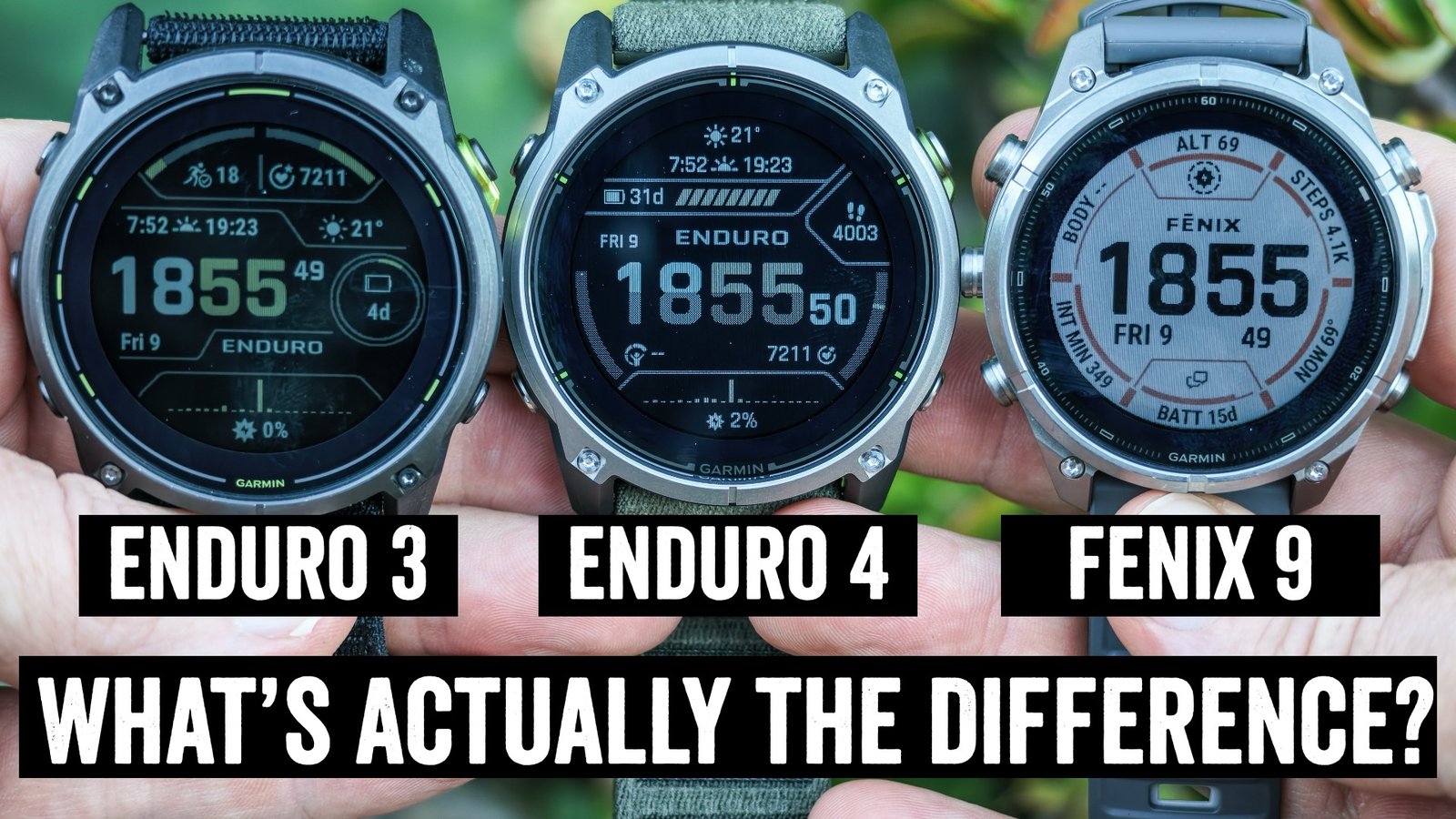
Garmin has officially unveiled the Enduro 4, a performance-focused multisport watch that incorporates the latest hardware advancements from the Fenix 9 platform. This release follows a familiar cadence for the brand, prioritizing internal component upgrades and a unified software experience while maintaining the extreme battery efficiency that defines the Enduro series.
Hardware and Design Enhancements
The Enduro 4 is designed to push performance boundaries without sacrificing endurance. Under the hood, the device features a faster processor and a 50 percent increase in RAM compared to its predecessor. These upgrades are specifically optimized to improve the fluidity of the mapping interface and data processing. Furthermore, Garmin has doubled the internal storage from 32GB to 64GB, allowing for more comprehensive offline map sets and data retention.
Physically, the Enduro 4 retains the signature 51mm footprint and the 1.4-inch MIP (Memory-in-Pixel) display. However, there are subtle material refinements. The watch now features a grey titanium bezel with a cleaner aesthetic, moving away from the previous black titanium finish. A notable upgrade is the inclusion of the new ComfortFit band, which utilizes a QuickFit system that improves comfort and security during intense activity. While this change adds a negligible 3 grams to the total unit weight, the case thickness remains unchanged at 15.7mm.
Unified Software Ecosystem
A critical aspect of the Enduro 4 launch is that it operates on the same software foundation as the Fenix 9 series. This ensures a consistent feature set across both product lines. Key additions to the software include an advanced suite of rucking features, such as a specialized pack-weight calorie calculator, dedicated rucking activity reports, and integration with GoRuck for structured workouts.
Athletes focused on precision training will also benefit from new power zones for running, enhanced indoor rowing metrics—including VO2Max and FTP estimations—and the introduction of “Field Tools,” which offers quick access to altimeter, barometer, and compass (ABC) data. While some of these software features are being backported to the Enduro 3 and Fenix 8, select mapping enhancements, such as the new Perspective map view and faster zoom responsiveness, are hardware-dependent and exclusive to the Enduro 4 and Fenix 9 lineups.
Battery Performance Metrics
The primary mandate of the Enduro series is longevity, and the Enduro 4 maintains the industry-leading endurance metrics established by the Enduro 3. In smartwatch mode, users can expect up to 36 days of battery life, which extends to 90 days with consistent solar exposure. In activity modes, the device provides 80 hours of standard GPS usage, stretching to 144 hours with solar charging. For ultra-endurance events, the Expedition mode offers up to 77 days of operation, or effectively unlimited potential with sufficient solar input. These figures are predicated on daily exposure to 50,000 lux conditions, ensuring that for long-distance trail runners and multi-day trekkers, power management is rarely a point of concern.
Comparison with the Fenix 9 Series
Positioning the Enduro 4 against the Fenix 9 reveals a clear strategic distinction. The Fenix 9 is a comprehensive, feature-rich device catering to diverse needs, including diving, voice-controlled communications, and integrated LTE connectivity. In contrast, the Enduro 4 is stripped of features like microphones, speakers, and depth sensors to maximize physical weight reduction and battery efficiency.
The Fenix 9 Pro series maintains a slight edge in raw processing power and offers additional hardware perks, such as a green LED flashlight, which the Enduro 4 lacks (instead utilizing the standard white and red LED). The Fenix 9 is also available in multiple sizes (43mm, 47mm, and 51mm), whereas the Enduro 4 remains a 51mm-only device. Consequently, the Enduro 4 serves as a cost-effective alternative for users who prioritize the specific physical profile and power duration of the Enduro line over the advanced multimedia and connectivity features of the Fenix 9.
Mapping and Navigation
The integration of a more robust processor and increased RAM yields tangible improvements in map navigation. While initial loading times for massive course files remain similar across the latest models, the Enduro 4 demonstrates significantly faster responsiveness when creating complex routes on-device.
The introduction of “Perspective View” provides a tilted, topographical perspective that aids in visualizing elevation changes during navigation. While standard map panning remains a secondary function for most high-end athletes, the performance gains ensure that checking terrain details mid-activity does not hinder the pace or flow of a workout. As a fully routable, onboard navigation system, the Enduro 4 continues to set the standard for mapping without relying on external smartphone tethering, maintaining a level of detail and independence that is highly valued for remote-area navigation.
Disclaimer: This content is auto-generated for informational purposes only.
Source: Read Original News