








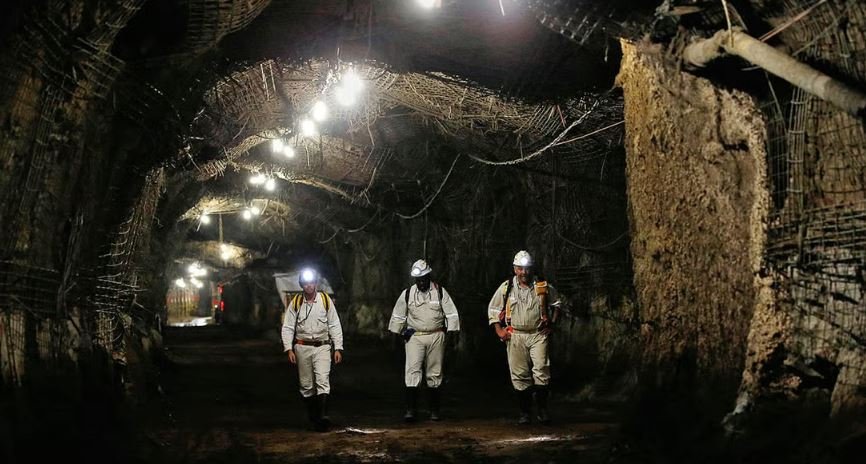
Africa Shifts Strategy: Ending the Era of Exporting Raw Potential
JOHANNESBURG – A seismic shift is rippling across Africa’s mining sector as the continent moves to abandon its historical role as a mere supplier of raw materials. Driven by the global scramble for critical minerals—essential for AI, semiconductors, and the energy transition—governments are moving toward a new model of mineral sovereignty, aiming to keep the value generated by these resources within their own borders.
The push comes as UNCTAD reports that strategic sectors accounted for 44% of global greenfield investment in 2025, up from just 16% five years prior. While Africa attracted a substantial US$70 billion in foreign direct investment last year, analysts warn that the benefits remain dangerously concentrated. For decades, the continent has exported raw minerals only to repurchase finished, high-value goods at a premium—a cycle that African leaders are now determined to break.
“Africa has spent decades telling the world what lies beneath its soil,” says Thuto Masasa, National Head of Advisory at BDO South Africa. “The next chapter should be about what Africa is capable of building above it.”
The strategy is clear: transition from extraction to beneficiation. However, the path forward is fraught with logistical hurdles. Building a competitive industrial ecosystem requires far more than political will; it demands reliable energy, efficient rail and port infrastructure, advanced technical skills, and massive capital investment.
Recognizing that individual nations may lack the scale to dominate the entire value chain, policymakers are increasingly looking toward the African Continental Free Trade Area (AfCFTA) as a vehicle for regional industrial architecture. The vision is for a collaborative continent where one nation provides the mineral, another the processing facility, and a third the manufacturing expertise. By leveraging collective strengths, African countries aim to turn mining into a platform for broader economic industrialization.
The stakes go beyond GDP growth; they encompass the future of Africa’s youth. Experts argue that a mining boom that fails to cultivate a modern workforce will be another missed opportunity. The modern mineral economy demands a workforce fluent in artificial intelligence, data analytics, renewable energy engineering, and sophisticated supply-chain management.
“The challenge is not simply to create more mining jobs,” Masasa notes. “It is to create a new generation of African industrial capability.”
But time is not on the continent’s side. As global supply chains adjust, the window for leverage remains narrow—technological shifts and the potential for mineral substitution mean that the current demand for African deposits could fluctuate. To capitalize on this moment, governments are shifting their focus from debates over policy to the execution of bankable projects.
The measure of success for this new era will not be production volume, but the degree to which these resources catalyze the growth of local suppliers, high-tech skills, and regional infrastructure. For Africa, the goal is no longer just to participate in the global economy, but to fundamentally shift its position from a provider of raw assets to an architect of industrial value.
Disclaimer: This content is auto-generated for informational purposes only.
Source: Read Original News