







The Shifting Soul of Scotland: A Rising Tide of Hostility Toward Immigrants
When Sanghmitra Singh moved to Scotland from India in 2018, she was greeted by the warmth that defines the nation’s cultural identity. In Glasgow, the city’s famous slogan—“People Make Glasgow”—felt like a tangible promise of inclusivity. For an immigrant woman, the city offered a rare, life-changing luxury: the freedom to exist in public spaces, walk alone at night, and participate in a vibrant, diverse community without fear.
However, in recent years, that sense of security has begun to fracture. As the UK grapples with the lingering effects of a global pandemic, economic instability, and austerity, a dark shift is taking hold. From a quiet sense of belonging, Singh now finds herself navigating a reality marked by racist disorder and growing intolerance.
A Summer of Unrest
The veneer of Scottish friendliness has been tested by a series of alarming, high-profile incidents. Throughout the summer of 2026, major Scottish cities became flashpoints for xenophobic aggression. In Glasgow, masked protesters marched through the streets, targeting Asian-owned businesses and harassing residents. In Edinburgh, a man was charged with attempted murder following a violent attack on individuals leaving a local mosque—an act the assailant allegedly claimed was to “protect the country.”
These events are not isolated. Data indicates that mosques across Britain are being targeted every five days, with hate-filled graffiti and fascist-style protests becoming increasingly common outside the Scottish Parliament. For many, including Singh, these events represent more than just fringe activity; they signal a top-down normalization of bigotry.
The Personal Toll
For immigrants living in Scotland today, the fear is no longer distant—it is personal. Singh reports a marked increase in confrontational encounters: being questioned about her accent, hearing strangers demand she “go back” to where she came from, and enduring the uncomfortable, lingering stares of passersby in public spaces.
“Colleagues who have been here since the 1980s and earlier tell me that racist violence has happened in Scotland before, but this time it feels different,” Singh writes. “We’re afraid to step out now. There’s a clear, marked shift in our levels of nervousness.”
A Perfect Storm of Division
Analysts point to a toxic cocktail of factors fueling this resentment. Extreme wealth inequality, the ongoing cost-of-living crisis, and a media landscape that often validates xenophobic biases have created an environment where the vulnerable become scapegoats. Furthermore, social media algorithms, which frequently favor inflammatory and divisive content, have acted as accelerants for extremist ideologies.
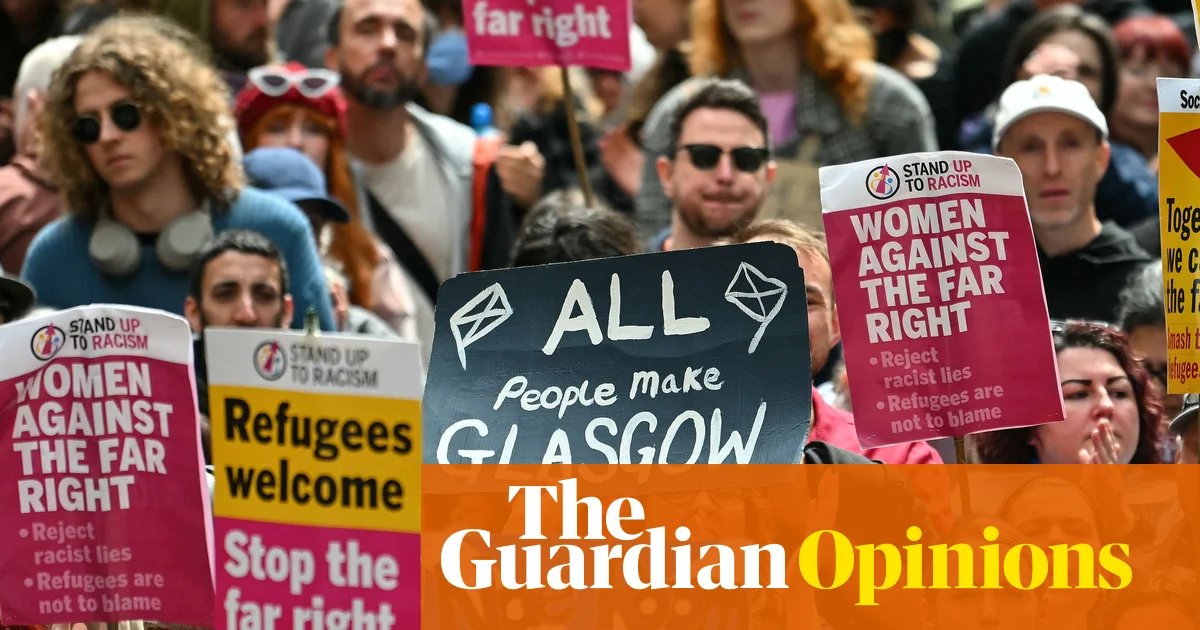
While grassroots movements have emerged in response—with thousands gathering in Glasgow and Leith to rally for tolerance and human rights—there is a growing concern that symbolic gestures are insufficient against the tide of systemic hatred.
Seeking a Way Forward
Singh argues that the solution lies in rejecting the “othering” of neighbors and focusing on shared humanity. She warns that while it is easy for political actors to whip up “pure, cold rage” for personal gain, the social damage caused by such rhetoric can take decades to repair.
“We have to focus on the living conditions and inequality we all share,” Singh notes. “We need to remember we have more in common with each other than with any billionaire. We must remember that the real blame lies with the system that wants us divided.”
As Scotland stands at a crossroads, the question remains whether the country will return to its roots of open-mindedness or allow this newfound hostility to define its future. For those on the front lines of this change, the hope is that by engaging with those who look and sound different, the cycle of fear can be broken before it is too late.