








AI Research Breakthrough: New Study Reveals When LLM Acceleration Can Backfire
BELAGAVI, KARNATAKA – A research team has been awarded the Best Paper prize at the International Conference on Emerging in Computing Technologies (INCECT 2026) for shedding light on a critical issue in artificial intelligence deployment: the unpredictable nature of performance acceleration techniques.
The winning paper, titled “Not All Domains Speculate Equally: Characterizing and Cheaply Estimating Acceptance-Rate Variation in Speculative Decoding,” addresses why a technique intended to speed up Large Language Models (LLMs) can sometimes lead to performance degradation rather than improvement. The study was selected from a competitive pool of 4,543 submissions, with only 5.1% of papers making the final cut.
The Problem with “One-Size-Fits-All” Speedups
Large language models generate text one token at a time, a process that is computationally expensive and slow. To combat this, engineers often use speculative decoding, where a smaller, faster “draft” model guesses the next several tokens, which the larger “target” model then verifies in parallel.
If the draft model is accurate, the system achieves massive speed gains. However, when the draft model’s predictions are frequently rejected, the overhead of the verification process can make the system slower than if it hadn’t used the technique at all.
The researchers—Varun Kotte, Rohit Joshi, Supratim Dutta, and Ravindra Rajasekhar Kavuru—found that industry standards often rely on performance benchmarks derived from general English conversational prompts. Their study demonstrates that these averages are misleading, as the efficacy of speculative decoding varies wildly depending on the specific “domain” of data the model is processing.
A Practical Solution for Developers
To prevent teams from wasting engineering resources on ineffective deployments, the team introduced a “lightweight offline probe.” By testing a small sample of 16 prompts, this tool can predict whether speculative decoding will actually improve performance for a specific workload.
The probe, which takes approximately 37 seconds to run on an A100 GPU, correctly determined whether to enable speculative decoding for all five test domains examined in the study.
“Speculative decoding is sometimes discussed as though it were a switch that makes every workload faster,” said lead author Varun Kotte, an independent researcher based in San Jose. “Our results show that the outcome depends heavily on both the domain and the drafter. Testing a small sample from the intended workload can reveal that difference before a team spends significant time building a full serving integration.”
Industry Implications
The study’s findings suggest a major shift in how AI teams should evaluate infrastructure upgrades. Co-authors Rohit Joshi (of Liberty Mutual Insurance) and Supratim Dutta (of T-Mobile) emphasized that organizations must stop importing benchmark numbers from unrelated datasets. Instead, they recommend that engineers measure acceptance rates on a representative sample of their actual production traffic.
The research, which was honored by an award jury led by Dr. Krupa Rasane, provides a scalable, practical framework for model optimization. As AI adoption grows, this shift toward data-driven, domain-specific performance testing is expected to become a vital part of the deployment lifecycle.
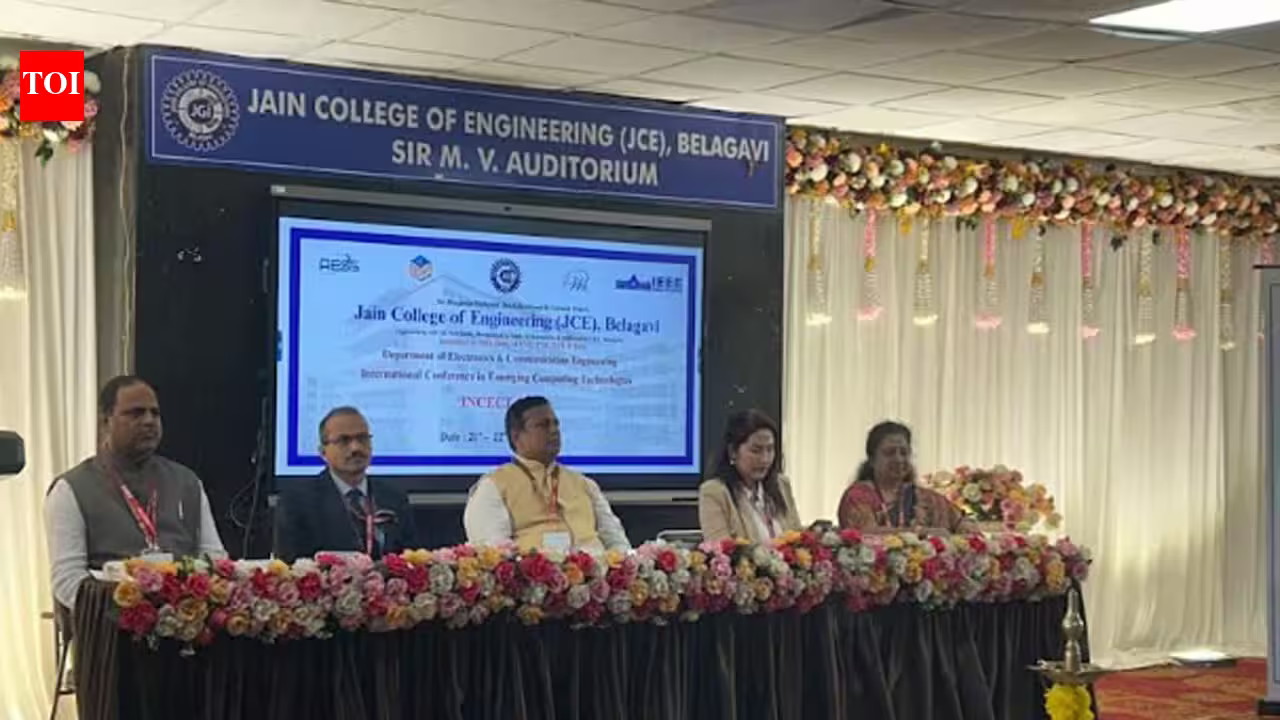
INCECT 2026, which took place on August 21-22 at the Jain College of Engineering, was technically co-sponsored by the IEEE Bangalore Section and the IEEE North Karnataka Subsection.