








Beyond the Monoculture: How One Farm is Rewriting the Future of British Agriculture
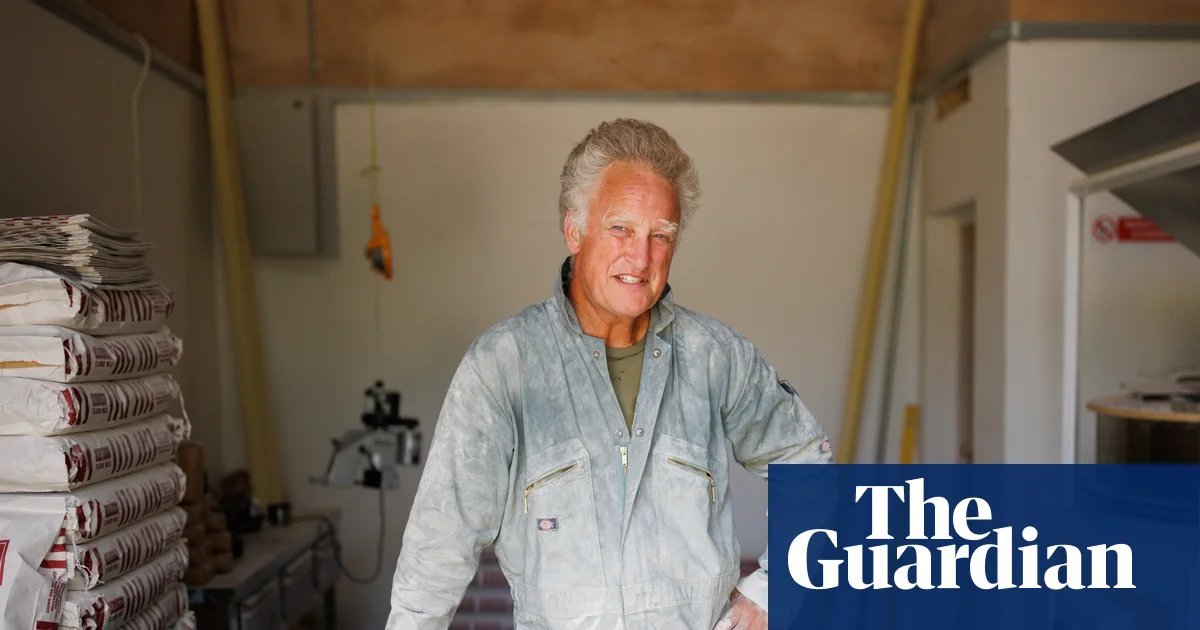
In the heart of the Cotswolds, Henry Astor is witnessing his earliest harvest on record. Yet, as he surveys the sun-scorched wheatfields of Bruern Farms, the atmosphere is far from the sterile quiet of a conventional industrial farm. The air is alive with the hum of insects, and the landscape is woven with vibrant wildflower meadows and expansive, bushy hedgerows.
Astor’s 490-hectare estate has become a beacon for conservationists. It is currently a sanctuary for 18 red-listed bird species, with recent tallies including 23 barn owls, three kestrels, two little owls, and several goshawk chicks. This resurgence is a stark, hopeful contrast to the wider UK trend, which has seen a staggering loss of 73 million birds since 1970.
A Return to Roots
Astor’s path back to the farm he inherited in 2017 was circuitous. After a career in advertising and documentary filmmaking, he returned to find a business that had been stripped of its ecological health. Post-1994, the farm had shifted away from mixed dairy to high-input, intensive arable monocultures.
“The contractors didn’t really care about trees or nature; it was just a business focused on maximum yield,” Astor explains. However, the financial reality proved just as bleak as the ecological one: wheat farmers were trapped in a cycle of diminishing returns, squeezed by rising fuel and fertilizer costs.
The turning point came when Astor looked at the discrepancy between his farm-gate price—15p per kilo of wheat—and the exorbitant cost of processed flour on supermarket shelves. This realization sparked a mission to reclaim the value of his crop by bypassing traditional wholesalers.
The Heritage Revolution
Astor’s strategy for restoration is two-fold: reintroducing “population wheat”—a diverse mix of 30 to 40 heritage varieties—and vertically integrating his operation. By milling his own heritage grains and cutting out the middleman, he creates a sustainable model that pays his farm a premium, allows for smaller yields, and prioritizes quality over quantity.
This approach has caught the attention of the culinary world. Last year, the bakery chain Gail’s introduced a sourdough using Astor’s grains, a product set for wider retail distribution this autumn. Beyond the economic benefits, the health of the land is improving. By eliminating pesticides 15 years ago and utilizing “intensive intercropping” to naturally manage pests, Astor is rebuilding soil fertility.
Scaling Up: The Power of Collaboration
Bruern Farms does not act in isolation. As a co-founder of the North East Cotswold Farmer Cluster, Astor is part of a collective of 40 farms working in tandem to restore the landscape. Together, they have set aside 3,000 hectares for flood mitigation along the River Evenlode and are restoring 800 hectares of floodplain meadows.
Tim Field, the cluster’s co-chair, argues that these farmer-led initiatives are more effective than top-down government mandates. “Farmer groups aren’t getting the recognition they deserve,” says Field. “Yet we are proof that when farms are aggregated by purpose, we can be more powerful for landscape restoration at scale.”
A Blueprint for the Future
The benefits of this shift extend to soil health and local community resilience. Soil expert Carlos Guerra notes that modern monocultures have “simplified soils,” weakening microbial communities. By contrast, Astor’s diverse planting and organic preparations are helping to restore nutrient cycling and soil structure.
Astor’s ultimate goal is a return to a more traditional, “self-sufficient community” model of agriculture, where the farm supports local businesses, hosts market gardens, and keeps food within the local economy. With his heritage wheat output projected to climb to 500 tonnes by 2028, his model provides a compelling vision for biodiversity loss reversal.
“I have three missions,” says Astor. “Growing nutritional food, feeding the community, and increasing biodiversity.” In the golden fields of Bruern, he is demonstrating that the future of farming may well lie in the wisdom of the past.