









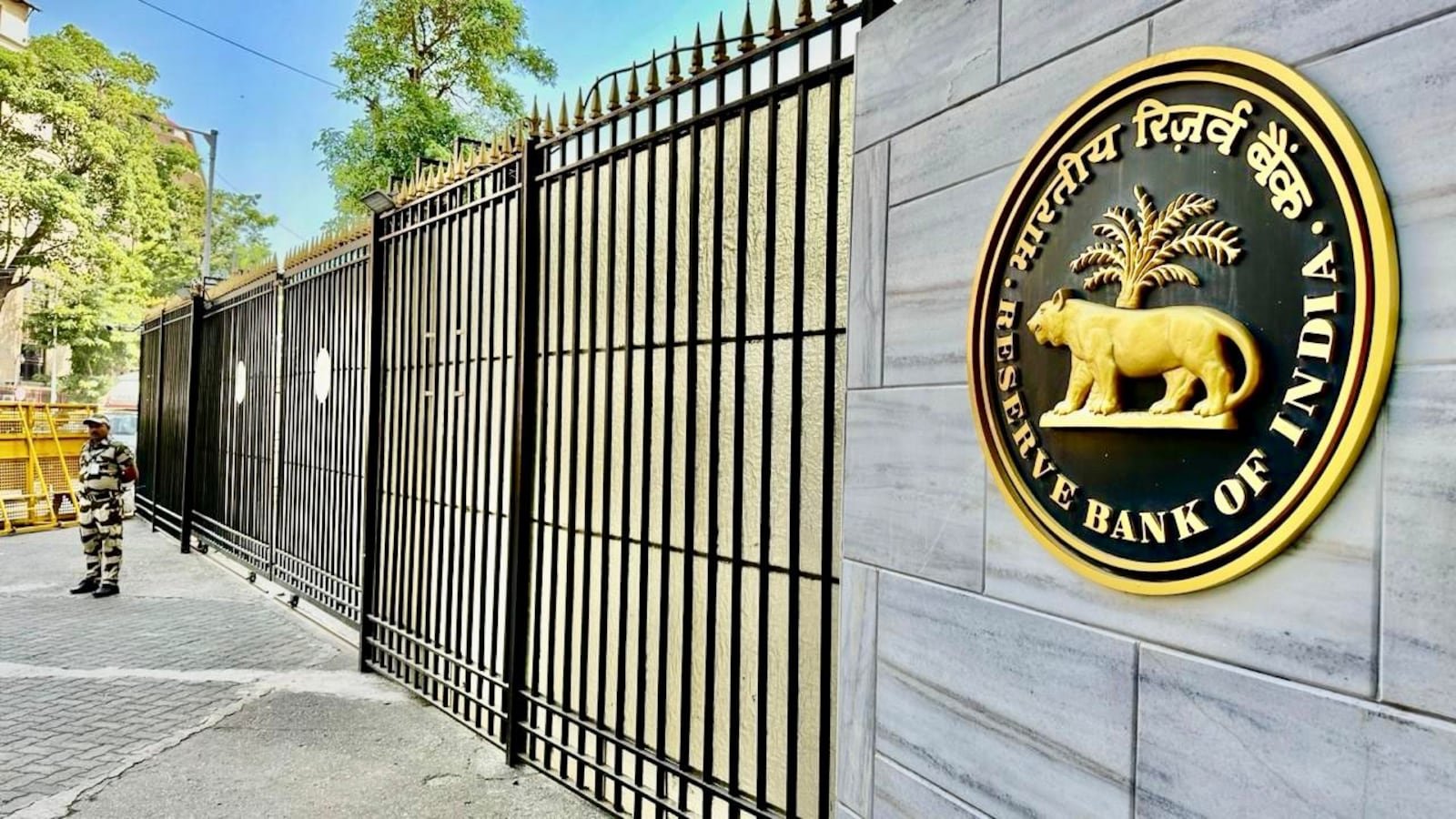
The Indian rupee has recorded its strongest performance in six months, surging by 1% to reach 95.75 per dollar on Monday. This recovery follows an aggressive intervention by the Reserve Bank of India (RBI), which implemented emergency measures this past weekend to halt a downward spiral that had pushed the currency dangerously close to an all-time low of 97 per dollar. While the immediate market reaction has been positive, financial analysts remain cautious about the long-term sustainability of this bounce as global economic headwinds intensify.
## Regulatory Intervention and Market Mechanics
In a move reminiscent of the “taper tantrum” era, the RBI unveiled a suite of defensive strategies designed to stabilize the rupee and discourage speculative betting. The central bank introduced a novel requirement for commercial lenders: they must now maintain a reserve equivalent to 20% of the notional value for any derivative transaction exceeding $2 million.
This policy bears a striking resemblance to tools historically utilized by the People’s Bank of China to manage yuan volatility. By effectively raising the cost of hedging, the RBI aims to clamp down on currency speculation. However, the move has drawn criticism from industry veterans. G Mahalingam, a former RBI executive director, characterized the requirement as “outlandish,” noting that it places a heavy financial burden on entities seeking legitimate hedging, which runs contrary to the central bank’s long-standing policy of encouraging prudent risk management.
## The Role of Tech and Data Analytics in Modern Finance
As markets navigate these turbulent waters, the demand for sophisticated data analytics and high-speed financial modeling has never been higher. For professionals in the financial sector, the ability to interpret complex regulatory shifts—like those seen in the RBI’s recent mandate—is a critical skill. Tech-driven firms and fintech platforms are increasingly integrating AI-powered tools to help institutions forecast currency movements and assess risk in real-time.
For those looking to pivot or advance their careers amidst these volatile economic shifts, upskilling in data analytics has become a vital strategy. As the tech industry faces its own cycle of layoffs, professionals are utilizing bootcamps and specialized training to unlock better compensation packages by applying quantitative skills to complex economic challenges. Whether it is tracking the impacts of global interest rate shifts or analyzing the effects of geopolitical risk on local markets, the synergy between technology and finance is becoming the new standard for resilience.
## Economic Outlook and Structural Challenges
Despite the immediate relief provided by the RBI, experts warn that these measures are largely tactical rather than structural. According to Madhavi Arora, lead economist at Emkay Global Financial Services, while the steps successfully tightened banking liquidity and constrained speculative positioning, they do not address the fundamental drivers of the rupee’s decline. Persistent issues, including elevated global oil prices, a widening external trade deficit, and a consistent outflow of foreign capital, continue to pressure the currency.
The RBI has already spent significant capital defending its position. Despite a record-breaking $133 billion raised via diaspora deposit programs, the central bank has seen its forex reserves shrink by $51 billion over the last four weeks alone. Economists at YES Bank suggest that the current rally may be short-lived, projecting the rupee to remain in the 96.75–97.25 range against the dollar by March 2027. As RBI Governor Sanjay Malhotra noted, market sentiment can often be irrational in the short term, leaving the central bank to continue its precarious balancing act between intervening in the onshore market and allowing for long-term economic adjustment.
Disclaimer: This content is auto-generated for informational purposes only.
Source: Read Original News