







The “Green” Mirage: Why India’s Forest Conservation Pledges Are Falling Short
A decade ago, India embarked on an ambitious mission to expand its forested landscape. However, a recent audit of the flagship Green India Mission has revealed a sobering reality: the program has barely taken root. Government auditors, in a stark assessment, reported a 97.57% shortfall against the initial 2014 pledge, characterizing the progress as “negligible.”
This revelation comes at a precarious time. The UK Met Office has issued a dire forecast, warning that 2027 could become the hottest year on record due to an unprecedented El Niño. For India, a nation heavily dependent on the monsoon for its agricultural backbone, the degradation of its natural green cover is not merely a statistical dispute—it is an existential crisis.
The Great Definition Debate
While the government’s 2023 report touted a growth in forest cover since 2021, independent researchers and former civil servants have raised alarms over what they describe as “creative accounting.” Critics argue that the government has manipulated its methodology to present a greener picture, including coconut orchards, rubber plantations, and smaller gardens in their definition of “forests.”
“A lot of the discrepancies are coming from how and what we are counting as forests,” explains Pooja Choksi, founder of the environmental consultancy Ficus Research Consulting. “We have broadened the definition to include a lot more.” While the government defends these methods as internationally accepted, experts like Choksi argue that this one-dimensional obsession with “green cover” masks a deeper loss of actual biodiversity.
Development at a Cost
Even as the rhetoric of conservation takes center stage, the reality on the ground tells a different story. In the last five years, India has approved the diversion of forest land for development projects equivalent to the size of Hong Kong. Mining remains the largest driver, accounting for 22% of all diverted land, followed by major infrastructure projects.
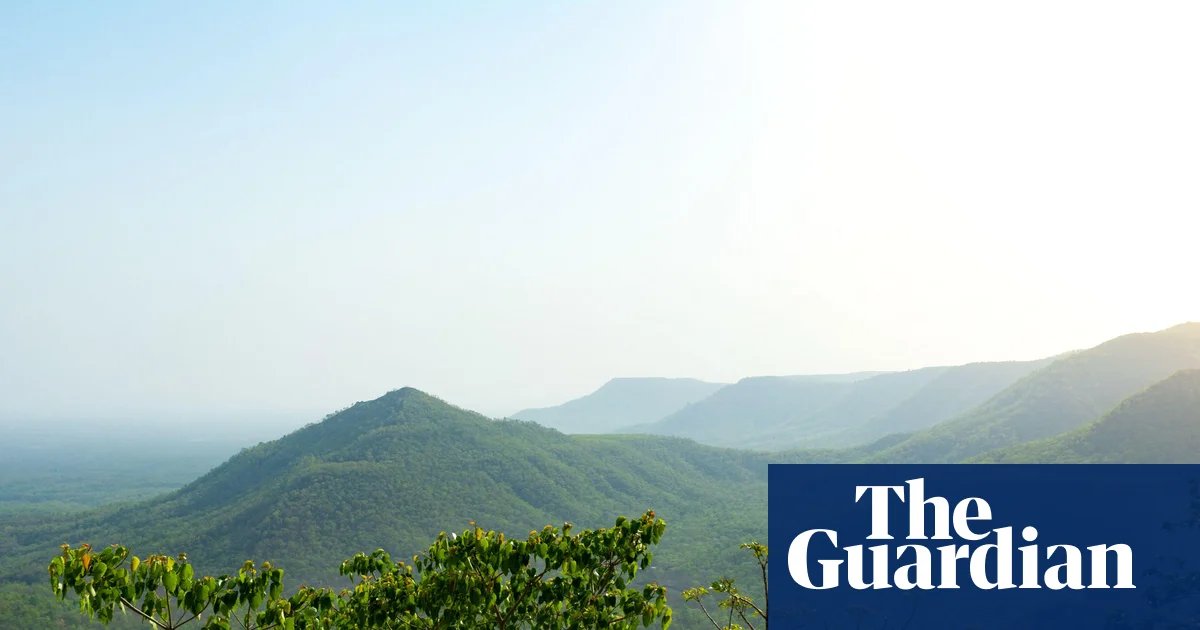
The impact is concentrated in states like Madhya Pradesh, which accounts for nearly a quarter of all national forest diversions since 2021. Studies mapping satellite data in coal-mining regions show that the environmental damage extends far beyond the felling of trees; water bodies have shrunk, soil quality has plummeted, and local ecosystems have seen a 35% reduction in viability.
A Controversial Gamble
Perhaps the most emblematic project currently under fire is the Great Nicobar Project. Marketed as a strategic necessity to boost India’s maritime and defense presence in the Indo-Pacific, the project aims to clear over 13,000 hectares of forest and at least 700,000 trees.
Critics, including geoscientist CP Rajendran, have labeled the project a “geological folly,” noting that building a mega-port and township in one of the world’s most tectonically active zones—at the intersection of rising sea levels and sinking land—is an ecological catastrophe in the making.
Moving Beyond “Green Cover”
As India continues to struggle with the Green India Mission, the central question remains: what is the true ecological value of these efforts? Experts argue that simply planting trees is not the same as restoring a forest. A managed plantation of 20 species lacks the profound biodiversity and resilience of a natural, multispecies forest.
As India prepares for the next phase of its environmental strategy, the gap between official data and the lived reality of its ecosystems continues to widen. With the next biennial forest report long overdue, the true health of the nation’s forests remains obscured behind a veil of statistics, while the climate clock continues to tick.