








Allahabad High Court Rules Against Wearing Headscarf in Schools, Upholds Institutional Dress Codes
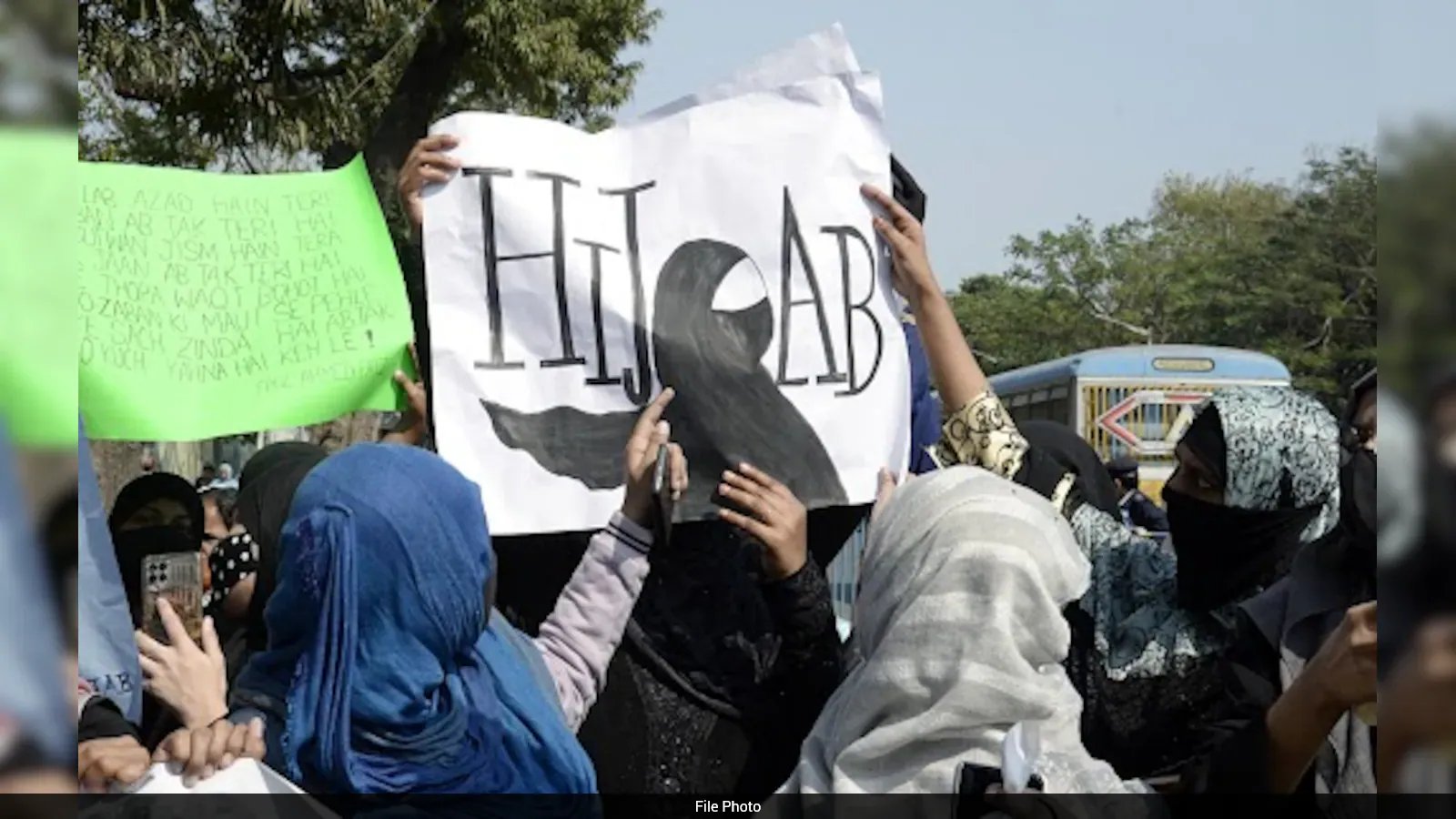
Prayagraj: In a significant judicial intervention regarding educational discipline, the Allahabad High Court has ruled that students do not possess the inherent right to unilaterally alter a school’s prescribed uniform. The court dismissed a petition filed by a minor girl, a student at a private school in Prayagraj, who had sought permission to wear a headscarf in addition to her standard uniform.
The petitioner, who recently completed her high school education and was seeking admission to Class XI at the same institution, filed the plea through her mother. She argued that wearing a headscarf constitutes an essential practice of her Islamic faith and noted that she had been wearing one since the sixth grade.
However, a two-judge bench comprising Justices JJ Munir and Indrajit Shukla rejected the claim after reviewing photographic evidence from the school. The court observed that the petitioner was the sole student wearing a headscarf, noting that even other female students from the same religious community were attending classes without one.
Crucially, the court dismissed the argument that wearing a headscarf qualifies as an essential religious practice. In its judgment delivered on August 21, the bench stated, “Wherever this issue has arisen, the high courts have been unanimous in opinion that wearing a headscarf is not an essential part of the Islamic faith for a woman to don in the absence of which faith would be jeopardised.”
The judges categorized the petitioner’s assertion as a “bare assertion,” noting that it lacked the necessary legal weight to override institutional policies. The court emphasized that private, unaided educational institutions retain the autonomy to enforce their internal discipline, provided the uniform code is fair, non-discriminatory, and applied consistently to maintain equality among all students.
The court further warned that allowing individual students to modify school uniforms based on personal preference would undermine the very concept of a “uniform” and effectively transfer the authority of institutional discipline from the school administration to the individual students.
The respondent school, a self-financed private institution, maintained that its uniform policy is applied to students from diverse backgrounds without exception. Granting a religious exemption, the school argued, would disrupt the uniformity and discipline it strives to maintain. The State Government and the CBSE also provided support for the school’s stance, opposing the petition throughout the proceedings.
With this ruling, the court has reinforced the principle that in an academic setting, institutional policies regarding attire take precedence over individual preferences.