







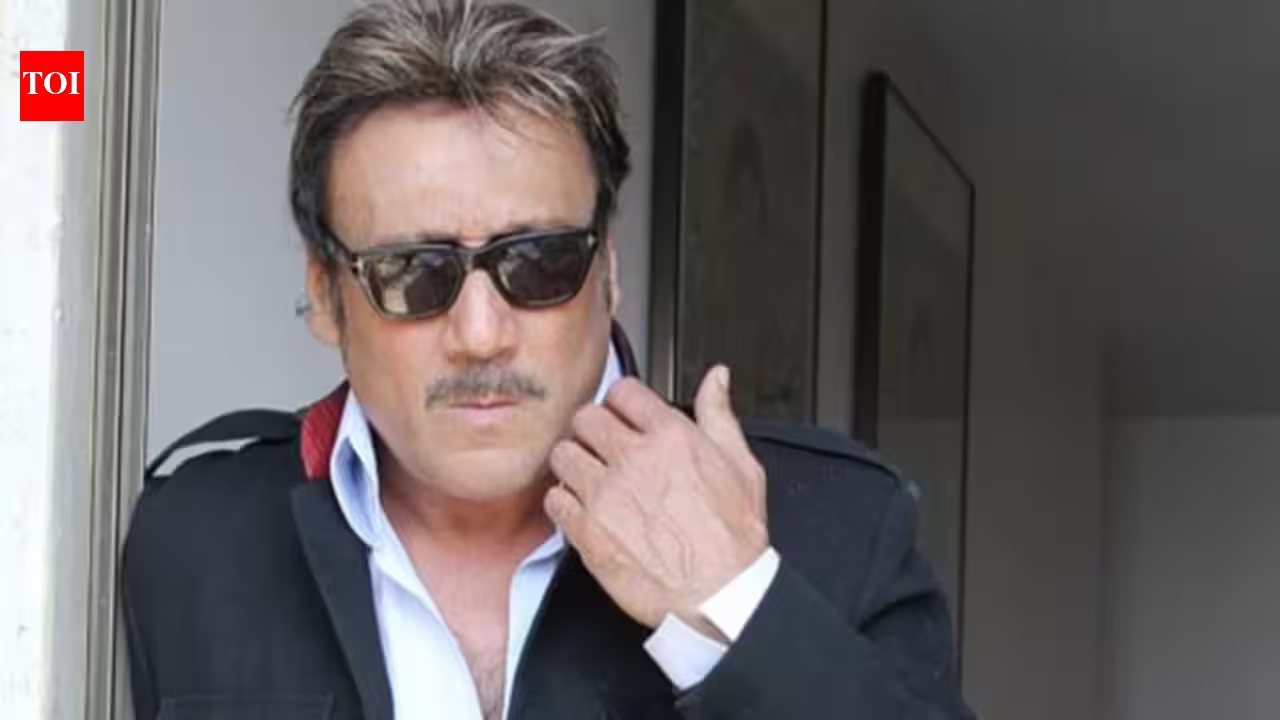
Javed Akhtar Laments Missed Opportunities to Showcase Jackie Shroff’s ‘Enigmatic’ Depth
Veteran lyricist and screenwriter Javed Akhtar has offered a rare, insightful critique of the Indian film industry’s handling of one of its most enduring stars, Jackie Shroff. In a recent candid discussion, Akhtar suggested that despite a decades-long career, the industry—including himself—has failed to fully harness the unique, internal magnetism that defines Shroff’s screen presence.
The Power of Silence
Akhtar, speaking to India Today, argued that Shroff possesses a rare ability to anchor a scene without the need for dialogue or overt emotional outbursts. While many actors require heavy scripts to convey interiority, Shroff can command the screen simply by being still.
“I am so disappointed with the writers and directors because they have never taken full advantage of this quality in Jackie. I include myself in that,” Akhtar admitted. “There is something in his personality that, even when he is quiet, he does not look empty-minded. You feel that there is something inside him that we are not able to fully understand.”
According to the acclaimed writer, this isn’t merely about an actor’s looks; it is an innate ability to spark curiosity in the audience. Even in a silent close-up, viewers are left wondering what the character is thinking, creating a layer of intrigue that transcends the written script.
A Comparison to the Legendary Smita Patil
In an effort to quantify this elusive quality, Akhtar drew a parallel between Shroff and the late, iconic actress Smita Patil. He described both performers as possessing an “inborn, enigmatic quality” that cannot be manufactured or taught.
“Take a straight close-up of Smita, you would feel that there was something inside her that we did not fully understand,” Akhtar recalled. “Jackie also has that enigmatic quality. You can have a silent close-up of him, and he will not look blank. He will look as though there is more to him than what we are seeing.”
This comparison elevates Shroff’s standing in the pantheon of Indian actors, suggesting that his contribution to cinema is characterized by a depth that often goes unnoticed by those focused solely on traditional performance metrics.
Time as the Ultimate Arbiter
Beyond his critique of casting and writing, Akhtar took a moment to reflect on the nature of artistic success. He cautioned against judging talent or creative output solely by its immediate popularity, suggesting that time serves as the only truly objective critic.
“At any given point in time, somebody or something can be a big success. But time is the best judge,” he noted. Drawing a parallel to literary masterpieces like War and Peace, which were not instantly hailed as classics upon publication, Akhtar argued that public perception is fickle. He believes that some performances and works require years to be properly appreciated, as history has a way of filtering out temporary trends to reveal what is truly enduring.
For cinephiles and industry insiders alike, Akhtar’s reflections serve as a poignant reminder that the true value of an actor like Jackie Shroff lies not in the words he speaks, but in the compelling mystery he brings to the screen—a quality that ensures his relevance long after the credits roll.