








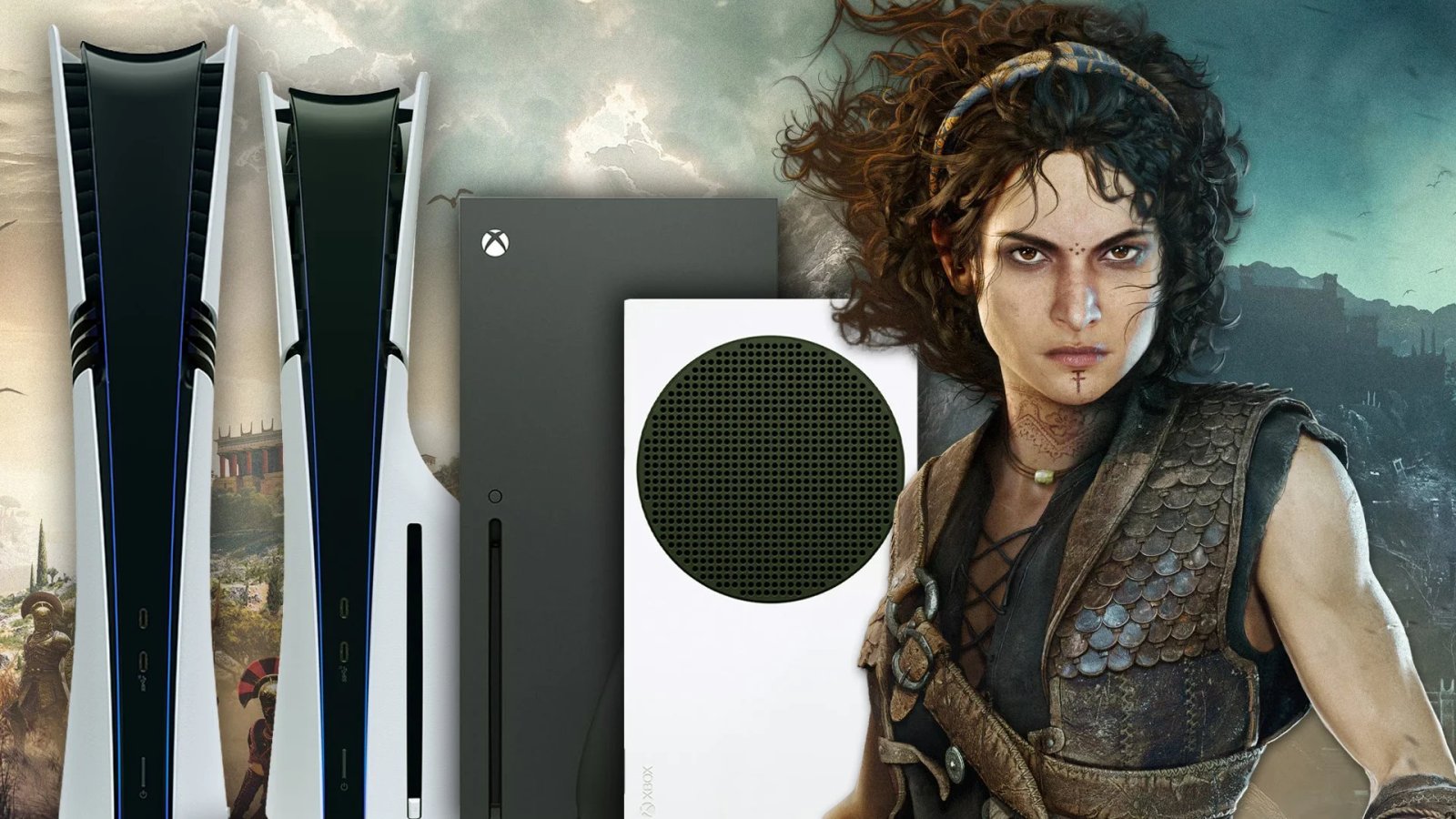
Resonance: A Plague Tale Legacy Sets a New Technical Benchmark for Asobo Studio
Asobo Studio has returned with a bold evolution in its acclaimed series, launching Resonance: A Plague Tale Legacy. Acting as a narrative prequel set 15 years prior to the events of Requiem, the game marks a significant departure from the franchise’s roots. Players follow the adventurer Sophia through a journey that trades the traditional, slow-paced stealth mechanics of its predecessors for a visceral, combo-heavy combat system.
Beyond its gameplay pivot, the title stands as a technical powerhouse. Utilizing the studio’s proprietary in-house engine, Resonance delivers some of the most striking environmental fidelity seen this generation. From the atmospheric, dense streets of Venice to the rugged, craggy terrains of the Minotaur island, the game showcases advanced material lighting and volumetric effects that push modern console hardware to its limits.
Performance and Graphical Fidelity
The developers have provided significant flexibility for console players, implementing multiple modes to cater to both visual fidelity and frame-rate enthusiasts. Across PlayStation 5 and Xbox Series X, players can toggle between a 30fps “Quality” mode, a 40fps intermediate mode for 120Hz displays, and a 60fps “Performance” mode.
While the 30fps mode offers a native 1440p image upscaled to 4K, the 60fps performance mode drops the native resolution to 1080p. Despite the lower pixel count, the trade-off is widely considered worth the added fluidity, even with minor concessions in draw distance and background NPC animations.
For those curious about the specifics of how this title compares across various hardware, a full deep-dive into the game’s performance metrics reveals that Resonance: A Plague Tale Legacy is a visual feast to cherish on every console.
The PS5 Pro Advantage
Sony’s mid-generation refresh, the PS5 Pro, provides a notable edge. The implementation of PlayStation Spectral Super Resolution (PSSR) offers a marked improvement over traditional Temporal Anti-Aliasing (TAA). PSSR significantly sharpens distant foliage and fine details, effectively eliminating the shimmer and banding artifacts often encountered during rapid camera pans. While the Pro model occasionally encounters minor stress in high-demand scenes at 40fps, it remains the definitive platform for the most polished visual experience.
The Xbox Series X Surprise
Perhaps the most unexpected takeaway from recent performance testing is the optimization lead held by the Xbox Series X. Across almost all display configurations—including unlocked frame-rate scenarios using VRR—the Series X demonstrates a tighter, more stable frame-pacing than its PlayStation 5 counterparts. While the root cause of this optimization delta remains a point of speculation, the console currently stands as the most performant platform for the title.
Accessibility on Series S
On the entry-level front, the Xbox Series S offers a stripped-back but remarkably cohesive experience. While it misses out on the 60fps performance mode and the high-end upscaling techniques found on the more powerful machines, it maintains a locked 30fps at 1080p. Through careful management of environmental assets and draw distances, Asobo has ensured that the “core soul” of the game remains intact, making it a viable entry point for a wider audience.
Despite minor, isolated instances of camera clipping or software instability, Resonance: A Plague Tale Legacy stands as a triumphant technical achievement. By balancing high-end features like PSSR with scalable performance modes, Asobo Studio has delivered a title that caters effectively to every tier of the current console market.