







Beyond the Taboo: India’s Heated Debate Over Profanity and Double Standards
As public discourse in India grows increasingly polarized, a fierce debate has erupted over the use of foul language—particularly when it comes from women. Experts argue that the outrage is less about the words themselves and more about deeply ingrained societal hypocrisy.
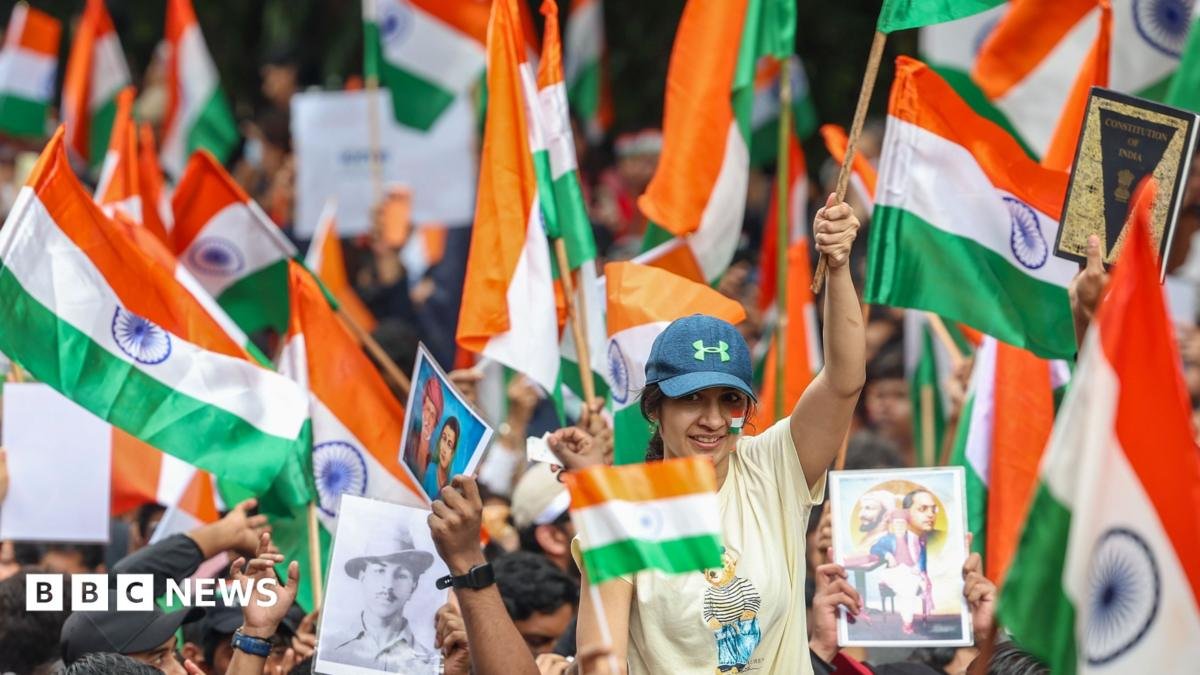
The recent backlash following protests at Delhi’s Jantar Mantar has reignited a long-standing national conversation about gender, decorum, and the use of expletives. Critics were quick to condemn the language used by protesters, characterizing it as a decline in public civility. However, prominent voices are pushing back, calling this moral panic a “classic case of double standards.”
A Cultural Contradiction
Namita Bhandare, a renowned journalist and columnist for the Hindustan Times, dismisses the shock surrounding women’s use of profanity as performative. “Women in India, of course, swear—it’s not new,” she told the BBC.
Bhandare points to the rich, albeit paradoxical, history of vernacular traditions in India. In many villages across northern India, for instance, a staple of wedding rituals involves women from the bride’s family singing traditional songs filled with explicit language to welcome the groom’s party. Far from being seen as offensive, these performances are a celebrated part of the cultural fabric.
“Women are treated so shabbily and it’s so easy to target them,” Bhandare notes. “And then when they use profanity, everyone asks, ‘How can our girls cuss and swear?'”
The Political Hypocrisy
The criticism of female protesters is particularly striking when contrasted against the behavior of the country’s political elite. While Prime Minister Narendra Modi famously called on the nation in his 2022 Independence Day speech to “fight misogyny,” he and his peers have frequently faced accusations of perpetuating it.
Observers have long highlighted a pattern of disrespectful rhetoric from senior leaders across the political spectrum. From the Prime Minister’s past controversial comments—such as the 2004 “Jersey cow” remark and the 2012 “50 crore ki girlfriend” slur—to recent inflammatory statements from opposition figures like those in the Congress party, the use of gendered insults is a recurring feature of Indian political life.
The Geography of Expletives
As the debate intensifies, data suggests that the use of profanity is widespread and transcends political or gender lines. Sunil Jalan, a social activist who has spearheaded the Gali Bandh Abhiyan (Stop the Swearing Campaign) since 2014, argues that the focus should remain on the language itself rather than the gender of the speaker.
The NGO’s 2025 “Gali Map of India,” which surveyed over 70,000 participants, reveals a stark regional divide. The prevalence of expletives targeting mothers, sisters, and daughters is highest in the north, with Delhi leading at 80%, followed by Punjab (78%) and Uttar Pradesh/Bihar (74%). In contrast, southern states reported rates below 44%, while the north-east remains significantly lower, between 15% and 18%.
Jalan believes the current controversy marks a crucial turning point. “It’s a very serious issue. It’s a virus that’s spread through society,” he says, noting that the normalization of foul language in films, comedy, and social media has exacerbated the trend.
Seeking a New Dialogue
As India grapples with this “virus” of language, experts agree that focusing on gendered policing is a distraction from broader social ills. For many, the current national discussion serves as a necessary, if uncomfortable, mirror—forcing a society to confront its own misogyny while questioning why the standards for “respectability” are so unevenly applied.
Whether this debate will lead to a cleaner public discourse or simply fade into the next news cycle remains to be seen, but for now, the conversation on the streets of India is as unfiltered as ever.