





The Data-Driven Day: How Oura CEO Tom Hale Manages His Life and Leadership
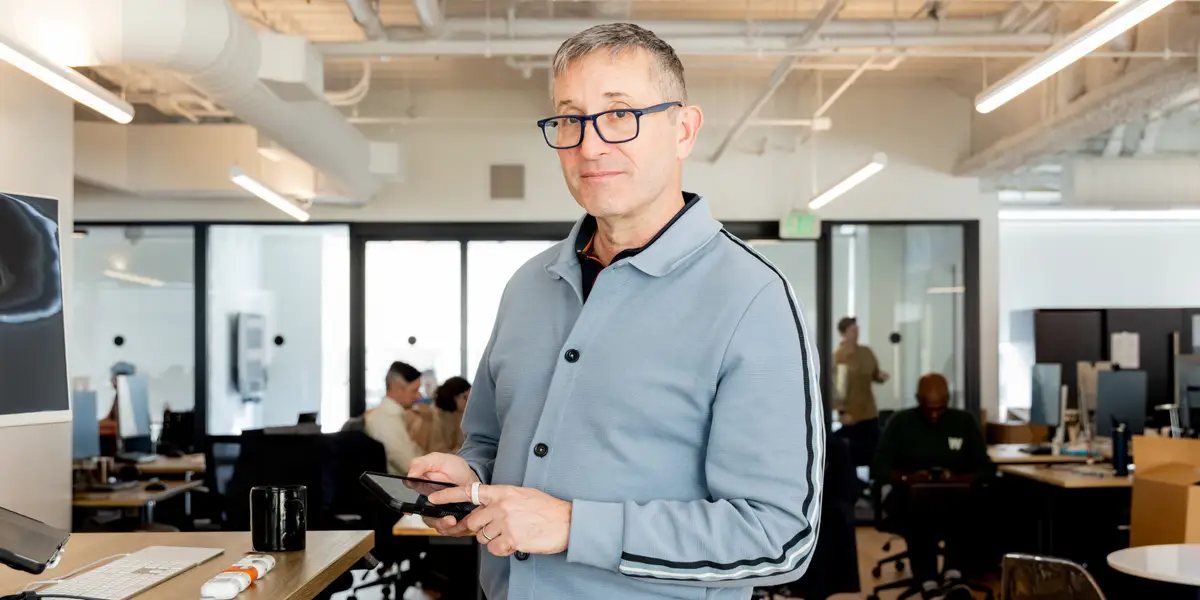
For Tom Hale, the 57-year-old CEO of Oura Health, the boundary between personal health and professional performance is non-existent. Since taking the helm of the wearable tech giant in March 2022, Hale has leveraged his own product—the Oura Ring—to calibrate everything from his morning workload to his decision-making speed.
With a career spanning over three decades in technology and consumer products, including a tenure as president of SurveyMonkey, Hale has evolved his management style to be as disciplined as the data his devices track.
5 a.m.: The Morning Calibration
Hale begins his day at 5 a.m., sans alarm. His first ritual is checking his sleep and readiness scores on his Oura Ring. “I have a little competition going with my wife and kids over our scores,” he shares.
This isn’t just for bragging rights; it is a strategic exercise in resource management. If his data indicates a low recovery score, he opts for a lighter workload and defers major business decisions. If he is primed, he pushes his limits. The rigor of his schedule shifts based on company health: when business is thriving, he sleeps until 5 a.m.; when challenges mount, he is often up at 3:30 a.m.
A Ritual of Discipline
After a shower, Hale carves out two minutes for a breathing exercise. While he admits to not being a “meditation person,” he notes that the practice is vital for centering himself. However, he acknowledges that in moments of crisis, this is the first habit to slip.
By 6 a.m., he is fully engaged in a high-information flow. He monitors critical data streams, including internal sales metrics, eBay product listings, and curated news from sources like The Information. To avoid the “rabbit hole” effect of social media, he employs a timer to limit his LinkedIn activity, ensuring his morning remains focused.
The “Commute” to the Office
Living in San Francisco, Hale walks to work—a 30-minute journey that includes climbing steep hills. He utilizes this time for professional development, listening to podcasts or taking calls with his global team. As Oura maintains a significant presence in Finland, Hale notes that his morning is often shaped by the overnight developments emerging from Northern Europe.
The Office Environment: Spartan and Structured
Upon arriving at his office, Hale tackles his anxiety through organization. He keeps a physical notebook, noting that checking off tasks provides a sense of tangible progress. His office is intentionally “Spartan,” devoid of trophies or memorabilia, and features a standing desk set in an open floor plan.
His week follows a rigid cadence:
- Mondays: Staff check-ins.
- Tuesdays: Structured staff meetings.
- Wednesdays: Ad hoc meetings and to-do list clearing.
- Thursdays: Customer and partner engagement.
- Fridays: Deep work.
Mastering the Evening Shutdown
Hale identifies the 5 p.m. to 7 p.m. block as his most productive period for high-level strategy and proactive communication. His evenings are defined by consistency—a stark contrast to his earlier years in his 30s and 40s, when he relied on caffeine and endured chronic sleep deprivation.
He and his wife share meals, often sticking to lean, consistent proteins like salmon or chicken. His bedtime is strictly between 8:30 p.m. and 9 p.m. To optimize sleep, he uses a sleep mask, earplugs, and an Eight Sleep mattress cover set to -3°C below ambient temperature.
Weekend Recovery
Weekends are reserved for family time, playing guitar, and active recovery. He describes contrast therapy—using saunas followed by jumps into the cold San Francisco Bay—as a “massive unlock” for his energy levels.
For Hale, the role of CEO is the most demanding of his career, yet he feels better prepared to handle it than ever before. “I don’t drink caffeine anymore, I get more sleep, and I’m very intentional about how I attack problems,” he says. By applying the same data-backed principles to himself that he offers his customers, he has turned the high-pressure world of tech leadership into a manageable, sustainable rhythm.