









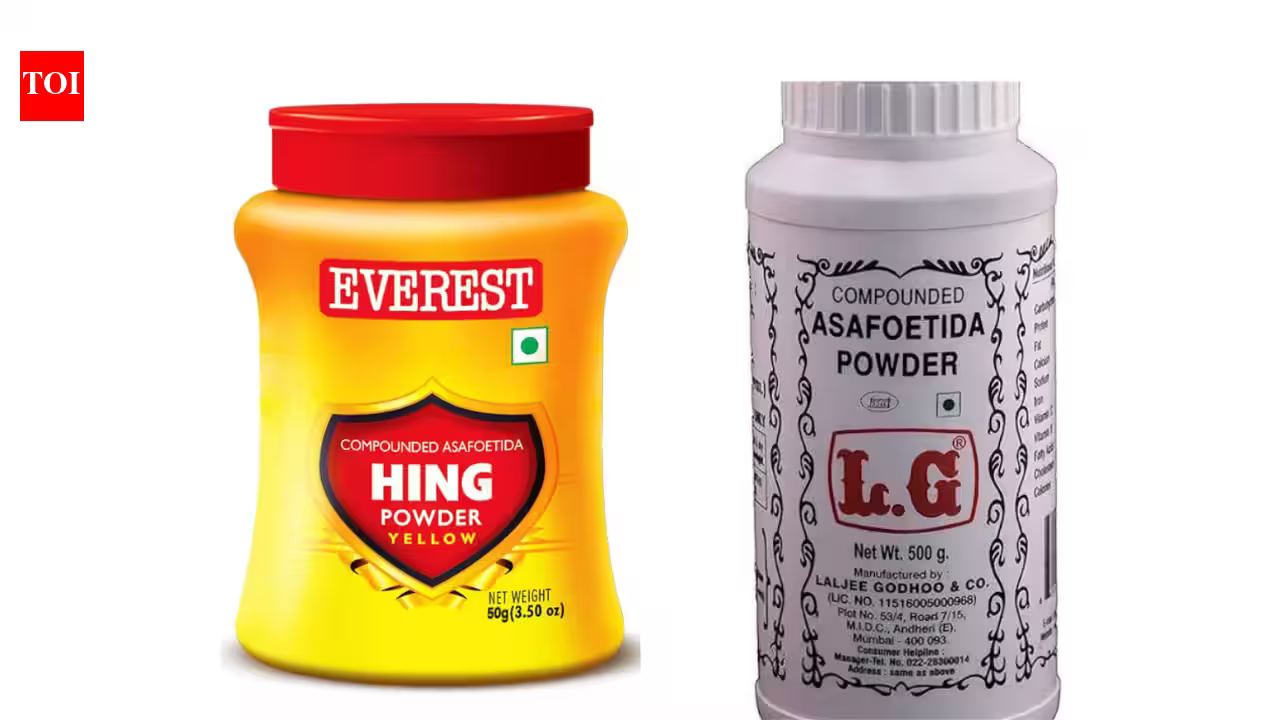
FSSAI Cracks Down on Everest and Laljee Godhoo Over Quality Violations in Asafoetida Products
NEW DELHI: The Indian kitchen staple, asafoetida—commonly known as hing—is under intense scrutiny as the Food Safety and Standards Authority of India (FSSAI) has issued immediate prohibition orders against two major industry players: Everest Food Products Private Limited and Laljee Godhoo and Company.
The regulator took decisive action following a series of quality tests that revealed significant lapses in product standards. According to an official statement released by the FSSAI, the products in question failed to meet the mandatory benchmarks set under the Food Safety and Standards Act, 2006.
Why the Ban Was Issued
The regulatory action against Everest Food Products was triggered by alarming results from laboratory analyses of their compounded asafoetida, yellow hing powder, and black hing powder.
Under the existing food safety regulations, compounded hing must contain a minimum of 5% alcohol-soluble extract. However, the testing data showed that one sample of Everest’s product recorded a “zero per cent” alcohol-soluble extract, rendering it completely non-compliant. The yellow and black hing powder variants fared little better, registering only 3.29% and 4.4% respectively, both falling short of the required safety and quality thresholds.
The move marks a significant blow to the brand, as the regulator has ordered an immediate halt to the sale of these specific compounded hing variants.
A Pattern of Non-Compliance
This latest intervention is not an isolated incident for Everest. The FSSAI noted that recent compliance reviews had already flagged the company for previous violations. These earlier issues involved lapses in quality standards and label-declaration errors across a range of other popular products, including their chicken masala, garam masala, and egg curry powder.
The FSSAI’s decision underscores the regulator’s intensified efforts to ensure that culinary ingredients sold in Indian markets adhere to strict safety norms. By targeting major manufacturers, the agency is signaling a zero-tolerance policy toward products that fail to meet the nutritional and chemical compositions mandated by law.
As the situation develops, consumers are advised to stay informed regarding food safety updates. For a detailed breakdown of the regulatory order, you can read more about the FSSAI ban on the official source.