








DLSS 5 Neural Rendering Tested on RTX 30 Series: Technical Breakthrough or Performance Disaster?
The landscape of PC gaming technology is shifting once again as enthusiasts push the boundaries of NVIDIA’s latest upscaling innovations. While the highly anticipated DLSS 5 Neural Rendering is officially earmarked for the upcoming RTX 50 series, early experimentation by modders has proven that the technology can technically run on older hardware. However, the results from these unofficial implementations suggest that “compatibility” does not necessarily equate to “playability.”
Modding the Neural Frontier
Following the recent leak of a specialized DLL file—which first surfaced in NBA 2K27—the modding community has been in a race to see how far NVIDIA’s latest upscaling suite can be pushed. After successfully enabling the feature on RTX 40-series cards through a simple swap of CUDA binaries, attention turned to whether the aging architecture of the RTX 30 and 20 series could handle the intensive computational load of neural rendering.
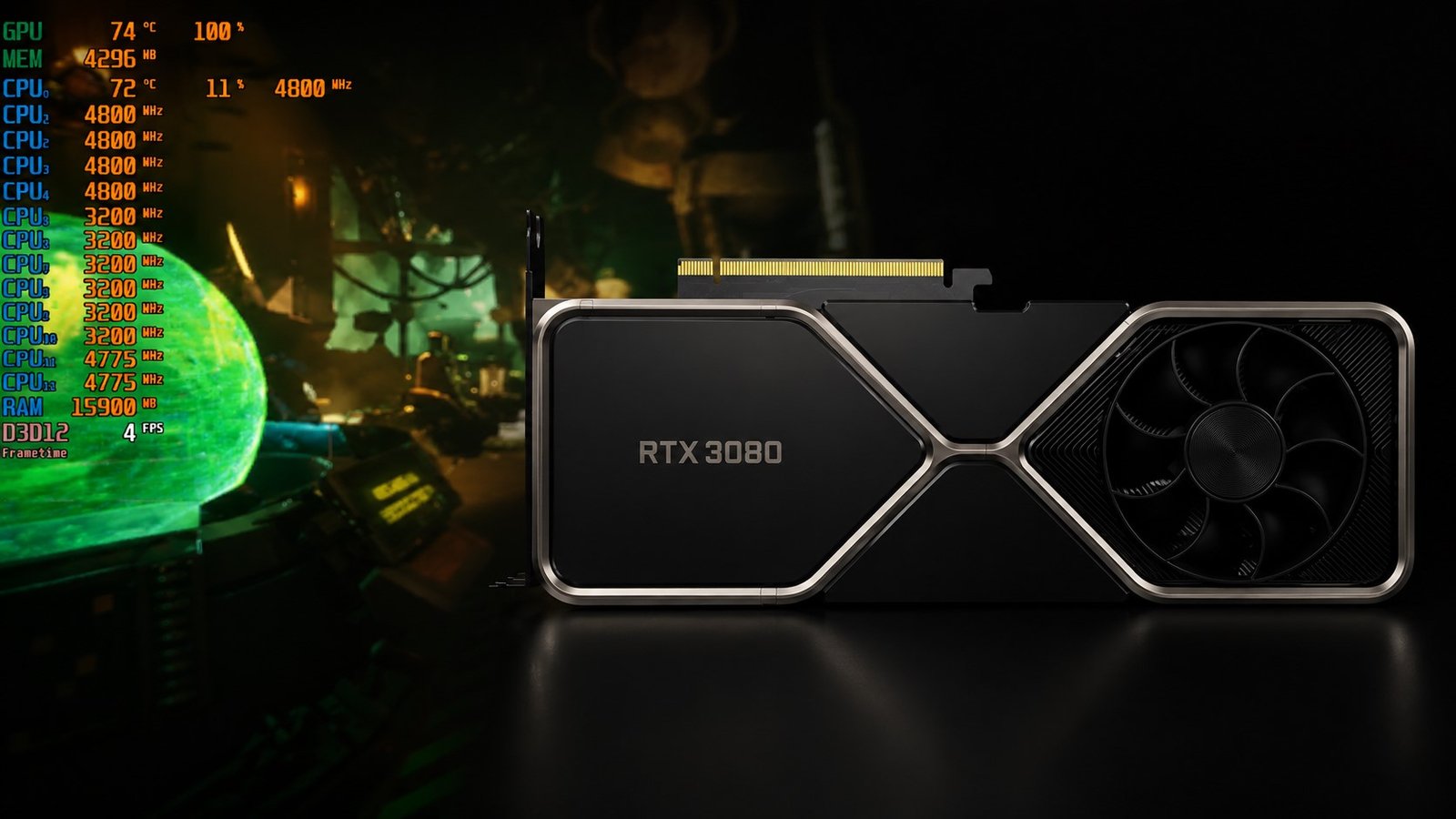
The answer, as confirmed by X (formerly Twitter) user @flovreq, is a resounding “yes—but.” By forcing the technology to run on an NVIDIA GeForce RTX 3080, testers have successfully triggered the DLSS 5 feature within the title Deep Rock Galactic.
A 97% Performance Penalty
While achieving functionality on Ampere-based cards is a technical milestone, the real-world performance metrics highlight why NVIDIA likely restricted the technology to its newest architecture.
In a demonstration video, the RTX 3080, which is typically a powerhouse, struggled immensely under the weight of the new rendering stack. Before enabling the feature, the system comfortably pushed 138 frames per second (FPS). Once DLSS 5 was toggled on, the frame rate plummeted to a staggering 4 FPS.
This represent a 97% performance regression, rendering the game completely unplayable. Further analysis of the frame times revealed a massive jump from a fluid 7–8 ms to a jarring 260 ms, highlighting the extreme strain the neural processing requirements are placing on the RTX 30 series’ hardware.
Will It Ever Be Viable for Older GPUs?
The stark difference between the 40–50% performance overhead seen on RTX 40 and 50-series hardware and the catastrophic collapse on the RTX 30 series underscores the architectural disparity between these generations.
For many users, this DLSS 5 enabled on RTX 3080 in Deep Rock Galactic test serves as a cautionary tale: just because software can be forced to run, does not mean the underlying hardware is equipped to handle the workload.
As of now, there is no official word from NVIDIA regarding support for older architectures. While the company has shown a willingness to bring specific features like DLSS 4.5 to legacy cards, the heavy neural-processing demands of DLSS 5 may remain a hardware-exclusive feature for the RTX 50 series and beyond. For now, owners of RTX 30 and 20 series cards will have to wait and see if future optimizations can bridge the gap, or if this technology will remain firmly behind the curtain of next-generation hardware.