







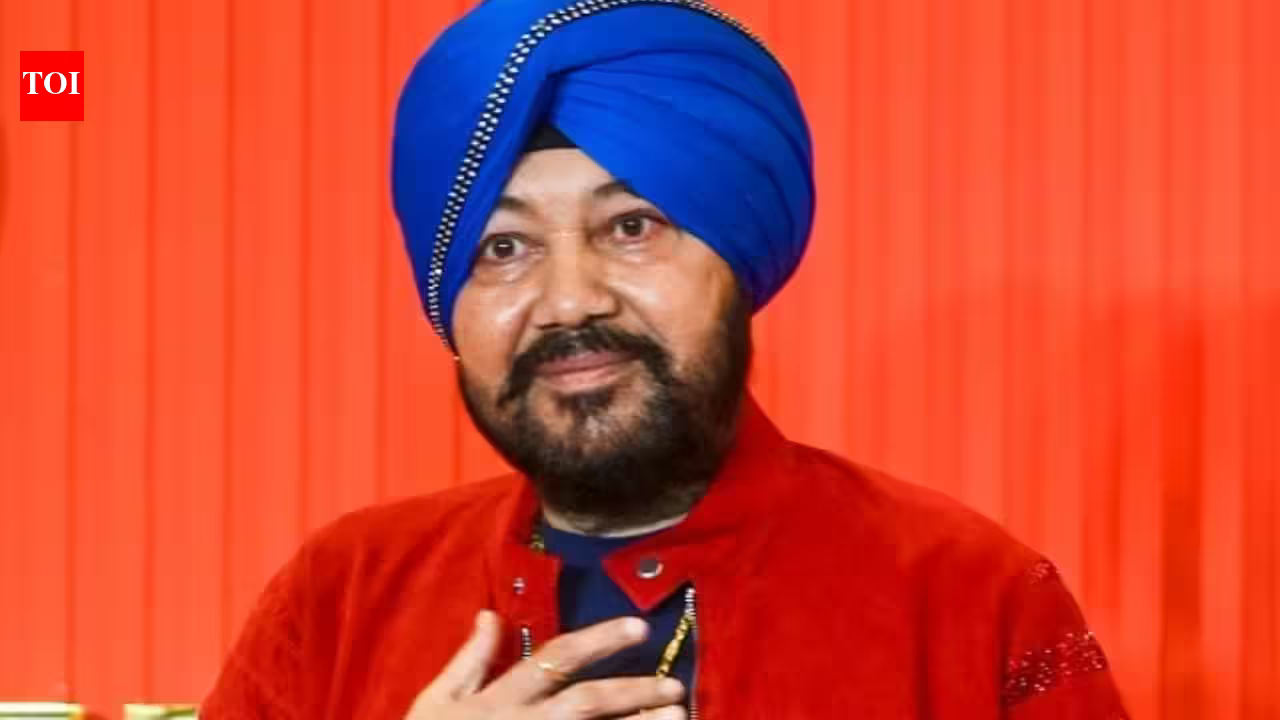
The high-octane world of Indian entertainment, often defined by the glitz of stage lights and the roar of a crowd, has hit a somber note this week. At the center of a brewing firestorm is none other than the “King of Bhangra,” Daler Mehndi. What was meant to be a high-energy performance at the Siddhpeeth Maa Kunjapuri Tourism and Development Fair in New Tehri has instead spiraled into a public relations crisis, pitting the veteran artist against state political leadership and sparking a massive debate regarding the treatment of performers in the public eye.
The incident, which went viral across social media platforms, saw Uttarakhand Cabinet Minister Subodh Uniyal storming the stage to interrupt Mehndi’s set, publicly leveling allegations that the singer was performing while under the influence of alcohol. For an artist of Mehndi’s stature—a man whose voice has defined the soundtrack of Indian weddings and pop culture for over two decades—the accusation was not just a professional disruption; it was a perceived attempt at public humiliation.
### The FWICE Steps In: Protecting the Artist’s Dignity
As the video footage of the altercation circulated, the Federation of Western India Cine Employees (FWICE) did not stay silent. Moving swiftly to defend one of the industry’s most recognizable faces, the body—which advocates for the welfare and professional rights of thousands of cinema and music workers—took the unprecedented step of writing formal letters to Prime Minister Narendra Modi and Uttarakhand Chief Minister Pushkar Singh Dhami.
The core of the FWICE’s argument rests on the principle of professional decorum. The federation emphasized that while the organizers of any event have a right to maintain standards, the method of intervention used by Minister Uniyal was fundamentally flawed. “While we recognise the importance of ensuring the smooth conduct of public events, such concerns should be addressed with sensitivity and discretion rather than through public reprimand,” the letter stated.
The FWICE’s intervention underscores a growing frustration within the artistic community: the feeling that performers are increasingly becoming vulnerable targets for political optics, often without being granted the benefit of the doubt or the dignity of a private conversation.
### A Question of Health Over Hysteria
The narrative took a turn when the FWICE revealed a crucial piece of context that had been conspicuously absent from the initial viral outrage: Daler Mehndi is currently in recovery. According to the federation, the singer has been battling significant health issues and has recently undergone surgery.
This revelation casts the viral video in an entirely different light. Movements or behavioral patterns that an onlooker might hastily attribute to intoxication can often be side effects of medication, physical discomfort, or the lingering fatigue of post-operative recovery. The FWICE argued that in such circumstances, it is “particularly important to exercise restraint before drawing conclusions.”
By bringing the singer’s health status to the forefront, the industry is calling for a “compassion-first” approach. They are effectively asking: at what point does a political official’s pursuit of “order” cross the line into the medical harassment of a performer?
### The Responsibility of Public Representatives
The incident in New Tehri highlights a growing disconnect between the expectations placed on artists and the treatment they receive from those in positions of power. The FWICE’s communication to the authorities was not merely a defense of Mehndi; it was a pointed critique of the lack of decorum shown by public representatives.
“Public representatives and event organisers have a responsibility to ensure that any concerns regarding a performer’s health or performance are handled appropriately,” the federation noted. The implication is clear: if there is a legitimate belief that an artist is unfit to perform, the proper protocol involves back-stage consultation, private discussion, or a quiet termination of the contract—not a theatrical stage invasion that creates a spectacle for the cameras.
For veteran artists who have spent their lives building a reputation, being labeled as “drunk” in a public forum is a career-damaging accusation that carries weight far beyond a single concert night. The FWICE is demanding that the dignity of the artist be treated as a non-negotiable aspect of event management.
### The Broader Impact on the Entertainment Fraternity
The “distress” mentioned by the FWICE is palpable across the industry. When a name as legendary as Daler Mehndi—an artist who has transcended generations and served as a cultural ambassador for Indian music globally—can be stopped mid-song and publicly shamed, it sends a chilling message to younger artists. It fosters an environment where the performer is at the mercy of the whims and political ambitions of the event hosts.
This situation has reignited a conversation about the precariousness of freelance and contracted work in the creative sector. Artists are often the face of the event, but they are frequently the last to be protected when things go awry. By standing firmly behind Mehndi, the FWICE is signaling a shift in policy: they are positioning themselves as a shield against the “public trial” culture that social media and reactionary politics have fostered.
### A Call for Sensitivity and Professionalism
As the dust settles, the spotlight remains firmly on the Uttarakhand government and the organizers of the fair. Will there be an apology? Will the authorities acknowledge the complexity of the situation?
The FWICE’s intervention is a timely reminder that the cultural and creative contribution of artists is a vital part of India’s national identity. When artists perform, they are offering their craft, often while juggling the unseen burdens of travel, health struggles, and the pressure of public expectation.
“Any concerns regarding a performer’s well-being should be addressed with compassion and professionalism,” the FWICE concluded. This is not just a request for Daler Mehndi; it is a mandate for the industry at large. In a world where every mistake is recorded and every accusation can go viral in seconds, the need for human decency—both from the stage and from the crowd—has never been more urgent.
The entertainment industry is watching closely, waiting to see if this plea for respect will result in systemic change or if it will be relegated to the archive of ignored grievances. For now, the legacy of Daler Mehndi stands intact, defended by his peers against a tide of hasty judgment.
Disclaimer: This content is auto-generated for informational purposes only.
Source: Read Original News