








The Epic Goes Digital: Why ‘Ramayana: Rise of a Legend’ is Rewriting the Rules of Film Distribution
In the landscape of modern Indian cinema, few projects have carried the weight of expectation that Nitesh Tiwari’s Ramayana: Rise of a Legend currently shoulders. With a star-studded ensemble, a global technical team, and the ambitious goal of bringing the greatest epic in history to the screen with unprecedented scale, the project has been the subject of endless industry speculation. But as the November 5, 2026, theatrical release date inches closer, it isn’t just the visual effects or the casting choices making waves. It is the announcement of a groundbreaking digital strategy—a “pay-per-view” model that promises to change how we consume blockbusters in the post-theatrical window.
The Democratization of the Epic
When producer Namit Malhotra stepped forward on October 22 to outline the film’s digital future, he spoke with the conviction of a man on a mission. “Ramayana belongs to every Indian,” he stated, touching upon the geographical disparity in India’s current cinematic infrastructure. While tier-one cities are flush with high-end IMAX screens and luxury multiplexes, vast swaths of the country remain underserved.
By opting for a pay-per-view (PPV) model on JioHotstar following the film’s theatrical run, the makers are essentially bypassing the traditional subscription-based “wait-and-see” approach. This strategy acknowledges a fundamental truth about Indian consumer behavior: when it comes to a cultural touchstone as significant as the Ramayana, fans don’t want to wait months for a subscription platform to host the title. They want access, they want it now, and they are willing to pay for the privilege of a premium home screening.
A Strategic Partnership with JioHotstar
The choice of JioHotstar as the exclusive digital partner is no coincidence. In a market where platforms are constantly battling for dominance, JioHotstar has leveraged high-stakes sports—most notably the IPL—to prove that they can handle massive concurrent traffic with ease. For a film of this magnitude, the infrastructure to support millions of simultaneous streams is just as important as the content itself.
Malhotra’s decision to partner with them suggests that the team behind Ramayana views the film not just as a movie, but as a “national event.” By separating the film from a standard monthly subscription, the studio retains the value of the intellectual property while ensuring it reaches every household that has an internet connection, effectively turning every living room into a private theater. It is a bold, capitalist move that mirrors the global “Premium VOD” trends we’ve seen in Hollywood, adapted perfectly for the scale and diversity of the Indian market.
The Star Power Behind the Spectacle
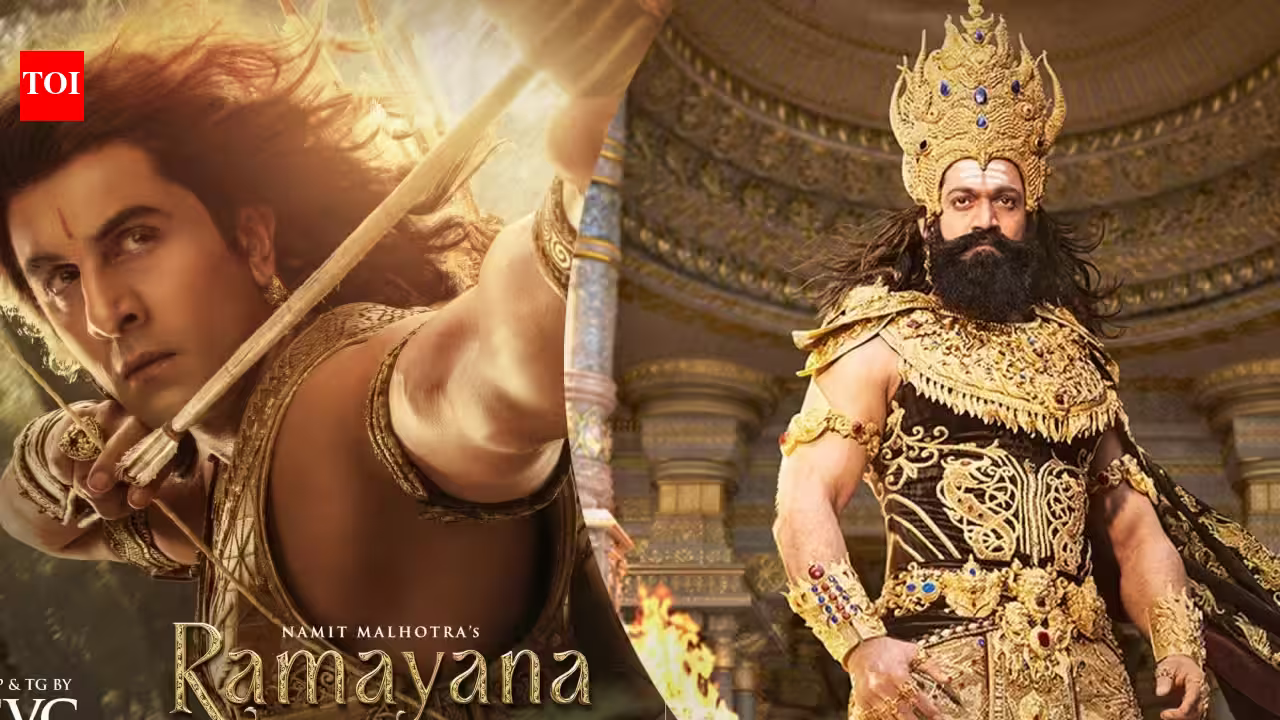
Of course, the technology would mean nothing without the talent in front of the camera. The casting for Ramayana has been a masterclass in cross-industry collaboration. Ranbir Kapoor, an actor whose dedication to his craft is currently at its zenith, steps into the role of Lord Rama, while Sai Pallavi—a performer revered for her grace and intense screen presence—will portray Sita.
The casting of Yash as Ravana is perhaps the most tantalizing element of the production. Having cemented his status as a pan-Indian superstar through the KGF franchise, Yash’s involvement guarantees massive interest from the Southern markets, ensuring the film has a truly unified footprint. Add to this the gravitas of Sunny Deol as Hanuman and the versatile Ravi Dubey as Lakshman, and you have a cast that bridges generations and regional sensibilities. The supporting ensemble—featuring veterans like Arun Govil alongside stars like Lara Dutta, Rakul Preet Singh, and Vivek Oberoi—only adds to the feeling that this is the definitive cinematic version of the epic for the modern era.
A Sonic Landscape for the Ages
Beyond the visuals, there is a mounting fervor regarding the film’s musical identity. To enlist the combined genius of Oscar-winning maestro A.R. Rahman and the legendary Hans Zimmer is a statement of intent. These are composers who don’t just write scores; they build sonic worlds. The sheer anticipation of hearing a Zimmer-esque orchestral landscape woven with Rahman’s signature soulful, melodic richness is enough to pack theaters. In an era where background scores often get lost in the noise of heavy CGI, Ramayana seems poised to provide a sensory experience that justifies every penny of its production budget.
The Stakes of the November 2026 Release
As we look toward the Diwali window of 2026, the industry is bracing for a seismic shift. The decision to release in Hindi, Tamil, Telugu, Kannada, Malayalam, and English simultaneously, paired with the IMAX 3D offering, confirms that Ramayana is aiming for a global footprint.
The “pay-per-view” model is a gamble—if successful, it could signal the end of the “subscription-only” era for mega-blockbusters in India. It creates a new middle ground where studios can monetize their massive investments more efficiently than they can through flat-fee licensing deals with streaming giants.
Ultimately, Ramayana: Rise of a Legend is testing the elasticity of the Indian box office. Can a film be both a theatrical spectacle and a digital event? Can the sacred nature of the epic coexist with a transactional digital model? If the creative team’s track record is anything to go by, the answer is a resounding “yes.” Come November 2026, the question won’t be whether people will see the film, but rather, how many times they will choose to experience it—at the cinema, on their big screens, or in the palms of their hands. The legend is rising, and it’s doing so on its own terms.
Disclaimer: This content is auto-generated for informational purposes only.
Source: Read Original News