









Cornell Faculty Offer New Perspectives on Global History, Conflict and Economic Policy
As the global landscape shifts under the weight of technological disruption, geopolitical tension, and historical reckoning, three new books from Cornell University scholars provide essential frameworks for understanding the forces shaping our world. From the economic future of the world’s most populous nation to the preservation of cultural memory in war zones and the labor history of the Second World War, these works bridge the gap between academic research and urgent real-world challenges.
Navigating the Future of the Indian Economy
India, now home to over 1.4 billion people and the fifth-largest economy globally, stands at a critical juncture. A generation after the liberalization that reshaped its economic trajectory, the nation faces a complex confluence of opportunity and peril.
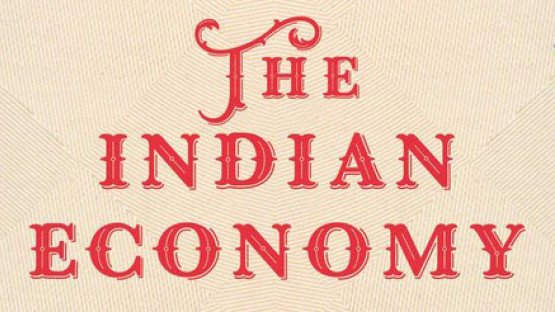
In their new book, The Indian Economy: Navigating a Global Turning Point (Simon & Schuster), Kaushik Basu—the Carl Marks Professor of International Studies at Cornell—and a team of leading economists examine the country’s development journey. The book traces India’s path from its early reliance on state planning to the unresolved dilemmas of its current lower-middle-income status.
With contributions from scholars including Sonalde Desai, Ashwini Deshpande, and Nirvikar Singh, the authors tackle the central question facing India today: Can the nation harness its demographic scale and entrepreneurial energy to create a sustainable, equitable model of development that expands human capabilities while navigating the pressures of AI, climate risk, and shifting globalization?
Documenting Conflict: The “Heritage Forensics” of the South Caucasus
While economic forces drive global policy, cultural identity remains a frequent casualty of territorial disputes. Since 2021, the Caucasus Heritage Watch (CHW) has utilized satellite technology to monitor the destruction of cultural sites in the South Caucasus, where Armenia and Azerbaijan have clashed for decades.
In Heritage Forensics: Culture on the Front Lines of the Armenia-Azerbaijan Conflict (Cornell University Press), researchers Lori Khatchadourian and Adam T. Smith—along with co-authors Ian Lindsay and Husik Ghulyan—present a new methodology for protecting cultural heritage in war zones. By combining spatial analysis with humanitarian advocacy, the book serves as an authoritative record of threatened sites, offering a robust framework for documenting abuses of history amidst bigotry and secrecy.
Reimagining the WWII Home Front
Moving from the contemporary world back to the mid-20th century, Troop Movements: Labor, Race, and Global Freedom Struggles in America’s World War II (University of Pennsylvania Press) challenges the traditional narrative of a unified “national consensus” during the war.
Tejasvi Nagaraja, assistant professor of labor history at Cornell’s ILR School, reveals that the mass mobilization for World War II was not merely a military endeavor but a crucible for social and political change. By synthesizing records from the U.S. Army, the U.K. Colonial Office, and various civil rights organizations, Nagaraja demonstrates how the wartime workforce became a site of entanglement for labor rights, Jim Crow policies, and the burgeoning military-industrial complex. The book suggests that the seeds of postwar domestic and foreign politics were sown within this complex, mass-scale mobilization.
These three works reflect the breadth of scholarship at Cornell, demonstrating how rigorous historical and economic analysis can provide the clarity needed to navigate an increasingly complex global order. Each book is currently available through its respective publisher.