








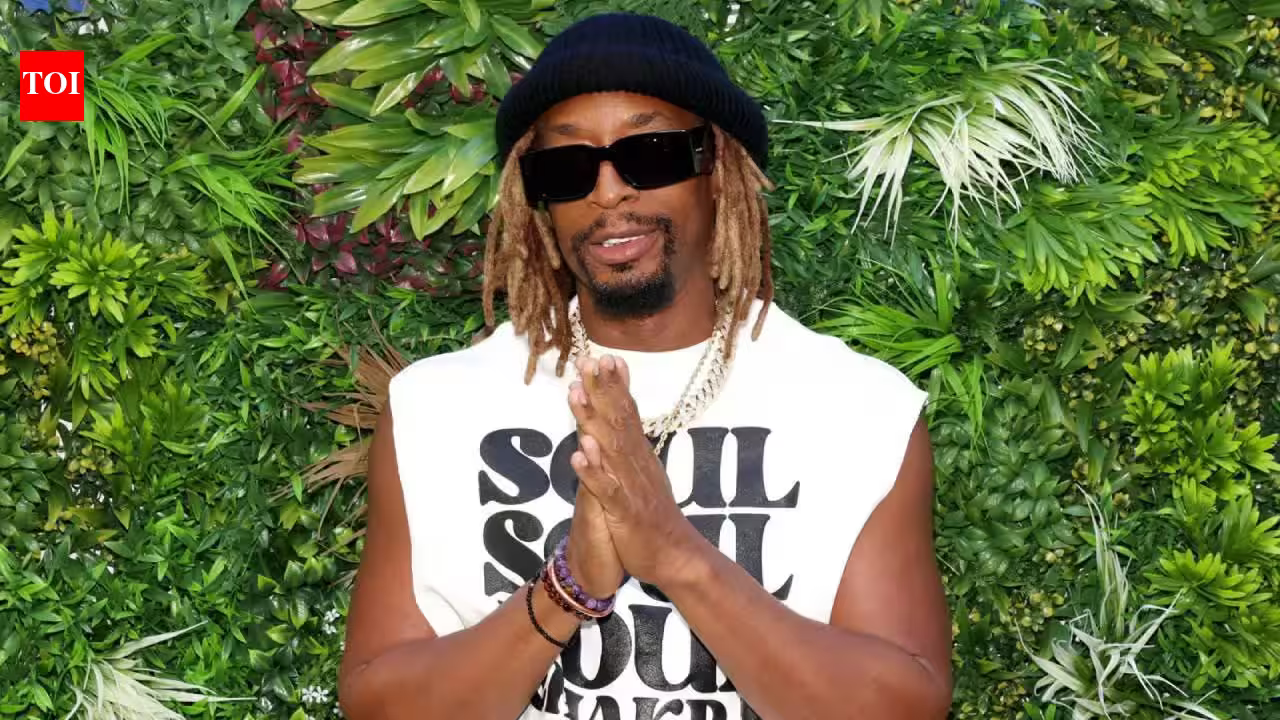
For decades, the image of Lil Jon—the crunk music pioneer, the boisterous king of the club anthem, the man who practically invented the genre’s signature shout—has been one of relentless energy and unwavering certainty. But in his new memoir, I Only Shout So You Can Hear Me, the artist born Jonathan Smith peels back the layers of his persona to reveal a man grappling with a sudden, seismic shift in his own identity.
The story is one that sounds like it was lifted from a daytime drama, yet for the Grammy-winning producer, it is his haunting reality. After a cousin’s routine DNA test yielded results that didn’t align with their shared family tree, the foundation of Jon’s understanding of his own lineage cracked. In a stunning late-in-life revelation, the man he spent his entire childhood calling “Dad”—the man who supported his early dreams of drumming and navigating the world—was not his biological father.
The DNA Surprise That Shook a Legacy
It is the kind of discovery that destabilizes the past. For most of his life, Jonathan Smith was the son of Carrie and Willie, raised in a household alongside his brothers and adopted siblings. His identity was firmly rooted in that family structure until a cousin’s curiosity brought about a genetic collision.
“He shared his map with me,” Jon told PEOPLE in a recent interview, referring to the DNA results. “We weren’t matching for some reason.”
The confusion sparked a search for truth that hit a brick wall. In a cruel twist of timing, the very people who held the keys to his origin story—his mother, Carrie, and the man who raised him, Willie—had long since passed away. The realization left the rapper in a state of purgatory, forced to confront the fact that the biological truth of his existence is likely locked behind the graves of his parents.
Honoring the Man Who Raised Him
While the biological mystery remains a jagged edge in his life, Lil Jon is quick to emphasize that the title of “father” remains firmly held by Willie. The man who raised him might not have shared his DNA, but he was present for the molding of his character. Willie, who worked to support his son’s budding interest in the drums from the age of six, didn’t live to see his son become a global icon; he succumbed to bone marrow cancer during the early 2000s, just as the “Get Low” era was shifting the musical landscape.
There is a bittersweet ache in Jon’s voice when he speaks of him. He knows that the man who taught him the value of hard work would have been profoundly proud of the empire he built. Conversely, his mother, Carrie, lived long enough to witness his ascent, cheering on her firstborn as his fame exploded. For Jon, the shock of the DNA results hasn’t diminished the bond he feels toward the parents who raised him, but it has added a layer of complexity to his own narrative—an “unanswered question” that follows him like a shadow.
The Heavy Burden of Unfinished Conversations
The revelation has opened doors that Jon isn’t yet ready to walk through. Following the news, relatives from his biological father’s side reached out, including a brother and sister who have attempted to make contact. To many, this might be a celebratory moment of reconnection, but for Jon, it is an overwhelming intrusion of “heavy” realities.
He admits to being paralyzed by the weight of it all. He isn’t ready to open that chapter, and perhaps he never will be. The agony of not being able to ask the people who should have told him the truth—”Why didn’t they tell me?” or “Who was he?”—has, at times, bordered on maddening. It forces a radical acceptance: the understanding that some secrets are taken to the grave, and that identity is often a construction of the living, not just the biological code of the dead.
Navigating Grief and the Loss of Nathan Smith
This existential crisis is playing out against the backdrop of an even deeper, more visceral tragedy. In early 2026, Lil Jon lost his son, Nathan Smith—also known as DJ Young Slade—at the age of 27. The circumstances were heartbreaking: after being reported missing in February, Nathan’s body was recovered from a pond near his Georgia home. His death was ruled an accidental drowning.
The juxtaposition of discovering his own biological origins while grieving the loss of his own child has forced a sobering shift in the producer’s worldview. The duality of death and discovery has stripped away the superfluous, leaving behind a man who is hyper-aware of the fragility of time. He is no longer just the guy in the bedazzled sunglasses shouting “Yeah!” over a club beat; he is a man navigating the hollow silence of grief.
Fatherhood and the New Perspective on Time
Today, as he balances the upbringing of his daughter, Nahara, with his partner, Jamila Sozahdah, the lessons of the last few years have coalesced into a singular philosophy: do not wait. The trauma of the past—both the sudden loss of his son and the unraveling of his own family history—has transformed his approach to his remaining loved ones.
“The No. 1 lesson I tell people now is, don’t feel like you can put something off for tomorrow, because you don’t know how much time you have with people,” he says.
In I Only Shout So You Can Hear Me, Lil Jon invites his fans to look past the hype. He isn’t just a caricature of success; he is a man finding his way through the fog of a mid-life identity reset. Whether or not he ever chooses to seek out his biological siblings or unearth the remaining mysteries of his heritage, he seems to have arrived at a place of grounding. He understands that while blood might have led to the initial shock, the family he was raised in, and the family he is building now, is what truly defines him. In the end, it’s not about where he came from—it’s about who he stands for when the music stops.
Disclaimer: This content is auto-generated for informational purposes only.
Source: Read Original News