








Leaked A20 Pro Die Shot Reveals Major GPU Boost and Advanced Packaging for iPhone 18 Series
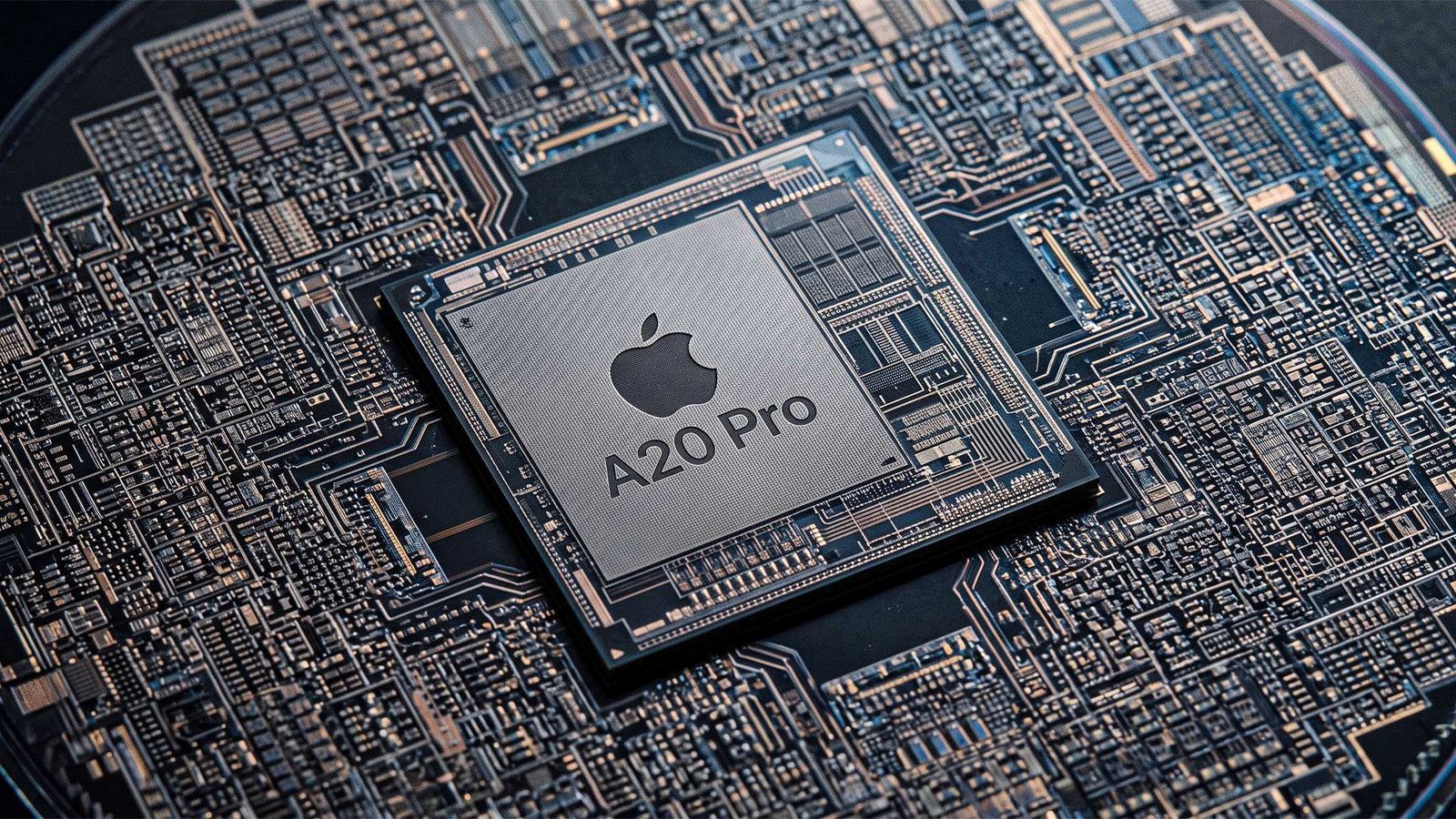
As anticipation builds for Apple’s upcoming “Surprise and Shine” event on September 9, new details have emerged regarding the company’s next-generation silicon. The iPhone 18 Pro and the highly anticipated foldable “iPhone Fold” are expected to debut the A20 Pro, Apple’s first-ever 2nm chipset. A freshly leaked die shot has now provided an exclusive look at the internal architecture of this powerful new processor.
A Leap in Graphics Performance
The most significant revelation from the leaked die shot, shared by a Weibo user and analyzed by tech observers, is the transition to a 7-core GPU configuration. This upgrade marks a notable departure from previous iterations, positioning the A20 Pro to deliver industry-leading graphics performance.
The shift is facilitated by Apple’s adoption of WMCM (Wafer-Level Multi-Chip Module) technology. By moving away from the aging InFO_PoP solution, Apple can now place memory dies alongside the primary SoC die rather than stacking them on top. This architectural change allows for a 96-bit memory bus, which significantly increases memory bandwidth while maintaining the cost-effective LPDDR5X standard, avoiding the need for the more expensive and potentially less power-efficient LPDDR6.
Architectural Refinements
Despite the massive changes to graphics and packaging, the A20 Pro retains a familiar CPU structure. The chipset features two performance cores and four efficiency cores. Apple’s decision to keep the core count stable suggests that the company is prioritizing peak power efficiency and IPC (Instructions Per Clock) gains rather than a raw “core count war.”
Other notable internal improvements include:
- Enhanced L2 Cache: The efficiency cores receive a boost to 8MB of L2 cache, up from 6MB in the A19 Pro.
- Neural Engine Expansion: Previous leaks have already confirmed that the A20 Pro will feature a significantly larger Neural Engine, underscoring Apple’s continued focus on on-device artificial intelligence.
- Stable CPU Performance: The performance cores maintain a 16MB L2 cache, ensuring that single-core and multi-core performance remains competitive and industry-leading.
Looking Ahead
While some components, such as the exact specifications of the ISP (Image Signal Processor) and the total energy efficiency profile, remain unconfirmed, the shift to 2nm process technology is expected to provide substantial improvements across the board.
As the September 9 event approaches, industry analysts are eager to see how these hardware improvements translate into real-world performance for the iPhone 18 Pro, iPhone 18 Pro Max, and the innovative iPhone Fold. With these architectural leaps, Apple appears to be firmly positioning itself to maintain its dominance in the mobile semiconductor space.
Stay tuned for more updates as Apple prepares to take the stage and officially unveil the future of the iPhone.