








The Zenith Update: Redefining Tactical Agility in Saros
The recent deployment of the Zenith update for the PlayStation 5 shooter Saros marks a significant evolution in how high-octane action titles address the intersection of difficulty and player accessibility. Developed by Housemarque, a studio long celebrated for its mastery of “bullet hell” mechanics and precise, demanding combat loops, this update serves as a technical bridge between the hardcore enthusiast and the curious newcomer. Rather than simply dialing back the complexity of the game’s ballistic arrays, the developers have implemented a suite of modular systems that fundamentally alter the player’s interaction with time and risk.
At the core of this update is the introduction of a sophisticated temporal manipulation feature. Recognizing that the screen density of projectiles in Saros can be overwhelming, the developers introduced a Slow Game Speed setting. This is not a standard difficulty reduction that lowers enemy health or damage; instead, it allows players to scale the flow of time itself. By offering both manual and automatic activation, the feature provides a tactical pause—a “thinking space”—within the chaotic flow of combat. This ensures that the aesthetic and mechanical identity of the game, characterized by its “bullet ballet,” remains intact while significantly lowering the barrier to entry for those struggling with the game’s high-speed requirements.
Customizing Difficulty through Modular Modifiers
The Zenith update introduces an extensive layer of system modifiers that allow players to calibrate their experience with granular precision. These modifiers are bifurcated into two primary categories: Protection and Trial. This binary approach provides a robust framework for balancing the game’s core loop according to individual skill levels and playstyles.
The Protection modifiers serve as an accessibility toolkit. These settings provide assistance that offsets the game’s inherent difficulty, such as the Corruption Melee Enhancement. This specific modifier rewards aggressive playstyles by transforming internal player metrics—the accumulation of “Corruption”—into offensive power, thereby turning a vulnerability into a strategic asset. Conversely, the Trial modifiers cater to veterans seeking to elevate the challenge. Mechanics like Hostile Regeneration force players to change their tactical approach; when this modifier is active, enemies recover health rapidly unless the player engages in high-risk melee finishers. This forces a shift from long-range projectile management to a more frantic, proximity-based combat strategy, increasing both the stakes and the pace of the encounter.
Eclipse Layers and the Evolution of New Game Plus
A major technical expansion in this update is the inclusion of the Eclipse Layers mode, which essentially reworks the concept of New Game Plus. Upon completing the primary campaign, players can access these layers, which function as escalating tiers of the game’s core systems. Each layer introduces altered rulesets, forcing players to adapt to shifting logic rather than simply fighting more durable enemies.
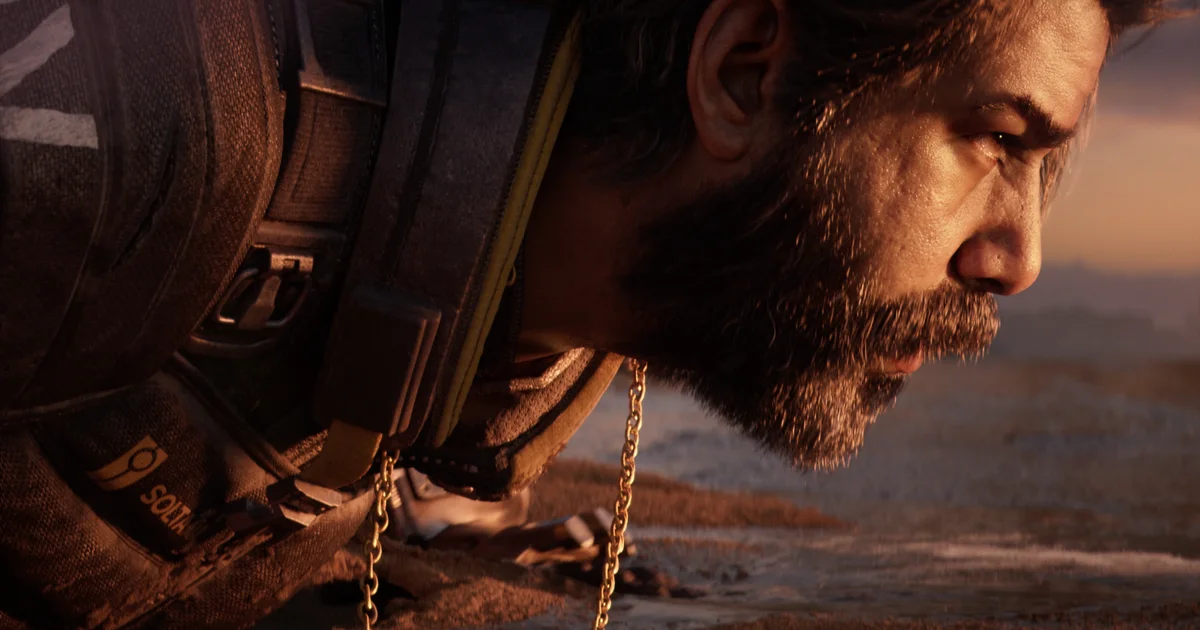
This progression is visually and narratively integrated into the protagonist, Arjun. As players navigate through different Eclipse Layers, Arjun’s armor undergoes a golden transformation, and he dons a sun-inspired crown. This aesthetic shift is not merely cosmetic; the crown acts as an environmental beacon, revealing 12 newly added story visions. By tethering narrative progression to the successful navigation of these heightened difficulty tiers, the developers have ensured that the endgame content feels meaningful and additive to the broader lore of the Saros universe.
Overlord Rush: Condensed Tactical Engagements
Addressing the need for variety in short-burst gaming sessions, the Overlord Rush mode introduces a boss-focused challenge that streamlines the Saros experience. Designed to be completed within roughly ten minutes, this mode isolates the most intense combat sequences—the boss encounters—and presents them as a sequential gauntlet.
The inclusion of the Totality set, which requires players to engage all eight Overlords in a single, continuous combat string, serves as the ultimate test of mechanical memory and endurance. From a design perspective, this mode provides a concentrated environment for players to practice their movement and evasion patterns without the downtime associated with standard stage navigation. It allows the game to function as both a long-form odyssey and a quick-action arcade experience, successfully diversifying the ways in which the title can be enjoyed during shorter windows of time.
The Future of Persistent Development
The release of the Zenith update signals a shift in Housemarque’s post-launch philosophy. While Saros saw a measured reception following its initial release, this update demonstrates a commitment to iterative improvement. The developers have signaled that this is merely the beginning of their ongoing support for the title, aiming to refine the user experience based on player behavior and performance data.
By focusing on modular systems—such as time dilation and variable modifiers—rather than broad-stroke balance changes, Housemarque is maintaining the integrity of the original design while expanding the audience capable of mastering it. This technical approach ensures that the game’s “bullet ballet” remains as punishing as intended for those who seek it, while providing the necessary tools for others to bridge the skill gap. As the studio continues to tweak and expand the platform, Saros is positioned to evolve into a more durable and inclusive experience, proving that a demanding combat system can coexist with sophisticated, player-centered accessibility features.
Disclaimer: This content is auto-generated for informational purposes only.
Source: Read Original News