








Nature’s Living Sail: The Mysterious Appearance of the ‘By-the-Wind Sailor’
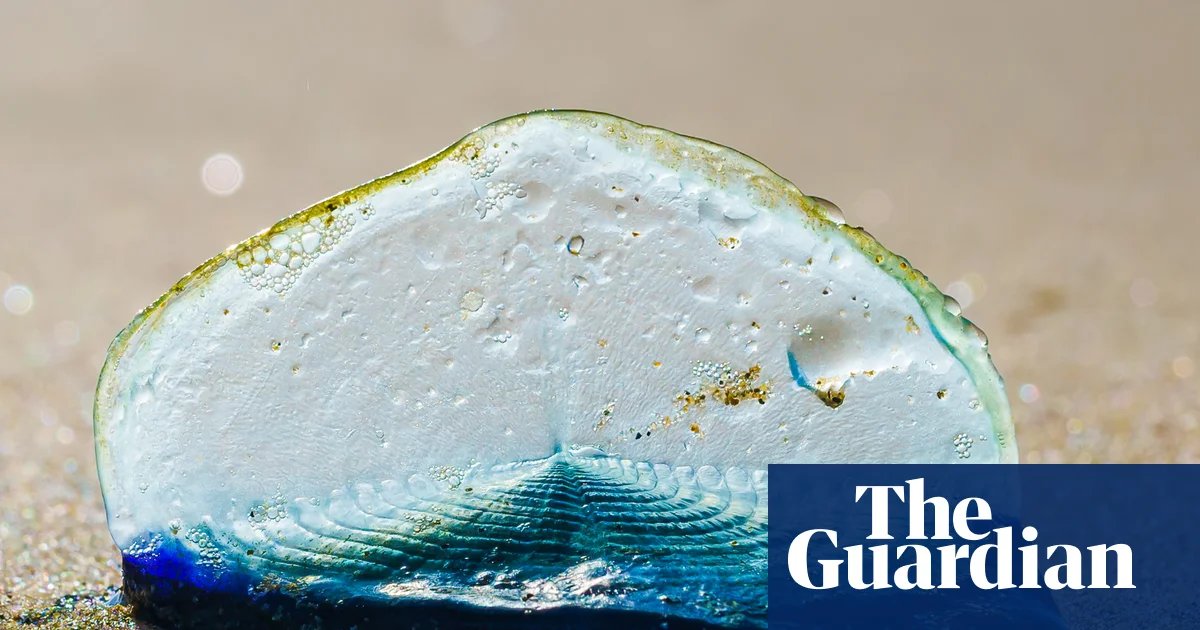
Among the sun-baked grit of an estuarine beach, a sudden, electric flash of color often stops passersby in their tracks. It is not the familiar, muted tone of a mussel shell or the frosted shimmer of sea glass, but a shade of blue so intense that it appears, at first glance, to be a stray piece of discarded plastic or a fragment of synthetic gear.
However, a closer inspection reveals that this is no man-made pollutant. It is a biological wonder: Velella velella, commonly known as the by-the-wind sailor.
A Colonial Masterpiece
Though it may look like a single, delicate organism, the Velella velella is a marvel of evolutionary cooperation. It is a marine hydrozoan—a floating colony of individual polyps working in unison to survive. Beneath its buoyant, disc-like base, the creature hangs a network of tentacles that capture passing plankton, while a small, translucent “sail” rises from the center to catch the breeze.
Unlike its more infamous relative, the Portuguese man o’ war, the by-the-wind sailor is largely harmless to humans. While it lacks a potent, dangerous sting, experts still advise caution, as physical contact can cause mild skin irritation.
Sailing the High Seas
The species earns its evocative common name from its unique method of locomotion. It does not swim; instead, it utilizes its rigid, diagonal sail to navigate the surface of the ocean, drifting wherever the currents and winds dictate. Beyond “by-the-wind sailor,” it is occasionally referred to as the purple sail, sea raft, or little sail.
The creature’s vivid blue hue is more than just a striking aesthetic; it is a vital survival tool. The color is derived from astaxanthin, a carotenoid pigment that acts as a natural sunscreen. This chemical shield protects the organism from harmful ultraviolet rays—a necessary defense for a life spent entirely on the surface of the water, particularly as global sea temperatures reach record highs.
An Unseasonal Arrival
While these drifters are occasionally spotted on UK shores, they are typically associated with the stormy winter months, when high winds force them toward the coast. However, 2026 has seen a surge in strandings during the summer, with reports coming in from the Welsh coast to St Bees in Cumbria.
While the presence of these creatures in such numbers might seem alarming, experts suggest the trend may be linked to specific oceanographic conditions. Recent observations indicate that quieter, calmer waters paired with favorable wind patterns are likely responsible for bringing these oceanic travelers closer to shore than usual.
For now, the sight of a lone, stranded sailor serves as a reminder of the strange and intricate life that populates our oceans—a fragile, vibrant traveler grounded by the very winds it relies on to survive.