








Transforming Vehicular Emission Standards: The Strategic Role of IIT-Delhi’s Innovation
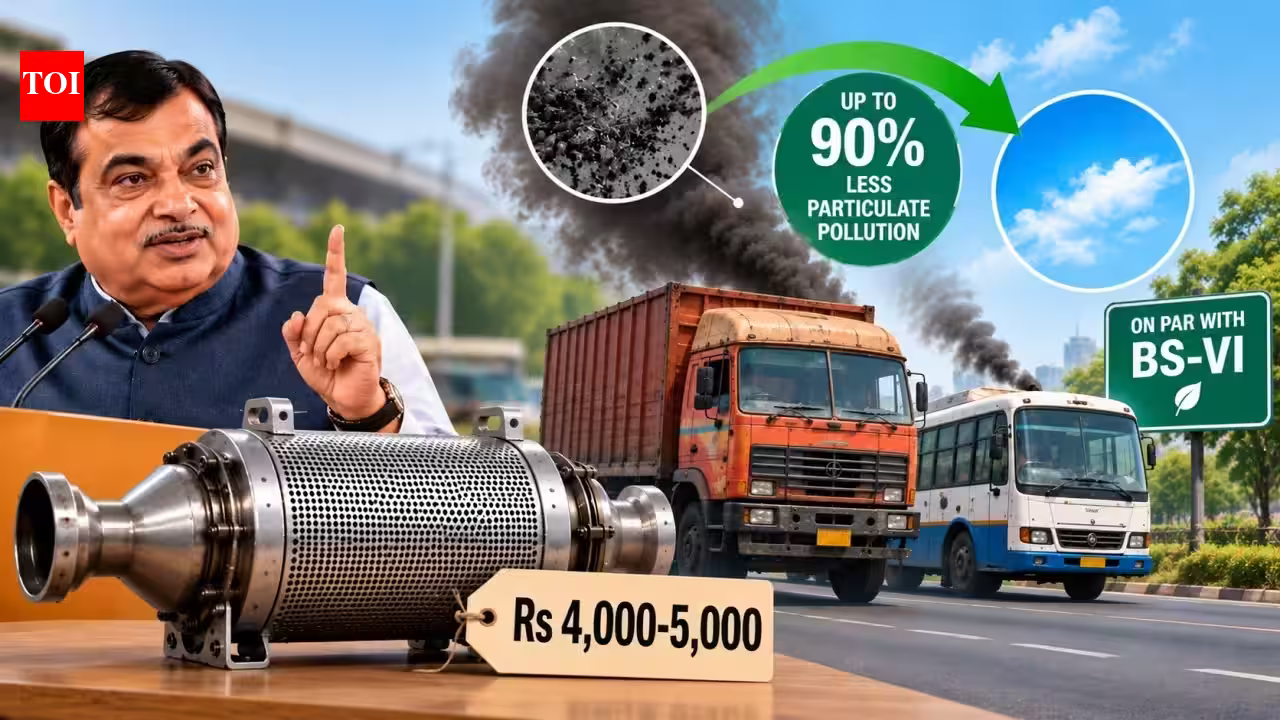
The Indian government has unveiled a transformative strategy to mitigate vehicular pollution by integrating cost-effective, indigenous technology into the country’s aging heavy-vehicle fleet. Road Transport Minister Nitin Gadkari recently announced that the government will facilitate the adoption of Retrofit Emission-Control Devices (RECDs) developed by IIT-Delhi. This initiative is designed to complement existing vehicle scrapping policies, offering a pragmatic solution for BS-III, BS-IV, and older diesel trucks and buses that currently contribute significantly to urban air quality degradation.
Technological Impact and Economic Viability
The innovation represents a significant leap in environmental engineering. These retrofit devices have demonstrated the capacity to reduce particulate matter (PM) emissions by up to 90% and nitrogen oxide (NOx) levels by approximately 60%. By bringing older diesel engines to performance standards comparable to BS-VI vehicles, the government is effectively extending the operational lifecycle of thousands of vehicles without the environmental cost of traditional exhaust systems.
From a Business perspective, the most compelling aspect of this technology is its cost-efficiency. With a projected price point of Rs 4,000 to Rs 5,000 per unit, the barrier to entry for fleet operators is remarkably low. This affordability factor is expected to drive widespread adoption, creating a new niche in the automotive aftermarket sector. As the Ministry of Road Transport prepares to notify the Automotive Industry Standard (AIS) 228, the standardization of these devices will provide a clear regulatory framework, ensuring quality control and performance consistency across the national Market.
Addressing Structural Challenges in Public Transport
Minister Gadkari’s discourse highlighted a critical systemic imbalance: India’s bus-to-population ratio remains at two buses per 1,000 citizens, significantly trailing the global benchmark of eight. Addressing this gap is essential for the evolution of the Indian transportation Stock and infrastructure. Gadkari emphasized that while high-capital projects like metro rail systems are vital, they are not always viable for Tier-II and Tier-III cities. The focus, therefore, must shift toward innovative, cost-effective public transport models that can be scaled rapidly in smaller urban centers.
This pivot toward modular solutions—whether through retrofitted buses or new public transit frameworks—reflects a broader administrative shift toward decentralizing transport solutions. By removing bureaucratic hurdles and encouraging local innovation, the government aims to create a more resilient public transportation ecosystem that can keep pace with India’s rapid urbanization.
Road Safety and the Bharat NCAP Evolution
Beyond environmental concerns, the Ministry is spearheading a comprehensive overhaul of road safety through the Bharat NCAP (New Car Assessment Program). By October 2027, the program will evolve to evaluate the “entire safety chain” of vehicles, moving beyond mere crash test ratings to include holistic vehicle performance assessments. This is a critical imperative for the domestic automotive Market, given that India currently reports approximately 1.8 lakh fatalities from five lakh accidents annually, with a disproportionate impact on the 18-36 age demographic.
To support this, the government is proposing a digitized ‘negative points’ system for traffic violations. By linking traffic offenses to driving licenses and vehicle registration, the administration intends to shift driver behavior through a dual-incentive model: penalties for repeat offenders and insurance-linked benefits for responsible drivers. This proactive regulatory approach signals a move toward data-driven enforcement, which could significantly reduce the long-term economic burden of road trauma on the nation’s productivity.
Ultimately, these combined efforts—technological retrofitting, structural public transit reform, and stringent safety protocols—position the transport ministry as a key driver of both environmental sustainability and public welfare. For investors and industry stakeholders, these shifts indicate a maturation of the Indian automotive landscape, where compliance, safety, and green technology will increasingly dictate growth trajectories.
Source: Read Original News