







Redefining Hardware Longevity: The Engineering Philosophy Behind the Fairphone 6+
The modern consumer electronics industry has long been defined by a cycle of planned obsolescence, where devices are sealed shut, discouraging repairs and mandating replacements every two to three years. However, the emergence of modular device architecture—most notably embodied by the Fairphone 6+—signals a fundamental shift in how we perceive Technology. By prioritizing “repairability by design,” Fairphone is challenging the industry standard, proving that a device’s lifespan need not be tethered to the chemical degradation of its lithium-ion battery. This evolution in hardware strategy suggests that the next frontier of innovation isn’t just about faster chips or sharper screens, but about the mechanical integrity of the chassis over a half-decade of use.
Modular Engineering and Structural Integrity
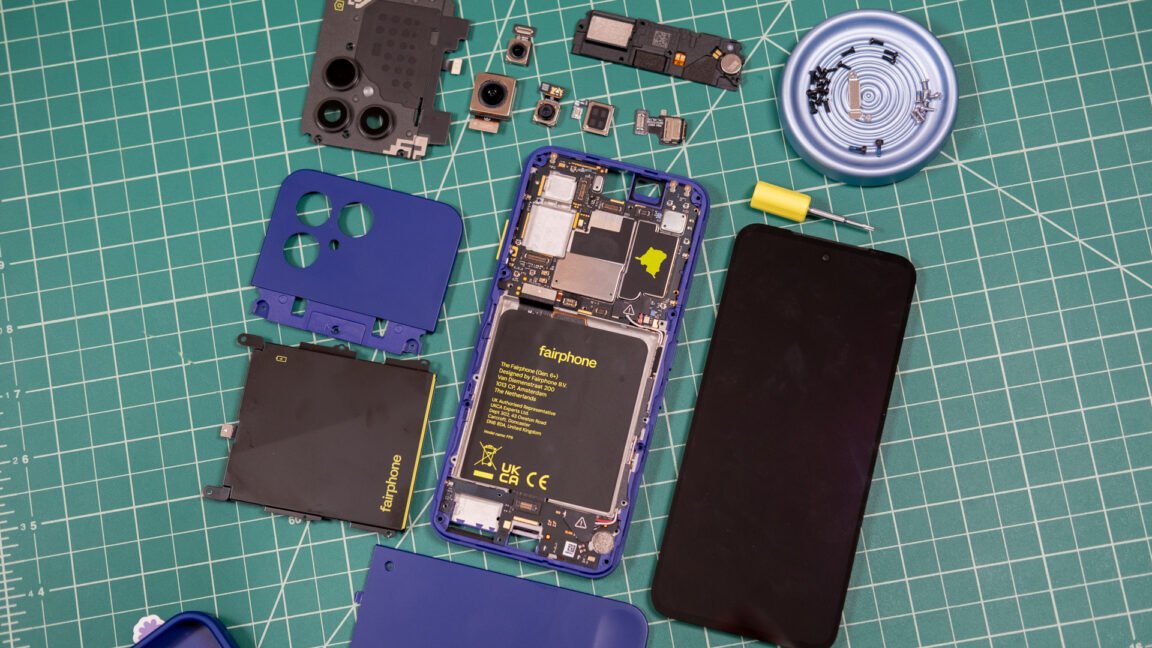
A common criticism of modular devices is the perceived tradeoff between repairability and structural rigidity. Critics often argue that if a phone can be easily taken apart, it is inherently flimsy. The Fairphone 6+ addresses this through a hybrid material strategy: while the external housing utilizes high-quality plastics to reduce weight and cost, the device relies on a reinforced internal metal frame to provide the necessary torsion resistance. This structural approach ensures the device remains robust even after multiple cycles of disassembly and reassembly.
The company employs rigorous testing protocols to validate this resilience. Engineers simulate scenarios that push the limits of user-serviceability, such as over-tightening screws, which can typically cause chassis warping or internal stress. By integrating “disassembly stress tests” directly into the product development lifecycle, Fairphone ensures that the device maintains its physical integrity, effectively bridging the gap between a DIY project and a premium consumer product.
Democratizing Repair: Accessibility and UX
For the average user, the barrier to entry for device repair is often anxiety over damaging delicate components. Fairphone mitigates this by adopting a modular, “board-to-board” connector architecture. In this design, components are not soldered directly onto the main motherboard; instead, they are connected via flexible, snap-on cables that resemble the internals of a high-end desktop computer. This simplified interface allows users to swap out faulty cameras, screens, or batteries using basic tools—specifically, a single T5 Torx screwdriver.
This approach shifts the role of the user from a passive consumer to an active maintainer. When a battery reaches its capacity limit—typically after 800 to 1,000 charge cycles—the user can replace it in minutes, bypassing the exorbitant service fees and data risks associated with sending a device to a manufacturer’s repair center. This movement is a vital component of the broader AI-driven era, where the complexity of Software and services demands hardware that remains reliable for years rather than months.
Industry Impact and the Circular Economy
The implications of this shift extend far beyond individual user convenience; they represent a significant step toward a circular economy in electronics. By making devices that are easily serviceable, manufacturers can significantly reduce electronic waste (e-waste) and the environmental footprint associated with raw material extraction. When a phone remains functional for five or six years, the total cost of ownership decreases, and the carbon impact of device manufacturing is amortized over a much longer period.
As global regulations regarding “Right to Repair” gain momentum, industry giants are being forced to rethink their closed-ecosystem models. The Fairphone 6+ serves as a blueprint for this transition. It demonstrates that providing users with access to their own hardware does not diminish the prestige of the device, but rather enhances its value. As consumers become more environmentally conscious, hardware that is built to last will likely become a primary competitive advantage, forcing legacy tech companies to adopt more transparent, modular designs to remain relevant in a market that is increasingly demanding accountability.
The Future of Sustainable Hardware
Looking ahead, the success of the Fairphone 6+ model will likely influence how mainstream manufacturers integrate components. While we may not see a wholesale shift to fully modular phones in the immediate future, we are seeing the “modularization” of key parts—such as screens and batteries—trickling down into mass-market devices. This architectural evolution is essential for long-term sustainability. Ultimately, the goal is to decouple the lifespan of the hardware from the lifespan of the battery, ensuring that high-performance components stay in the hands of the user and out of landfills. As we continue to integrate sophisticated Technology into our daily lives, the sustainability of our tools will become just as critical as their processing power.
Source: Read Original News