







The political landscape in Tamil Nadu has become increasingly charged following the emergence of a contentious narrative within the ruling Tamilaga Vettri Kazhagam (TVK) party. Speculation regarding Chief Minister C. Joseph Vijay’s potential candidacy for the Prime Ministerial post in the 2029 general elections has sparked a significant rift within the coalition government, prompting senior party figures to clarify the party’s stance amidst growing pressure from regional allies.
The Genesis of the Prime Ministerial Pitch
The controversy gained momentum recently when posters appeared in the port city of Thoothukudi, hailing Chief Minister Vijay as the “Tomorrow’s PM.” These posters, attributed to local TVK functionary Sudhakar—a recent entrant to the party from the AIADMK—triggered a chain reaction of political reactions. The move was further amplified by public comments from TVK leaders, including PWD Minister Aadhav Arjuna, who suggested that it was high time a leader from Tamil Nadu occupied the nation’s highest constitutional office.
For a party that achieved a meteoric rise, securing power in the state Assembly within just two years of its formation, the aspiration to transition from regional dominance to national relevance is seen by some analysts as a bold, if premature, strategic pivot. However, this ambition has clearly unsettled the delicate balance of power maintained within the current state coalition.
Defining the Party Stance
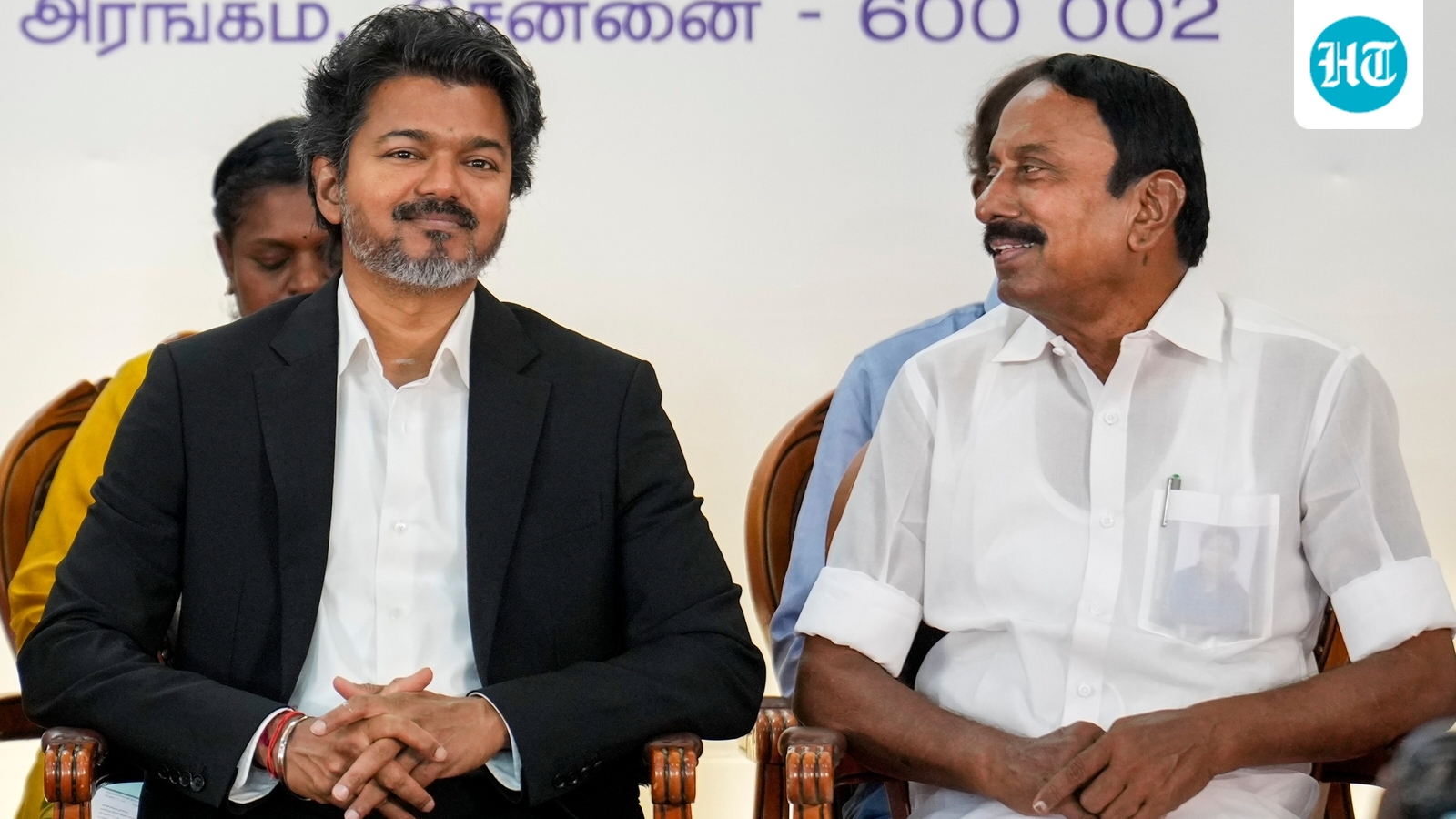
Addressing the escalating tensions on Friday, Tamil Nadu Minister KA Sengottaiyan attempted to steer the narrative back to the party’s immediate priorities. When questioned about the projection of Vijay for the 2029 race, Sengottaiyan emphasized that the Chief Minister is primarily focused on fulfilling the mandate given by the people of Tamil Nadu.
Sengottaiyan noted that the electorate demonstrated immense faith in Vijay during the recent Assembly elections, and the administration’s current mission remains the implementation of public-interest schemes and the protection of state interests. By framing the discourse around governance rather than future national aspirations, the minister sought to dampen the speculative fire that had begun to consume the coalition’s internal harmony.
The Strained Coalition Dynamics
The alliance between the TVK and the Congress has been the focal point of the current unrest. The Congress party, which holds five seats in the state cabinet, expressed profound dissatisfaction with the “Vijay for PM” rhetoric. The disapproval was not merely muted dissent; it escalated into a threat. Tamil Nadu Tourism Minister S. Rajesh Kumar explicitly stated that the two Congress ministers serving in the current cabinet would resign if the TVK failed to formally endorse Rahul Gandhi as the Prime Ministerial candidate for 2029.
The discord reflects the complex nature of coalition politics in India, where regional pride often intersects with national party agendas. Tamil Nadu Congress President B. Manickam Tagore offered a sharp critique of the situation, suggesting that some functionaries within the TVK were still operating with the temperament of “fan clubs” rather than seasoned political actors. This remark highlighted a perceived lack of professional coordination between the newly formed TVK and its more established national partner.
Conflicting Perspectives Within TVK
Despite attempts by senior ministers like Sengottaiyan to maintain a neutral or governance-focused stance, other voices within the TVK have continued to fuel the fire. TVK MLA Kanimozhi Santhosh recently doubled down on the sentiment, predicting a “shocking change” in Indian politics by 2029. Her assertion that Rahul Gandhi, who helped elevate Vijay to the Chief Ministerial chair, would reciprocate by guiding him to the Prime Minister’s office, represents a starkly different communication style compared to the measured tone adopted by the senior party leadership.
This duality—between the administrative caution of seasoned ministers and the exuberant, often provocative, statements of legislators and lower-level cadres—suggests an internal struggle within the TVK regarding how to manage its rapid ascent. While the leadership understands the fragility of their current legislative mandate, the grassroots enthusiasm for their leader often outpaces the cautious diplomatic strategies required to keep the coalition intact.
The Broader Impact on Tamil Nadu Politics
The wider political spectrum in Tamil Nadu has not remained a silent observer. Opposition parties, most notably the AIADMK, have utilized the situation to highlight what they characterize as the instability and immaturity of the current regime. AIADMK leader Edappadi K. Palaniswami has used the incident to mock the TVK, suggesting that if such a trend of projecting leaders continues, one might soon see claims of the Chief Minister aspiring for international offices.
For the public, the situation presents a confusing picture of a government that has only recently taken office but is already preoccupied with the politics of 2029. As the state deals with pressing developmental issues, the public debate has been hijacked by a debate about future national roles. The challenge for Chief Minister Vijay now lies in managing his party’s internal dynamics while preventing his coalition partners from withdrawing support. Whether the TVK can rein in its more vocal supporters and solidify its relationship with the Congress will be a critical test of Vijay’s leadership skills in the coming months.
In the immediate future, all eyes remain on the cabinet meetings and the potential for a formal reconciliation between the two parties. For the time being, the government maintains that its priority remains the people of Tamil Nadu, yet the shadow of the 2029 general election continues to loom large over the corridors of power in Chennai.
Disclaimer: This content is auto-generated for informational purposes only.
Source: Read Original News