








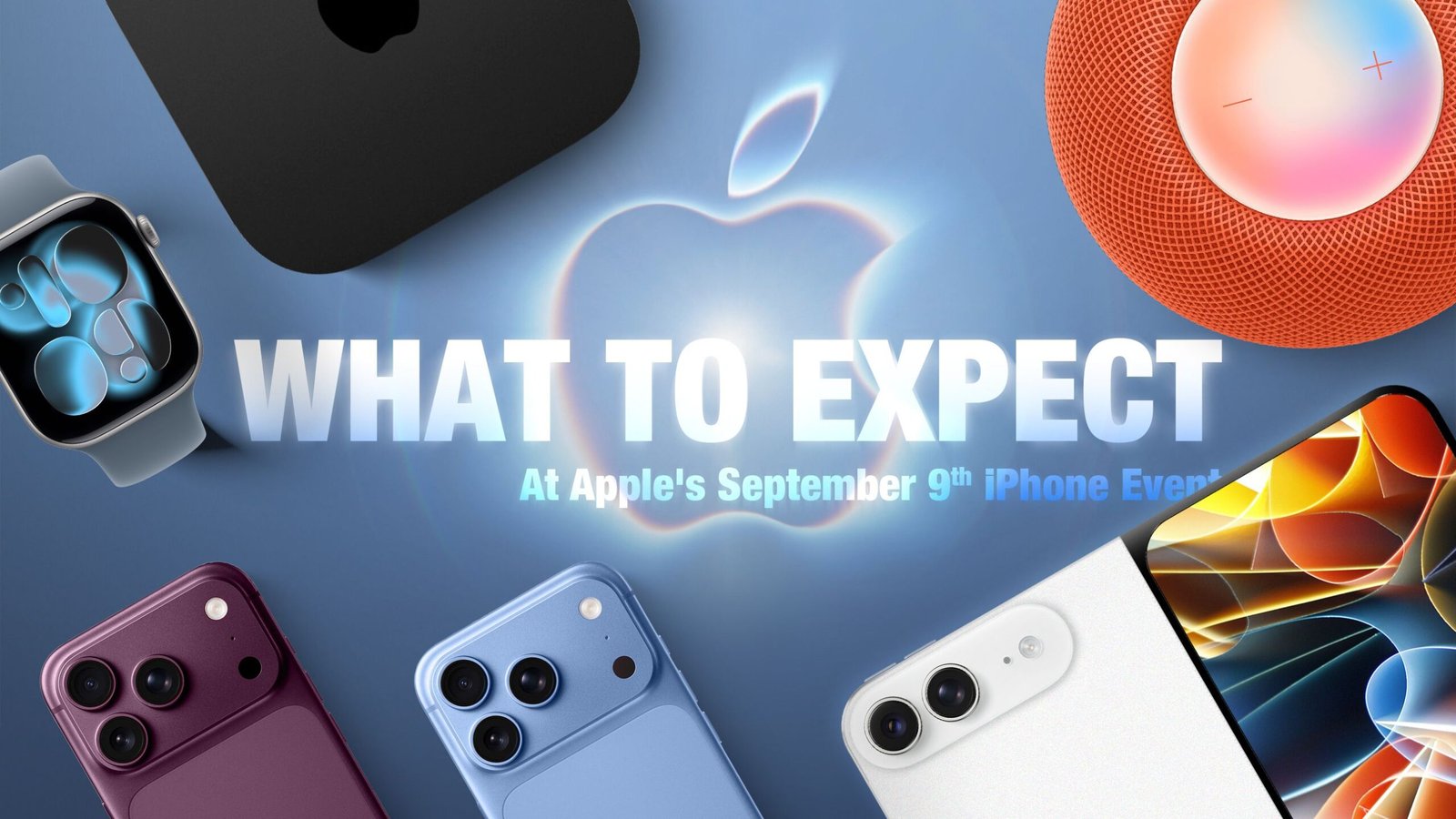
Apple’s “Surprise and Shine” event is scheduled for Wednesday, September 9, 2026, at 10:00 a.m. Pacific Time. This highly anticipated presentation marks a significant turning point in the company’s product history, serving as the debut for Apple’s first foldable device and the first major launch led by newly appointed CEO John Ternus.
The Advent of the Foldable iPhone Ultra
The most significant announcement of the event is the introduction of Apple’s first foldable smartphone, widely expected to be branded as the iPhone Ultra. Departing from the traditional slab design, this device utilizes a book-style hinge mechanism that allows it to unfold into a 7.8-inch display, effectively serving as a pocketable iPad mini. When closed, it functions through a 5.5-inch outer OLED screen.
To ensure long-term reliability in a foldable form factor, Apple has implemented a durable liquid metal hinge. While a completely crease-free experience remains elusive with current display technology, the device will utilize specialized optically clear adhesives designed to fill micro-cracks and minimize surface visibility of the fold. Measuring as thin as 4.5mm when fully opened, the device will be the thinnest in Apple’s history.
In a departure from standard iPhone configurations, the iPhone Ultra will utilize Touch ID integrated into the side button rather than the TrueDepth Face ID system. It will feature a dual-lens camera setup consisting of a Wide and Ultra Wide system. Powered by a 2nm A20 Pro chip and supported by 12GB of RAM, the device is built for heavy multitasking, including side-by-side app functionality and sidebar interfaces reminiscent of tablet software. Pricing is projected to start at $2,000, reaching up to $2,500 for higher storage configurations.
iPhone 18 Pro and Pro Max Upgrades
Complementing the foldable debut, Apple will unveil the iPhone 18 Pro and iPhone 18 Pro Max. These models maintain the familiar industrial design of their predecessors, though with subtle refinements. Notably, the iPhone 18 Pro Max will feature a significantly larger 5,567 mAh battery. Both models will utilize a more efficient LTPO+ OLED display technology, which, when paired with the 2nm A20 Pro chip, promises substantial gains in both battery longevity and processing throughput.
The most notable hardware advancement involves the rear camera system. Apple is introducing a variable aperture lens for the primary sensor, which allows for manual control over light intake. A smaller aperture provides increased exposure control in bright environments, while a larger aperture enables superior low-light performance and natural background blur. The devices may also adopt a three-layer stacked image sensor to further improve responsiveness. Despite these upgrades, Apple plans to simplify the capacitive Camera Control button by removing the sliding gesture functionality.
Wearables and Home Automation
The event will also serve as a platform for the next generation of Apple’s wearable ecosystem, specifically the Apple Watch Series 12 and the Apple Watch Ultra 4. While these models will not undergo major aesthetic redesigns, they will feature upgraded internal processors. These new chips will power expanded health and wellness tracking capabilities, including a new system that collects heart rate data continuously throughout the day to provide longitudinal health analysis.
Additionally, Apple is set to expand its smart home strategy. The company is developing a new dedicated home hub device equipped with a 7-inch display, an integrated camera, and advanced presence sensors. This device is designed to act as a central interface for smart home management, video conferencing, and interaction with the next generation of Siri, which leverages generative AI models to provide more complex responses and task execution.
Strategic Shift in Product Launch Cycles
A critical detail regarding the 2026 roadmap is the absence of the standard iPhone 18 model. Apple has opted to shift the release of its non-pro handsets to the spring of 2027, when it intends to debut the standard iPhone 18 alongside the iPhone 18e and the iPhone Air 2. This reorganization is intended to create more focused cycles for Apple’s diverse hardware lineup.
The transition to John Ternus as CEO, succeeding Tim Cook, adds a historical weight to this presentation. Ternus will be the primary host for the September 9 event, marking his first major public product demonstration since stepping into the chief executive role. This change in leadership, paired with a significant hardware departure like the foldable iPhone, indicates a shift in focus toward evolving the hardware form factor while moving into the next iteration of intelligent, AI-integrated software.
Preorders for the new hardware are expected to commence on Saturday, September 12, with a wide market availability beginning on Friday, September 18. This Saturday window ensures that the order process does not conflict with the anniversary date of September 11, a precedent Apple established during previous release cycles.
Disclaimer: This content is auto-generated for informational purposes only.
Source: Read Original News