







The Kitchen Chronicles: Kangana Ranaut’s Culinary Clash
In the high-stakes world of celebrity social media, few figures command the digital space quite like Kangana Ranaut. Whether she is navigating the complex corridors of Parliament or sharing serene, snow-dusted mornings from her Manali retreat, the actor-turned-politician consistently finds herself at the center of the conversation. This Janmashtami, however, the spotlight shifted from her political agenda to a decidedly more domestic—and combustible—arena: her kitchen.
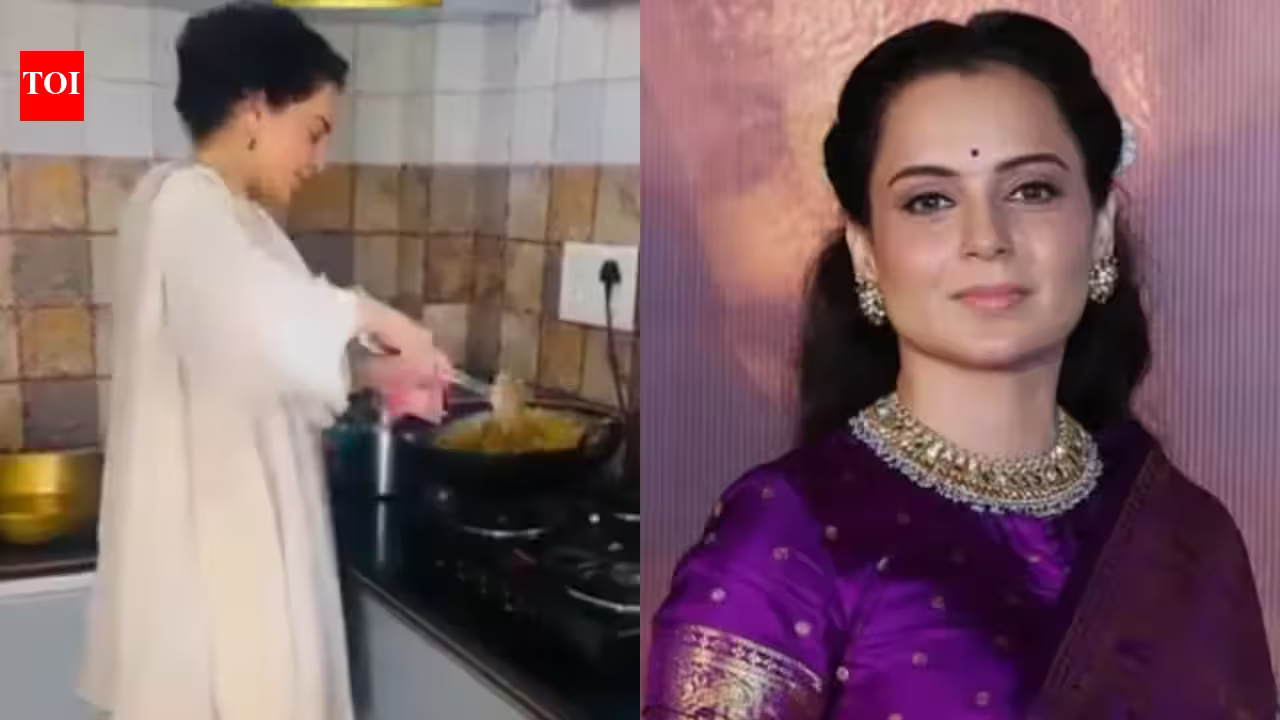
It began with a simple gesture. Hoping to share the sanctity of the festival with her followers, Ranaut posted a video documenting her preparation of a bhog (offering) for Lord Krishna. It was intended to be an intimate, wholesome glimpse into her traditions. Instead, it became an unexpected battlefield. Eagle-eyed internet critics, ever vigilant for a “gotcha” moment, quickly zoomed in on her stove. The accusation was swift: a commenter claimed the utensil was blackened and that, perhaps most damningly, the gas hadn’t even been switched on. The implication was clear—a suggestion of performative cooking.
“Tum Sirf Khaane Pe Dhyaan Do”: The Sharp Retort
If there is one thing we have learned about the Emergency star over the years, it is that she does not retreat when cornered. Ranaut wasted no time in dismantling the critique with the kind of pointed, no-nonsense delivery that has become her trademark.
“Yeh halwa nahi bhog hai,” she clarified, explaining that the dish required complex, multi-stage preparation where ingredients were handled separately before the final assembly. She didn’t stop at the technical defense, however. Taking aim at the critic’s audacity, she fired back, “Can’t expect cooking skills from people who are a burden on parents and the planet, tum sirf khaane pe dhyaan do (you focus on eating only) don’t worry about cooking.”
It was a classic Ranaut maneuver: pivot from a defensive stance to an offensive jab, silencing the noise by questioning the relevance of her detractor. While the internet remains divided on whether her tone was justified, the exchange perfectly highlights the precarious nature of sharing “authentic” life online. In the eyes of the public, celebrities are never truly allowed to just make bhog; they are making a statement, one that is subject to forensic scrutiny.
Beyond the Stove: A Season of Conflict and Conciliation
The kitchen scuffle is merely a microcosm of a larger, more turbulent summer for the Mandi MP. For the past few weeks, Ranaut has been navigating a series of high-profile skirmishes, most notably her public, ideological clash with yoga guru Swami Ramdev.
The trouble began when Ranaut made headlines for her polarizing take on the behavior of young Hindu women. Her use of the term ‘generation gutter’—suggesting a lack of accountability in their pursuit of freedom—rippled through the media, drawing sharp rebukes from various public figures, including Ramdev. The yoga tycoon didn’t mince words, calling the remarks reflective of a “spoilt mind” and suggesting that her own political party take note of such inflammatory rhetoric.
Ranaut, true to form, didn’t shy away, choosing instead to remind Ramdev of his own legal entanglements. It was a classic “glass houses” rebuttal, showcasing the combative nature that has defined her transition from the silver screen to the political dais.
The Raksha Bandhan Olive Branch
Yet, if the digital age is defined by rapid-fire conflict, it is also defined by the unexpected pivot. Just as the feud with Ramdev seemed destined for a long, drawn-out legal or verbal slog, the winds shifted during the festival of Raksha Bandhan.
In a move that surprised political observers and fans alike, Ramdev extended an olive branch. Expressing a desire to move past the vitriol, he pivoted from “debate” to “dialogue,” famously stating that it was time to replace disputes with conversation. He even teased the idea of a Rakhi gift for the actor, signaling a desire for reconciliation.
For many, this felt like an orchestrated moment of grace, but for Ranaut, it provided an opportunity to demonstrate a different kind of public posture. By embracing the gesture, she displayed a pragmatic maturity, writing, “Tyohar ka din hota hai sab bhool chook maaf karne ke liye hai,” (The day of a festival is meant for forgiving mistakes).
The Performance of Public Life
When we analyze the arc of Kangana Ranaut’s recent headlines, a clear pattern emerges. Whether she is sparring with a faceless troll over a stove or reconciling with a powerful public figure over a holiday, the common thread is the performative nature of her public life.
Ranaut understands that in the current media ecosystem, silence is rarely an option. Every comment, every cooking video, and every retort is a component of a larger personal brand that prizes defiance, cultural pride, and uncompromising honesty. Her followers aren’t looking for a passive representative; they are looking for someone who fights back, whether the antagonist is a political rival or a random commenter on X.
As she moves forward, balancing the demands of her constituency with the relentless scrutiny of her personal life, the “cooking scandal” serves as a reminder: for a star of her magnitude, even a simple moment of domesticity is an act of public theater. Whether the gas was on or off matters less than the fact that the conversation stayed firmly in her kitchen, on her terms. And, if her recent record is any indication, she isn’t planning on leaving the kitchen—or the spotlight—anytime soon.
Disclaimer: This content is auto-generated.
Source: Read Original News