







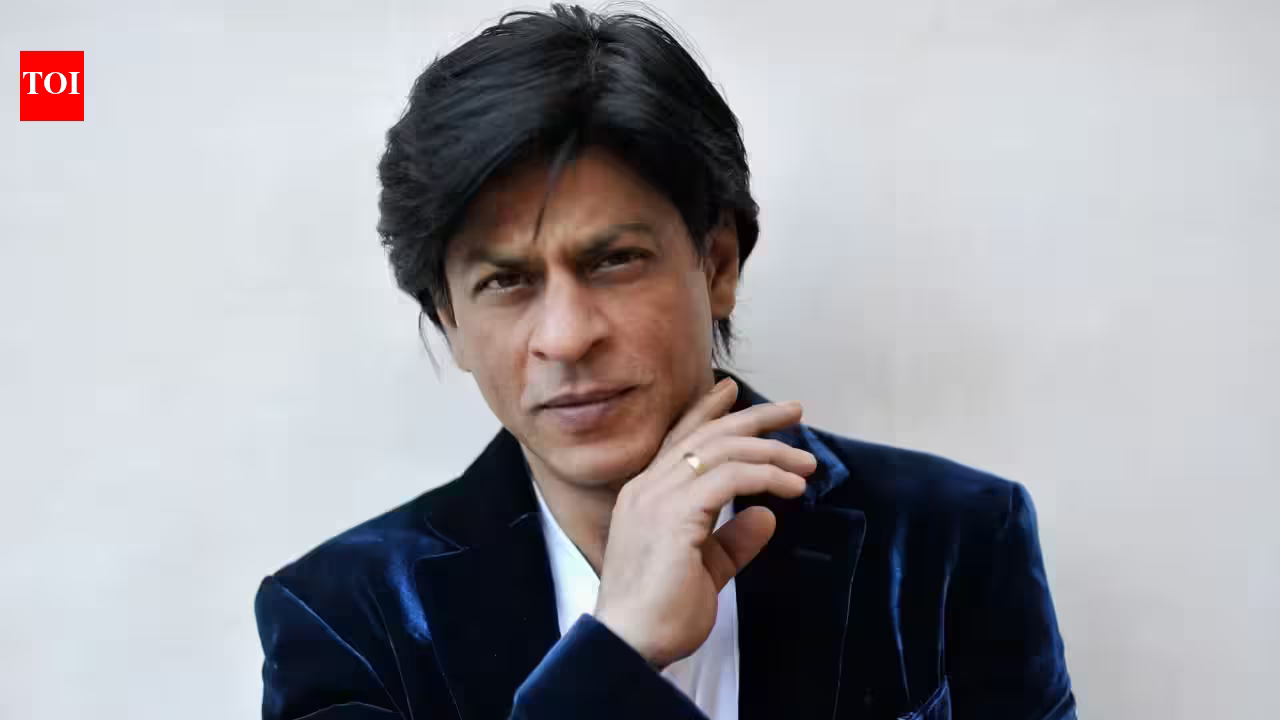
In the neon-soaked, high-stakes landscape of 1990s Mumbai, the glitter of Bollywood often hid a much darker reality. For a decade, the film industry existed in the shadow of the underworld, where the line between a movie mogul and a mob boss was thinner than a celluloid strip. While many in the industry quietly acquiesced to the demands of shadowy figures to avoid a bullet or a blast, one man stood as a defiant anomaly: Shah Rukh Khan.
Recent revelations from filmmaker Sanjay Gupta have pulled back the curtain on a forgotten chapter of Bollywood history, painting a portrait of a superstar who, at the peak of his rising fame, looked the barrel of a gun in the eye and refused to blink.
The “Pathaan” Stance: A Defiance That Made History
In a recent appearance on Hussain Zaidi’s podcast, filmmaker Sanjay Gupta recounted a legendary interaction that has since become part of Bollywood folklore. According to Gupta, when the pressures and threats from the underworld reached their zenith, Shah Rukh Khan didn’t look for an exit strategy or reach for a checkbook. Instead, he leaned into his heritage.
“The only guy in the film industry, Shah Rukh Khan, when he was threatened, he said, ‘I will never do the film or show, I am a Pathaan, just shoot me if you want’,” Gupta recalled.
It wasn’t just bravado; it was a psychological pivot. By refusing to play the game—by explicitly stating he would rather face the ultimate consequence than compromise his agency—Khan effectively broke the spell of intimidation. As Gupta noted, Khan’s audacity earned him a strange, begrudging respect from the very people trying to extort him. Even the underworld, it seems, recognized that there was a line they couldn’t cross with a man who wasn’t afraid of dying.
Shadows of the 90s: When Threats Were Part of the Script
To understand the gravity of Khan’s defiance, one must look at the era. The 1990s was a period where the Mumbai underworld had effectively become a shadow producer for the film industry. Illegal financing was rampant, and filmmakers were often coerced into casting specific actors or giving up overseas distribution rights to gangsters.
The dangers were not merely professional—they were lethal. The 1997 assassination of music mogul Gulshan Kumar, gunned down in broad daylight outside a temple, sent a shockwave of terror through the industry. It was a brutal reminder that in this environment, success made you a target.
In a candid interview with comedian Ruby Wax during that volatile period, Khan pulled no punches about the reality of his life. When asked if he had ever been told, “be in my film or I’ll blow your head off,” Khan’s response was chillingly direct: “Not as nicely as you’re saying it.” For three long years, the face of Indian romance lived under the constant, suffocating weight of police protection, yet he refused to let the fear dictate his filmography.
A Brother’s Shield: Protecting Karan Johar
The protection Khan offered wasn’t limited to his own career; it extended to his inner circle. Karan Johar, in his autobiography An Unsuitable Boy, recounted a terrifying moment of vulnerability during the high-pressure release of his directorial debut, Kuch Kuch Hota Hai.
Faced with demands that could have derailed his life and career, Johar was paralyzed by fear. Khan, acting less like a superstar and more like a protective sibling, refused to let his friend break. Johar recalls Khan dragging him out of a room, standing firm, and challenging the shadows: “I’m standing here in front of you. Let’s see who shoots you. I’m standing right here.”
Khan’s reassurance to Johar’s mother—”I’m a Pathaan. Nothing can happen to me and nothing will happen to your son”—remains a defining moment of his personal character. It underscores why, decades later, the bond between the Khan and Johar clans remains unbreakable. It wasn’t just about business; it was about brotherhood forged in the fires of a lawless era.
The Chori Chori Chupke Chupke Fallout
The underworld’s grip on Bollywood finally reached a breaking point in the early 2000s. The infamous case of Chori Chori Chupke Chupke (2001) became the watershed moment that exposed the nexus between the mob and the elite, leading to the arrest of financier Bharat Shah and producer Nazim Rizvi.
The investigation forced the industry to reckon with its own complicity. While the legal aftermath dismantled some of the systemic rot, it was the individual acts of defiance—like Khan’s—that helped change the cultural perception of the industry. By the time the dust settled, the “don” of Bollywood was not a gangster on a phone line, but the actor who refused to let his art be held hostage.
A Legacy of Resilience
Today, Shah Rukh Khan is a global icon, known for his charm and his box office dominance. But looking back at these anecdotes, one realizes that the “King of Bollywood” title was earned through more than just hit songs and romantic gestures.
His refusal to bow down to the underworld was a critical moment for the dignity of the Indian film fraternity. It established a precedent: that creative integrity and personal honor were not for sale, regardless of the price. In an industry defined by shifting allegiances, Khan’s “Pathaan” defiance remains a testament to a man who, even in his youth, possessed the iron resolve required to survive the darkest chapters of Mumbai’s cinematic history. He didn’t just survive the era; he emerged as the man who defined its boundaries, proving that sometimes the greatest performance is the one given when no cameras are rolling.
Disclaimer: This content is auto-generated.
Source: Read Original News