








The Emergence of DLSS 5 in Emulated Environments
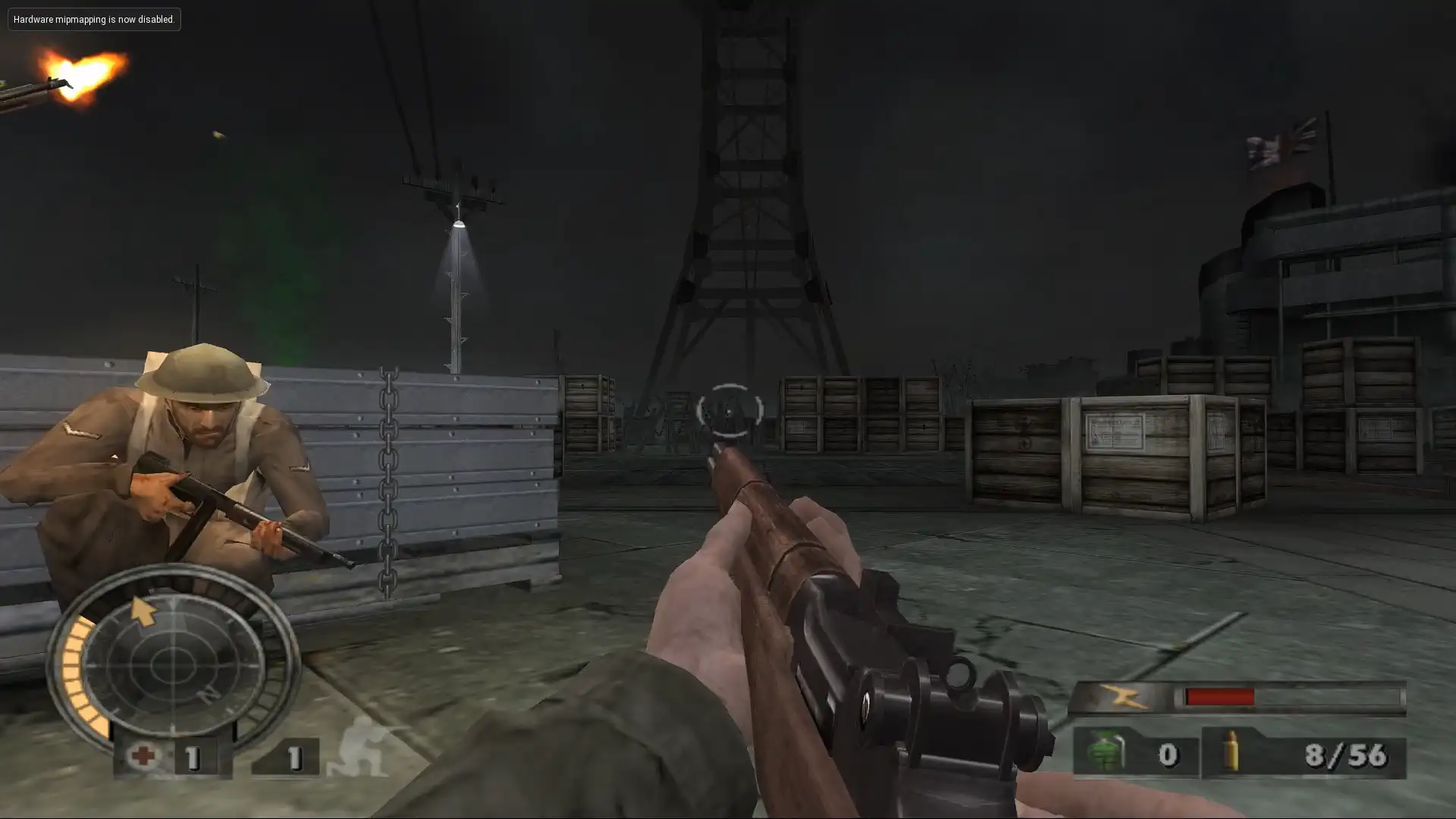
The landscape of PC gaming preservation and enhancement has reached a new milestone with the successful integration of NVIDIA’s latest iteration of Deep Learning Super Sampling, known as DLSS 5, into legacy titles. Through the use of the PCSX2 emulator, enthusiasts have successfully rendered the 2005 classic Medal of Honor: European Assault with advanced neural network upscaling enabled. This demonstration, conducted on an NVIDIA GeForce RTX 4070 Super, marks a shift in how the community approaches the restoration of historical software. By moving beyond simple resolution scaling, users are now applying complex temporal reconstruction algorithms to decades-old rendering pipelines.
The technical implementation relies on custom dynamic-link libraries and modified executable modules. These tools act as a bridge, tricking the emulator into piping its graphical output through the DLSS 5 framework, which is natively designed for modern rendering engines. This achievement highlights the modularity of current upscaling software, which, when decoupled from the specific development environments mandated by original publishers, can be force-injected into a wide array of legacy 3D applications.
Architectural Implications of Cross-Generation Upscaling
One of the most significant aspects of this development is the hardware compatibility achieved by the modding community. While DLSS 5 is marketed with a focus on the latest RTX 5000 series architectures, the community-led adaptation demonstrates that these neural upscaling techniques can be ported back to the RTX 2000, 3000, and 4000 series cards. By bypassing the software locks imposed by original hardware requirements, users can evaluate the efficacy of machine learning models on older graphics architectures.
The technical challenge lies in the disparity between the rendering paradigms of the PlayStation 2 era and the current GPU standard. PS2-era graphics were largely rasterized with fixed-function hardware and specialized, often proprietary, vertex and pixel processing. Modern upscaling algorithms, conversely, are built to interpret data from modern motion vectors and depth buffers—information that is either missing or stored in fundamentally different formats in a console emulator. The ability of DLSS 5 to produce coherent frames from such dated source material suggests a high degree of adaptability in the underlying AI models utilized for image reconstruction.
The Performance Cost of Neural Reconstruction
Despite the visual fidelity gains, the implementation of DLSS 5 in an emulated environment comes with a notable performance penalty. Initial reports from users experimenting with Medal of Honor: European Assault indicate that enabling the feature can lead to substantial fluctuations in frame rates. This is largely due to the overhead of the emulator itself, which must convert legacy instructions in real-time, combined with the heavy compute demands of the neural network being forced to process lower-resolution, lower-fidelity output buffers.
Furthermore, because the game engine was not designed with the temporal stability required by DLSS, visual artifacts may appear during rapid camera movement or transitions. The neural network often struggles to identify motion vectors in a scene where the engine’s internal resolution is mismatched with the upscaled target. While the resulting image is objectively sharper and cleaner than native pixel-doubling or standard linear filtering, the inconsistent frame pacing serves as a reminder that modern upscaling is best suited for engines that provide clear, reliable data to the reconstruction algorithm.
Expanding the Horizons of Game Preservation
The application of DLSS 5 to emulated content serves a dual purpose: enhancing visual clarity and benchmarking the capabilities of machine learning hardware. For many, the goal is not merely to “make it look new,” but to utilize high-end hardware to overcome the visual limitations of historical display technologies. By removing the jagged edges and shimmering common in standard 480i or 480p output, these enthusiasts are proving that modern temporal upscaling is a viable tool for digital archeology.
However, the industry perspective remains divided. Some purists argue that applying modern, AI-generated reconstruction fundamentally alters the artistic intent of the original developers. Conversely, proponents argue that the ability to play classic titles at modern resolutions without the blurring effects of traditional upscaling methods is the ultimate expression of player control. As these tools become more accessible, the definition of a “remaster” is becoming increasingly blurred, shifting from developer-led initiatives to user-controlled optimizations.
Future Outlook for Community-Driven Upscaling
As the tools for injecting DLSS 5 and other neural upscaling methods continue to evolve, it is likely that we will see more standardized procedures for adding them to emulators like PCSX2, Dolphin, and RPCS3. This would allow a broader audience to modify their classic libraries without requiring extensive technical expertise. The core interest lies in the potential for these neural networks to handle transparency, particle effects, and post-processing filters that traditionally caused visual corruption when upscaling older games.
The experiment with Medal of Honor: European Assault proves that the technical foundation for such universal enhancement exists. Whether this leads to a formal integration within official emulator builds or remains a niche hobbyist pursuit, the impact on game preservation is undeniable. By leveraging the immense power of modern GPU tensor cores, the modding community is effectively creating a new standard for how we interact with, preserve, and eventually play our historical digital archives. Moving forward, the focus will likely shift toward optimizing the latency of these injectors to ensure that the visual gains are not neutralized by the increased demand on system resources.
Disclaimer: This content is auto-generated for informational purposes only.
Source: Read Original News