







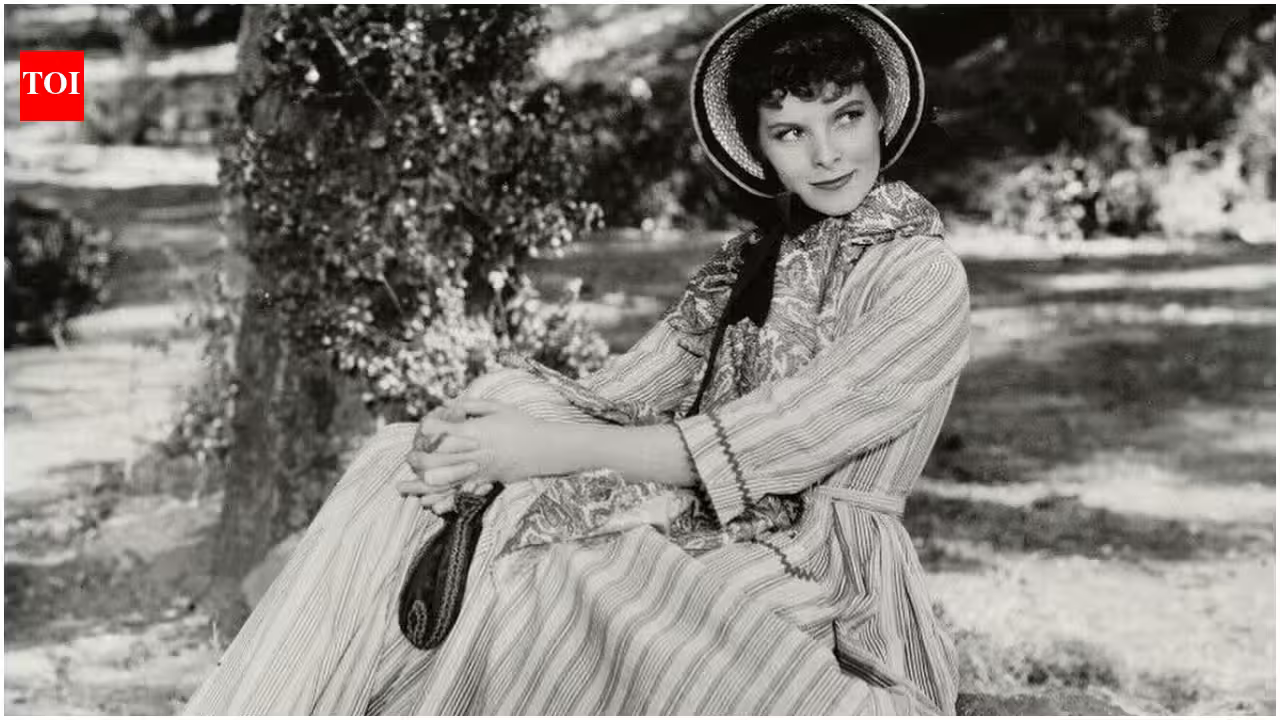
In the gilded age of Old Hollywood, where starlets were often treated as porcelain dolls sculpted by studio heads, one woman refused to be molded. Katharine Hepburn didn’t just occupy space on a screen; she commanded it. She walked onto soundstages in trousers when the world expected silk gowns, and she spoke with a crisp, clipped patrician accent that cut through the noise of gossip columns like a blade. Today, her legacy is being revisited not for her gowns or her scandals, but for her philosophy: the radical, unyielding idea that a person is the sole captain of their own soul.
Her famous reflection, “As one goes through life, one learns that if you don’t paddle your own canoe, you don’t move,” pulled from her 1991 memoir Me: Stories of My Life, serves as a timeless manifesto for the self-made. It is a humble metaphor for a woman who was anything but subtle.
The Philosophy of the Paddle
At its core, Hepburn’s wisdom is an antidote to the modern epidemic of waiting—waiting for the promotion, waiting for the validation, waiting for the “right time.” In a world that often encourages us to be passengers in our own lives, hoping for a favorable current or a steady hand at the tiller, Hepburn’s imagery is jarringly blunt. If you aren’t putting effort into the water, you are simply drifting.
This isn’t just about hustle culture or career climbing. It’s about the emotional maturity to realize that your life is not a spectator sport. When we outsource our happiness or our decision-making to partners, bosses, or society, we lose the ability to navigate the rapids. Hepburn understood that life is rarely calm water. She survived professional “box office poison” labels in the late 1930s—a time when most stars would have been discarded—by refusing to rely on studio publicists to fix her image. She went to the theater, reclaimed her reputation, and eventually paddled herself right back to the top.
Why the Message Resonates in the Digital Age
We live in a culture of curated perfection, where social media feeds often make life look like a passive experience—a slide show of things happening to us rather than things we are doing. Yet, Hepburn’s words feel more urgent now than when they were first penned.
The “canoe” philosophy forces us to confront the uncomfortable reality of agency. If you are unhappy with your career trajectory, are you paddling, or are you hoping for the current to change? If you feel stuck in a toxic dynamic, are you holding the oar, or are you waiting for someone else to steer the boat? Hepburn’s brilliance lay in her lack of sentimentality. She wasn’t offering a comforting platitude; she was offering a warning. You have a choice: exert effort and suffer the blisters, or accept the stagnant, still waters of inaction.
A Career Built on Independent Motion
To understand the weight behind her words, one must look at the path she carved. Born in 1907 in Hartford, Connecticut, Hepburn was raised by parents who championed suffrage and social reform. She grew up in a household where “paddling your own canoe” wasn’t just a metaphor—it was a survival skill.
When she broke into Hollywood, she didn’t conform to the “siren” archetype that was popular at the time. She was angular, fierce, and entirely uninterested in playing the damsel. She chose her roles with surgical precision. From the sharp wit of The Philadelphia Story to the tender vulnerability of her late-career masterpiece On Golden Pond, every project was a deliberate stroke of her paddle. She didn’t just wait for the right script to fall into her lap; she fought for the rights to the stories she wanted to tell. Her four Academy Awards for Best Actress—a record that remains a testament to her singular, unyielding drive—are not just trophies; they are the markers of someone who refused to let anyone else dictate her pace.
The Cost and Reward of Self-Direction
Of course, paddling your own canoe is exhausting work. Hepburn was often criticized for her aloofness and her perceived “difficulty” on set. When you are the one steering, you inevitably ruffle feathers. The people who prefer you to be a passenger are rarely happy when you seize the oar.
Yet, looking back at her six-decade career, it is clear that the cost was worth the price of admission. She was never a “star” in the sense of a flickering light that burns out quickly; she was a landmark. By taking full responsibility for her failures and her triumphs, she created a life that was distinctly, unapologetically hers.
Lessons for the Modern Voyager
As we navigate our own increasingly complex waters, the temptation to let go of the oars is stronger than ever. The noise of outside opinion, the pressure to conform, and the fear of failure all act as headwinds that threaten to stop us dead in the water.
Katharine Hepburn’s life teaches us that the only person who can be held accountable for our movement is the person staring back at us in the mirror. You don’t have to be a four-time Oscar winner to live by this creed. You only have to be willing to do the work. Whether it’s starting that business, ending a cycle of self-doubt, or simply speaking your truth in a room full of people who want you to be quiet, the principle remains the same.
The water is waiting. You can sit in the boat and lament the lack of wind, or you can pick up the paddle and start moving. Katharine Hepburn made it clear: the boat doesn’t move by magic, and it certainly doesn’t move by waiting. It moves by the sheer force of your will, one stroke at a time.
Disclaimer: This content is auto-generated for informational purposes only.
Source: Read Original News