








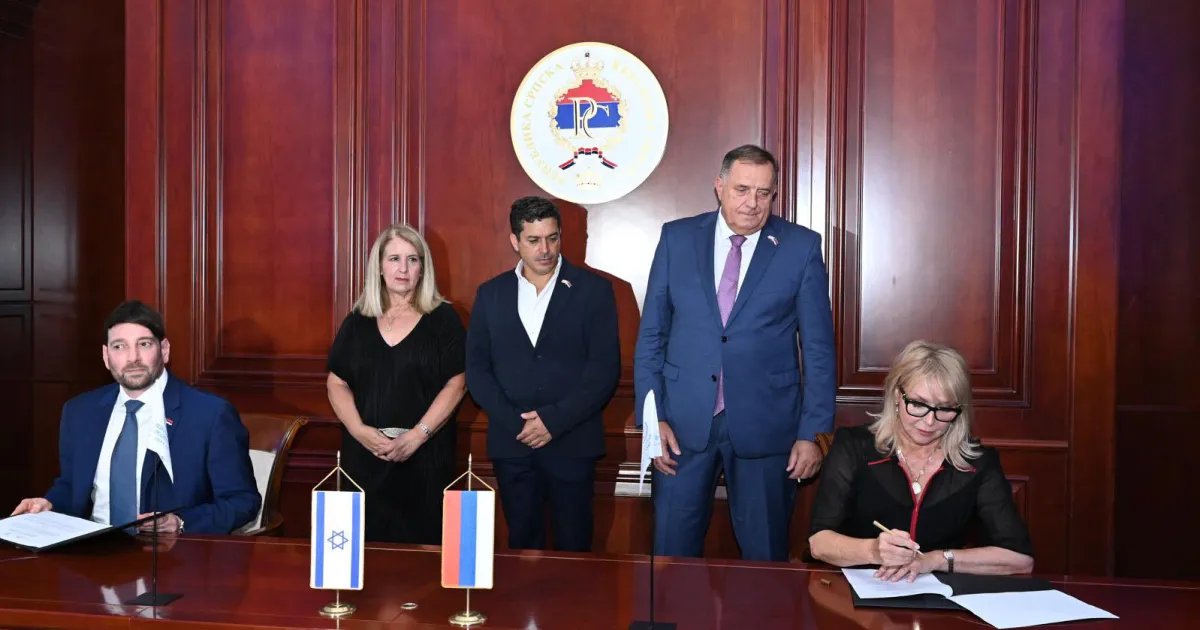
The Israeli Chamber of Commerce has officially inaugurated a new office in Banja Luka, the administrative center of Republika Srpska, marking a significant escalation in diplomatic and economic alignment between the entity and Israel. The move comes amid a complex geopolitical backdrop, as Israel navigates intense international scrutiny regarding the war in Gaza, while Bosnia and Herzegovina remains deeply divided over its stance toward the conflict.
### Deepening Political and Economic Ties
The opening ceremony was headlined by Milorad Dodik, the influential leader of Republika Srpska, who has consistently championed pro-Israeli sentiment since hostilities escalated in October 2023. During the event, Dodik emphasized what he characterized as shared historical struggles for identity and sovereignty, framing the partnership as a natural convergence of interests.
Israeli Ambassador to Bosnia and Herzegovina, Galit Peleg, noted that the office is designed to facilitate investment cooperation and strengthen business-to-business links. The initiative is being spearheaded by Amir Gross Kabiri, an Israeli businessman and head of the M.T. Abraham Group, who has established a significant footprint in the Bosnian economy through industrial investments. While officials mentioned potential support programs for Israeli-sourced technologies, concrete details regarding specific financial agreements remain limited.
### Strategic Implications for the Western Balkans
The office’s establishment has sparked immediate concern among regional analysts, who suggest the partnership may serve as a lifeline for Republika Srpska’s strained economy. Davor Gjenero, a prominent analyst based in Zagreb, warned that the entity is grappling with significant debt and potential insolvency, and may be looking to external partners to bypass broader state-level economic challenges.
“Any economic activity with Israel appears to be part of a broader strategy to mitigate the entity’s financial instability,” Gjenero stated. He further cautioned that this move, performed without the coordination of the central government in Sarajevo, could exacerbate internal divisions. By sidelining federal authority, the move creates friction regarding Bosnia’s path toward European Union integration, which requires a unified diplomatic approach.
### Geopolitical Risks and Technological Aspirations
The alliance also signals a shift in the regional power balance. With both Republika Srpska and the government of Serbia deepening ties with Israel—particularly in the military and security sectors—observers fear that the “centrifugal processes” at play could undermine the sovereignty of Bosnia and Herzegovina.
While officials in Banja Luka characterize the office as a hub for innovation and investment, the lack of transparency regarding specific technology transfers or capital influxes has left observers wary. Furthermore, the timing of the office opening—coinciding with widespread pro-Palestine protests in Sarajevo—highlights the stark ideological divide within the country.
As Bosnia and Herzegovina looks toward the future of its European candidacy, the unilateral actions of entities like Republika Srpska continue to complicate the state’s foreign policy coherence. Whether the new chamber of commerce will generate meaningful economic development or merely function as a mechanism to deepen political polarization remains a point of intense debate. For now, the office stands as a testament to the complex and often precarious intersection of international diplomacy and regional maneuvering in the Balkans.
Disclaimer: This content is auto-generated for informational purposes only.
Source: Read Original News