






The Strategic Pivot Toward Reusable Launch Infrastructure
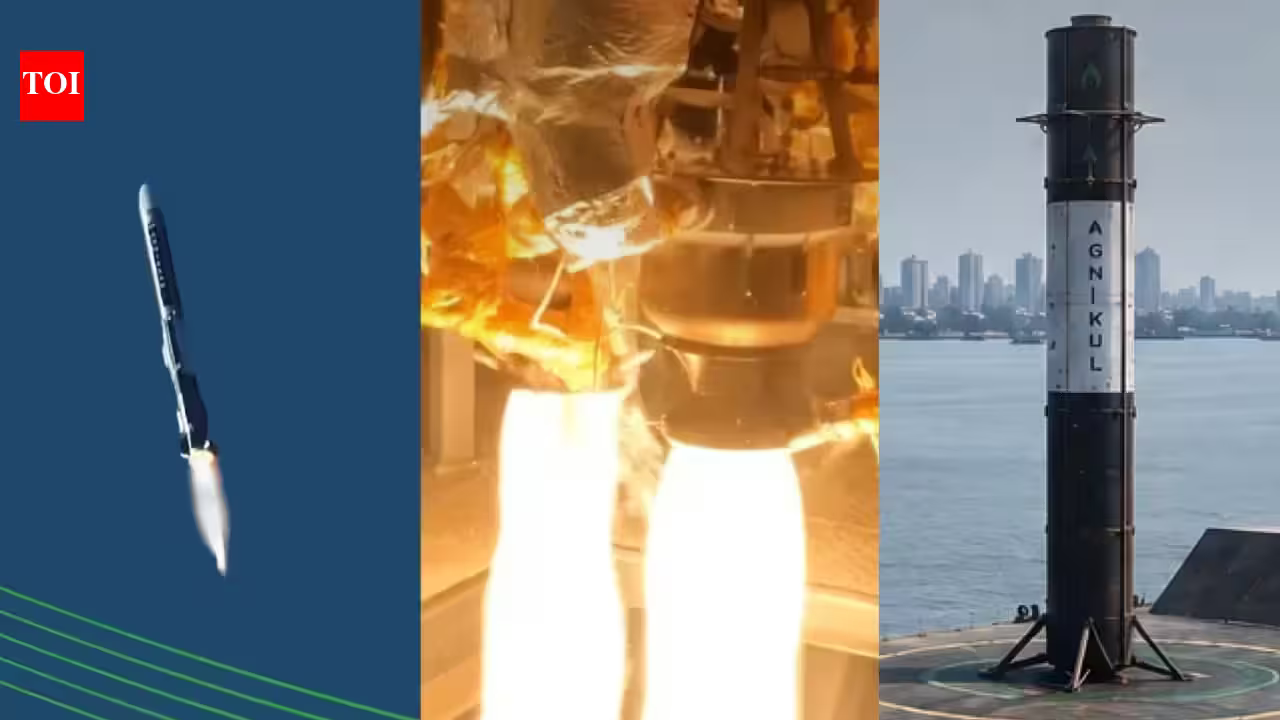
The global space economy is undergoing a fundamental transformation, shifting from expensive, single-use launch missions to cost-effective, reusable architectures. In the Indian context, this shift is no longer a theoretical pursuit of national space agencies but a commercial imperative driven by private startups. The recent inauguration of the Stage Testing & Inspection Facility (STIF) and the Pressurant Tank Realisation, Over-wrapping and Outfitting Facility (PROOF) by Chennai-based Agnikul Cosmos marks a decisive milestone in this trajectory. By moving beyond mere design and into the high-stakes domain of vertical integration, Indian space firms are signaling that the future of the local industry lies in self-reliance and operational efficiency.
The establishment of these facilities addresses the primary economic barrier to space access: the exorbitant cost of rocket hardware. For a startup, the path to profitability requires a rapid cadence of launches. Reusability is the engine of this cycle. By developing the infrastructure to test, recover, and requalify rocket stages in-house, Agnikul is effectively reducing the total cost of ownership for its launch vehicles. This analytical approach to manufacturing, which mirrors the successful models pioneered by international players like SpaceX, places India firmly on the map as a serious contender in the small-lift launch vehicle market.
Advancing Indigenous Capability Through Vertical Integration
Vertical integration is a hallmark of resilient aerospace manufacturing. Historically, space programs relied on a fragmented supply chain that often led to delays and compromised quality control. Agnikul’s decision to bring the manufacturing of pressurant tanks and the testing of complete stages under one roof is a strategic response to these industry bottlenecks. The PROOF facility, capable of producing over ten vessels per month, enables the company to exert granular control over mission-critical components. By manufacturing its own pressure vessels—which must withstand extreme conditions—Agnikul ensures that its supply chain remains insulated from external disruptions.
This level of control extends to the STIF facility, which serves as a testing ground for flight-like operating conditions. Supporting thrust levels up to 200 kN and achieving cryogenic temperatures as low as 73 K, the facility is designed to validate the endurance and structural integrity of rocket stages before they are cleared for flight. For the Indian startup ecosystem, this infrastructure represents a move toward mature industrialization. It shifts the narrative from prototyping and proof-of-concept testing toward sustained, high-volume manufacturing, which is necessary to meet the burgeoning global demand for small-satellite launches.
The Commercial Impact on the Global Small-Lift Market
The global demand for launching small satellites—for communication constellations, earth observation, and climate monitoring—has skyrocketed. However, these satellites require affordable and frequent transportation to orbit. Traditional heavy-lift vehicles are often too expensive or lack the flexibility required by small-satellite operators. Agnikul’s Agnibaan family of configurable launch vehicles is positioned to capture this market segment. By perfecting reusability, the company is not merely reducing costs; it is increasing the predictability of launch windows for its customers.
The ability to test a stage, fly it, and then recover and requalify it for another mission is the holy grail of commercial spaceflight. When a launch company can turn a stage around in weeks rather than months, it significantly improves its capital efficiency. Furthermore, having a fully in-house facility reduces the reliance on external national test ranges for routine check-ups. This autonomy is crucial for a private firm that aims to maintain a high mission cadence. As the Indian government continues to encourage private participation in the space sector, startups that invest in their own testing and manufacturing hubs are likely to emerge as the backbone of the domestic space economy.
The Role of Advanced Manufacturing in India’s Space Vision
India’s space program has long been admired for its frugal engineering and high success rates. Today, that legacy is being augmented by advanced manufacturing technologies, most notably 3D printing. Agnikul Cosmos is a notable adopter of additive manufacturing, particularly for its single-piece, 3D-printed semi-cryogenic engines. The integration of 3D printing with the new testing infrastructure highlights an important trend: the marriage of cutting-edge materials science with rigorous industrial validation.
The Indian government’s focus on the “Make in India” initiative has provided a favorable landscape for these technological advancements. By fostering a climate where space startups can utilize local talent and resources to build sophisticated components, the country is cultivating a skilled workforce capable of handling complex aerospace engineering challenges. The presence of personnel such as Group Captain Shubhanshu Shukla at the inauguration of these facilities underscores the synergy between the Indian Space Research Organisation (ISRO) and the private sector. It signifies that the national space vision is a collaborative effort, where startups provide the agility and innovation required for commercial dominance, while state institutions provide the foundation of expertise and regulatory guidance.
Future-Proofing the Launch Mission Lifecycle
Looking ahead, the success of companies like Agnikul will depend on their ability to transition from the current experimental phase to consistent operational delivery. The “Mission-02” objective, mentioned by CEO Srinath Ravichandran, represents the next threshold. It is not enough to design a reusable stage; it must perform consistently under repeated flight cycles. The data collected from the STIF facility during post-flight inspections will be invaluable. It will allow engineers to refine the design of future stages, ensuring that structural fatigue is minimized and that the recovery process remains economically viable.
The challenges of the commercial space industry are immense, including stringent safety regulations, the volatility of the satellite market, and intense global competition. However, by establishing dedicated infrastructure for pressure vessel manufacturing and stage requalification, Agnikul is building the necessary buffers against these challenges. The infrastructure serves as an asset that appreciates in value as the company gains more flight hours and performance data. As the Indian private space sector continues to scale, this model of investing in deep-tech, specialized manufacturing facilities will likely become the blueprint for others to follow. Ultimately, the development of these Chennai-based hubs proves that the Indian space industry is no longer just observing global trends; it is actively setting the standard for how small-scale, high-frequency launch services should be structured in the modern era.
Disclaimer: This content is auto-generated for informational purposes only.
Source: Read Original News