









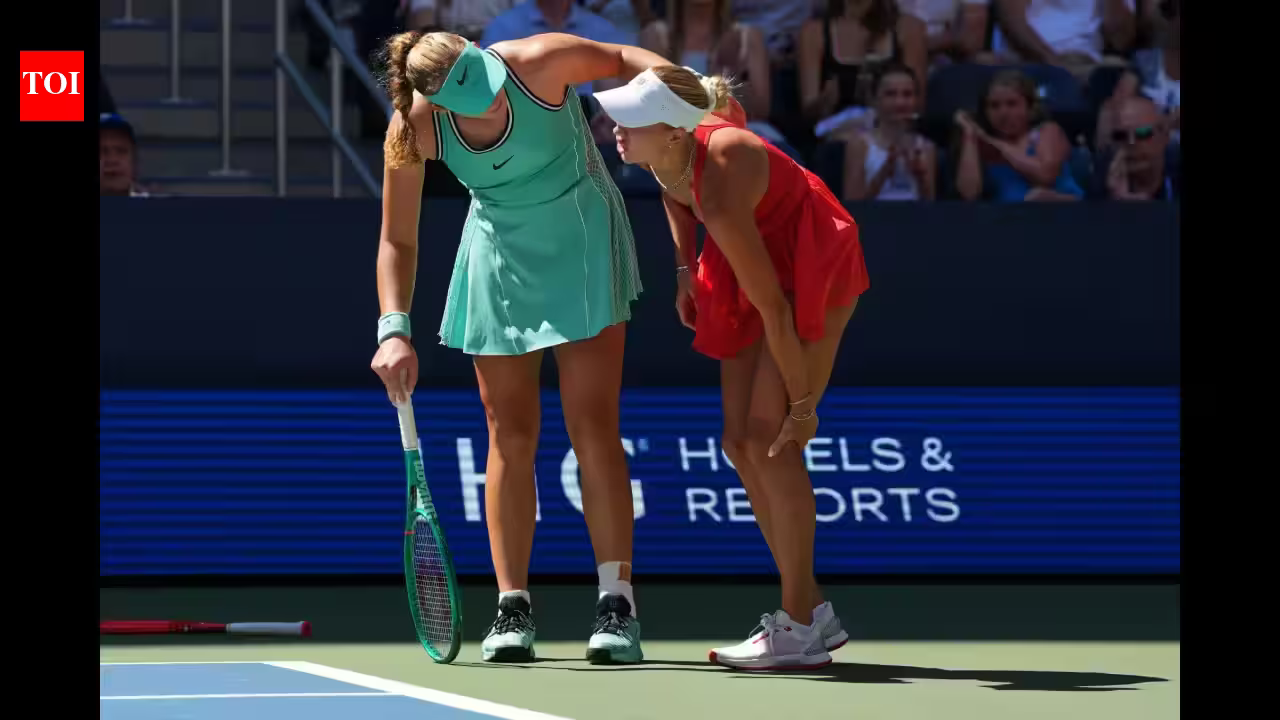
SPORTSMANSHIP transcends the scoreline in New York, and at this year’s US Open, a moment of profound empathy has stolen the spotlight from the high-stakes intensity of the Grand Slam stage.
In a fourth-round encounter that pushed both athletes to their physical and emotional limits, Mirra Andreeva, the No. 5 seed and reigning Roland Garros champion, demonstrated that the bonds forged on the professional tour often outweigh the hunger for victory. With the match deadlocked in a grueling battle, a sudden, frightening injury to Anastasia Potapova transformed a competitive clash into a display of genuine human connection that resonated deeply with the Arthur Ashe Stadium crowd.
## A Match Defined by Intensity and Empathy
The contest between Andreeva and Potapova was, by all accounts, a masterclass in modern tennis endurance. After two hours and 25 minutes of baseline warfare, the humidity and physical toll of the New York summer began to take their inevitable toll. As the third set entered its decisive final stages, the scoreboard showed little room for error. Then, tragedy struck.
Potapova, 25, reached for a difficult ball before clutching her knee and crumpling to the hard court. The silence that fell over the stadium was near-instantaneous. Before the chair umpire could even signal for medical assistance, Andreeva—who had been locked in a tactical battle for every point—abandoned her position on the baseline. She sprinted across the net, abandoning the psychological distance required to win a match, to reach her friend and opponent.
The scene was a stark contrast to the ruthless focus typically associated with a top-five seed. Andreeva, just 19 years old, kneeled beside Potapova, checking on her well-being with visible concern. It was a brief, poignant pause in the heat of a major tournament, reminding everyone in attendance that these athletes are more than just ranking points and prize money—they are peers navigating the grueling life of professional tennis together.
## From Mentorship to Mid-Court Friendship
To understand the depth of the moment, one must look back at the origins of their relationship. The two first crossed paths in Monastir, Tunisia, during a WTA 250 event. Andreeva, then an emerging talent, had been granted a wildcard and drew the more experienced Potapova in the opening round.
At that time, the hierarchy of the women’s tour was clear. Potapova had already established herself as a consistent threat, a player Andreeva had admired from afar as she climbed the junior ranks. Reflecting on that first encounter, Andreeva noted the impact Potapova had on her early development.
“Nastya was always like a prodigy,” Andreeva said following her victory. “She came on tour early, she also had a lot of wins. You look at players like that when you’re starting out and you see the blueprint for where you want to go.”
Though Potapova emerged victorious in that initial meeting in Tunisia, the defeat was secondary to the impression she left on the teenager. Andreeva recalls that despite the competitive nature of their first match, Potapova was remarkably gracious, offering “a lot of nice words” that boosted the young player’s confidence. That interaction sparked a friendship that has seen the two players practice together frequently, developing a rapport that shifted from professional admiration to genuine personal support.
## The Path to the Quarterfinals
When the match finally resumed following the medical timeout, the competitive spirit that defines both players returned, but the dynamic had shifted. Andreeva eventually closed out the match, sealing a 5-7, 6-4, 6-3 victory. While she secured her spot in the quarterfinals, the win was a bittersweet conclusion to a match that had pushed both women to their limits.
For Andreeva, the win marks another significant milestone in her meteoric rise. Having conquered the clay at Roland Garros earlier this year, she is now proving that her game is equally formidable on the hard courts of New York. However, the path forward does not get any easier.
Her next hurdle is arguably the biggest challenge in women’s tennis today: a quarterfinal showdown against world No. 4 Coco Gauff. The American star has been in imperious form, feeding off the energy of the home crowd, and will be a stern test for the 19-year-old Russian.
## A Legacy of Character
As the US Open progresses, the tennis world will undoubtedly focus on the tactical brilliance and athletic prowess required to win the title. But for many spectators in New York, the enduring memory of the 2024 tournament may not be a specific forehand winner or a championship point. Instead, it will be the image of a 19-year-old running across the court, not to celebrate a tactical advantage, but to offer a helping hand to a friend in distress.
Andreeva’s actions served as a timely reminder that sportsmanship remains the heartbeat of tennis. In an era where the pressure to win can often overshadow the human element, Mirra Andreeva showed that elite athletes can be fierce competitors while remaining deeply compassionate.
As she turns her attention to the showdown with Gauff, Andreeva carries with her not just the momentum of a hard-fought victory, but the respect of the entire tennis community. Whether she advances to the semifinals or bows out, she has already demonstrated the most important attribute of a champion: the ability to recognize that the person on the other side of the net matters more than the result on the board.
Disclaimer: This content is auto-generated for informational purposes only.
Source: Read Original News