









A Landmark Return to Hyrule
Nintendo has officially solidified its commitment to the next generation of gaming hardware with the announcement of the Legend of Zelda: Ocarina of Time remake. Revealed during the franchise’s 40th-anniversary stream, the title is slated for a worldwide release on November 5th. As a launch-window exclusive for the Switch 2, this project represents more than a simple graphical overhaul; it marks the first time the seminal 3D adventure will be rebuilt from the ground up to leverage the advanced processing capabilities of Nintendo’s upcoming console.
The decision to position such a storied title alongside high-profile industry releases like Grand Theft Auto VI underscores Nintendo’s confidence in the technical prowess of their new platform. While the original 1998 release defined the architecture of three-dimensional action-adventure gaming, this iteration aims to modernize the experience for a contemporary audience while preserving the core design philosophy that made the original a masterpiece. Producer Eiji Aonuma emphasized that the development team is treating the project as a faithful interpretation, utilizing modern rendering engines to bring the world of Hyrule to life with unprecedented fidelity.
Technical Advancements and Graphical Fidelity
The transition from the Nintendo 64 to the Switch 2 hardware allows for a significant leap in visual complexity. Demonstrations provided during the anniversary broadcast highlighted the shift toward high-dynamic-range lighting and high-resolution textures. The Great Deku Tree, a foundational element of the game’s opening sequences, now exhibits intricate bark patterns and volumetric lighting that reacts to the player’s movement, creating a sense of depth that was previously impossible.
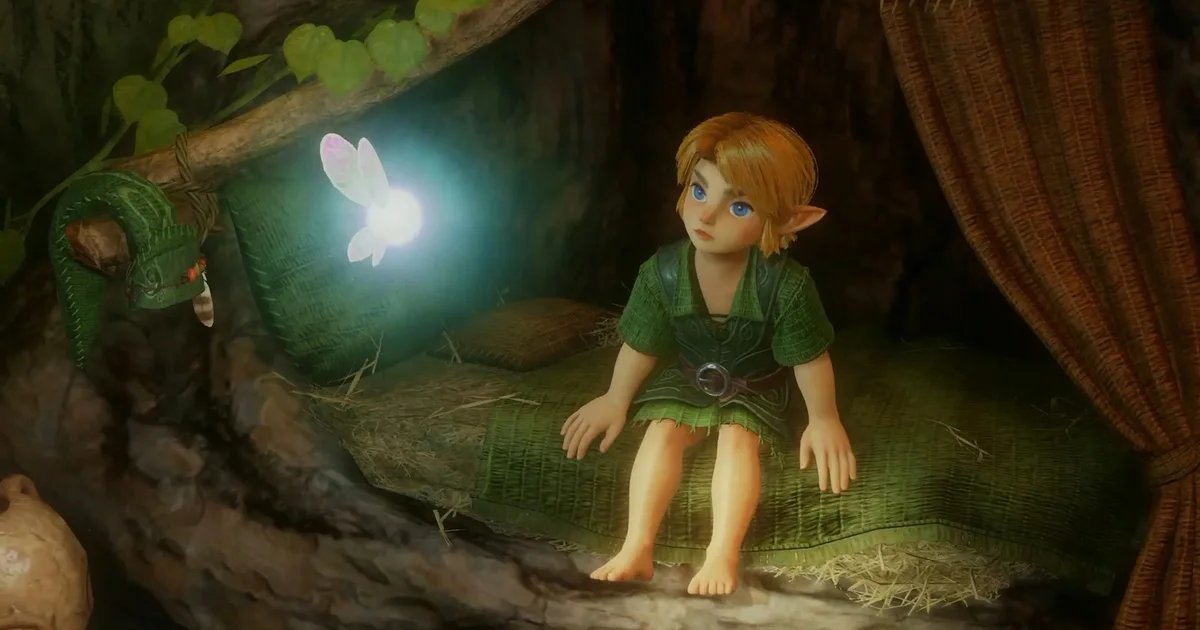
Beyond static environmental assets, the character models have undergone a complete transformation. Link’s design now incorporates a high-polygon count that allows for detailed clothing physics, such as the fabric textures and structural integrity of his signature hat. These graphical upgrades are not merely cosmetic; they are supported by a more robust engine capable of handling free camera movement. Unlike the original, which relied on fixed camera angles or simple tracking, the remake provides players with full analog control, enabling them to inspect the environment with precision and fluidity that matches current industry standards.
Innovative Gameplay Mechanics: Threads of Time
Among the most significant additions to the remake is the system referred to as “threads of time.” In the original design, players often relied on cryptic NPC dialogue or memory to navigate the vast landscapes of Hyrule. This new feature functions as an integrated, non-intrusive waypoint system that visually manifests on the screen, providing context for the player’s next destination. Because the game involves traveling between the past and the future, these threads provide a spatial and temporal map, clarifying the consequences of Link’s actions across different eras.
This inclusion is designed to lower the barrier for new players without compromising the challenge of the dungeons and puzzles. By providing a subtle navigational guide, the developer ensures that the focus remains on exploration and strategic problem-solving rather than rote memorization of the world map. This approach balances the need for modern accessibility with the intricate design requirements that the Legend of Zelda series is known for.
Refining Player Input and Control
The remake introduces long-requested refinements to the movement and interaction systems of the franchise. Most notably, the inclusion of a dedicated jump button represents a shift in how players traverse the environment. In the original version, jumping was restricted to automated context-sensitive actions at ledge boundaries. By implementing manual jumping, the developers are opening new possibilities for platforming challenges and combat maneuvers, allowing for a more vertical approach to level design.
Additionally, Nintendo has reimagined the Ocarina’s musical mechanics. In the classic version, players used the controller buttons to input specific musical sequences. The remake now features an input method that allows players to hum tunes directly into the console hardware. This sensory integration creates a more tactile connection between the player and the instrument, reinforcing the theme of music as an essential tool for manipulating the environment. This shift away from traditional button-input prompts represents a broader industry trend toward hardware-aware interaction, utilizing microphone sensitivity to foster deeper immersion within the game world.
The Strategic Significance for the Switch 2
The release of this title as a Switch 2 exclusive is a strategic maneuver designed to showcase the capabilities of the new hardware to a broad demographic. By selecting a legacy title that enjoys high name recognition, Nintendo is effectively demonstrating how their new console can handle complex lighting, advanced shaders, and fluid, high-frame-rate gameplay. This provides a bridge for players who are familiar with the history of the series but are accustomed to the fluid performance of modern PC and console titles.
The impact of this launch goes beyond software sales. It serves as a benchmark for how Nintendo intends to manage its intellectual property throughout the lifecycle of the Switch 2. If this remake succeeds in modernizing the user experience while maintaining the structural integrity of a classic design, it sets a precedent for how other historical titles in the Nintendo library might be handled in the future. As the industry approaches the end of the year, the performance of the Ocarina of Time remake will be a significant indicator of the Switch 2’s ability to hold its own in a competitive landscape, proving that technical modernization can breathe new life into foundational pillars of gaming history.
Disclaimer: This content is auto-generated for informational purposes only.
Source: Read Original News