








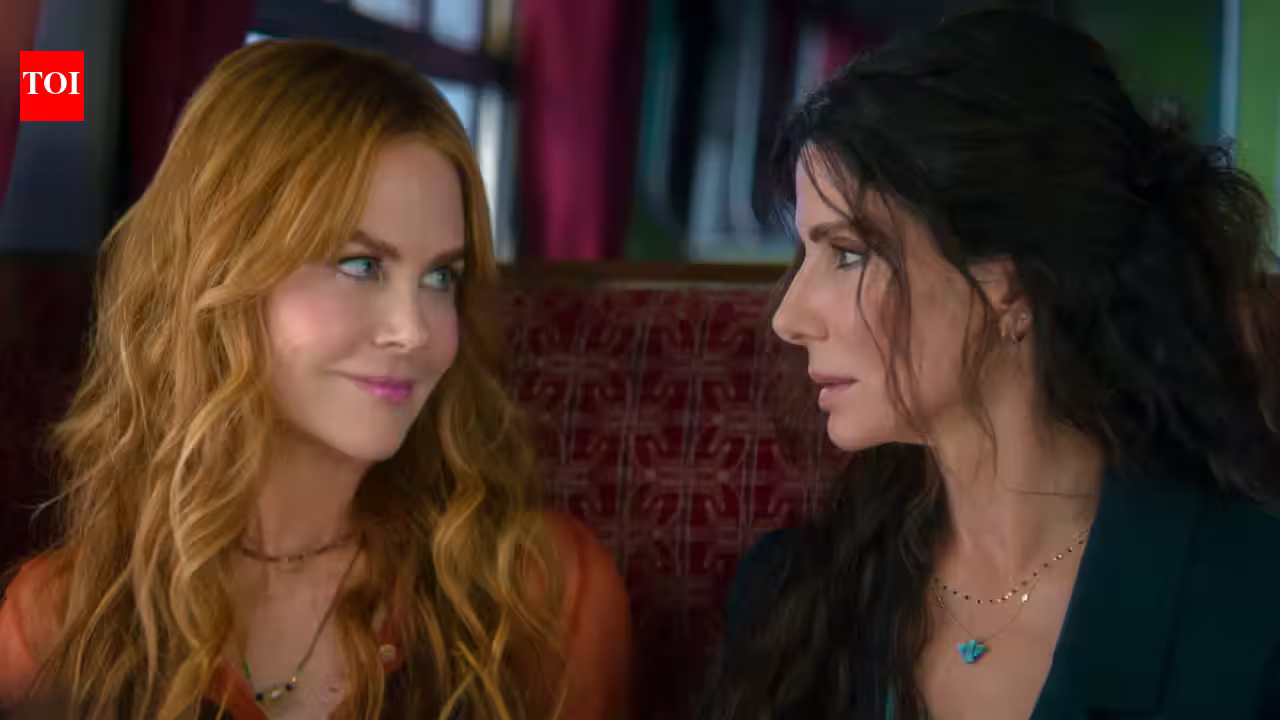
Twenty-eight years ago, the cinematic landscape wasn’t quite ready for the Owens sisters. When Practical Magic hit theaters in 1998, audiences were met with a swirling, moody, and unapologetically feminine blend of romance, gothic aesthetics, and witchcraft. It was messy, it was singular, and according to the critics of the time, it was far too much.
For stars Sandra Bullock and Nicole Kidman, the promotional cycle for the film—which saw them navigating a press corps that seemed baffled by their chemistry and the film’s tonal shifts—felt less like a celebration and more like a trial. Today, however, the cultural pendulum has swung back with force. As the duo prepares to reprise their roles as Sally and Gillian Owens in the highly anticipated Practical Magic 2, arriving in theaters September 10, they are finally getting the victory lap they were denied nearly three decades ago.
A Reckoning with the Past
The journey to the sequel has been a poignant exercise in reconciliation. Both Bullock and Kidman have been candid about the “shame” they carried regarding the original film’s lukewarm reception. For years, the consensus was that Practical Magic was a quirky misfire. It wasn’t until the film found its footing on cable television and, eventually, via the viral heartbeat of social media—where a new generation of fans found kinship in its celebration of sisterhood—that the narrative shifted.
“I had so much trauma from the press junket from the first one because it was brutal,” Bullock recalls. “We were not well-received because we were ‘too much,’ ‘too witchy,’ ‘too many women,’ ‘too many tones.’ I’m like, ‘Have you lived a day in a life as a woman?'”
Bullock now views that initial “stumble” as a period of necessary maturation. “Maybe it needed to marinate a little bit,” she says. “We were marinating. But here we are, and how lucky are we that we’re still here to be able to go reap the benefits and the rewards of our work?”
The Reclamation of the Witch
Beyond the personal vindication of the stars, Practical Magic has benefited from a profound societal shift. In the late 90s, the “witch” archetype was still frequently viewed through a lens of suspicion or campy caricature. In the modern era, the label has been reclaimed as a symbol of female autonomy, resilience, and power.
“A witch has always been a negative connotation,” Bullock notes. “The word is being taken back, and there’s ownership of it from the community saying, ‘I’m a witch and I’m proud.'” For Kidman, the realization that the film had become a touchstone for so many people came gradually. “People started just coming into my life who would go, ‘You want to know what my favorite film of yours is? Practical Magic.’ And suddenly I was like, ‘What? Wow, OK.'”
When it came time to greenlight the sequel, Bullock didn’t just rely on scripts; she sat down with her children and their friends to watch the original. It was an attempt to view the material through a fresh lens, to see why this particular story of curses, love, and loyalty still resonates in a world saturated with superhero spectacles.
Constructing the Magic on a Budget
One of the most daunting tasks for the production team—which includes Bullock and Kidman as producers—was the recreation of the Owens family home. In the 1998 film, the house was a partial set, a shell built for the needs of the camera. To bring the magic back to life for the sequel, the team faced the fiscal realities of modern filmmaking.
“It was an incredibly tough fiscal time. We were hedging the dollar,” Bullock admits. “We’re not a big superhero film, so you don’t get the luxury of a big price tag.” Building a full structure on a London back lot was a logistical challenge, but both actresses were adamant about maintaining a sense of groundedness.
Kidman emphasizes the discipline required to keep the production lean. “We also knew the responsibility of bringing it in on a certain price because then you go, ‘OK, we can breathe a bit,'” she says. “I think when a budget blows out, you’re like, ‘Oh my gosh, the stress.’ And we don’t need any more stress in our lives. It’s stressful enough.”
Passing the Baton
The sequel isn’t just a nostalgic reunion; it’s an evolution. The narrative expands to focus on the next generation of Owens women: Kylie and Antonia, played by Joey King and Maisie Williams. For the younger stars, stepping into the world that Bullock and Kidman built is a career-defining moment.
“I appreciate that it’s like a passing of the baton. I think it’s beautiful,” King says. “It just felt like we were stepping into their world and doing this with them, and it’s a real gift and honor to be considered the people who are taking the batons.”
Producer Denise Di Novi, who has been with the franchise since the beginning, sees the sequel as the start of a broader universe. With the source material—Alice Hoffman’s The Book of Magic—providing a dense roadmap, the potential for further stories is vast. “We would love to make a third one, and I think there’s so much more to do with Kylie and Antonia,” Di Novi notes. “At the end of the movie… you kind of feel like the Sally and Gillian characters are the elder aunts, and Kylie and Antonia are the ones launching off into the world.”
Williams is already on board for the long haul. “We’re so there for it,” she says. “There’s so much more of The Book of Magic that we didn’t get to explore.”
As September 10 approaches, the air around the project feels decidedly different than it did in 1998. The industry has finally caught up to the magic, and for Bullock and Kidman, the long-awaited sequel isn’t just a business venture—it’s a final, triumphant affirmation that their “witchy” vision was right all along.
Disclaimer: This content is auto-generated for informational purposes only.
Source: Read Original News