








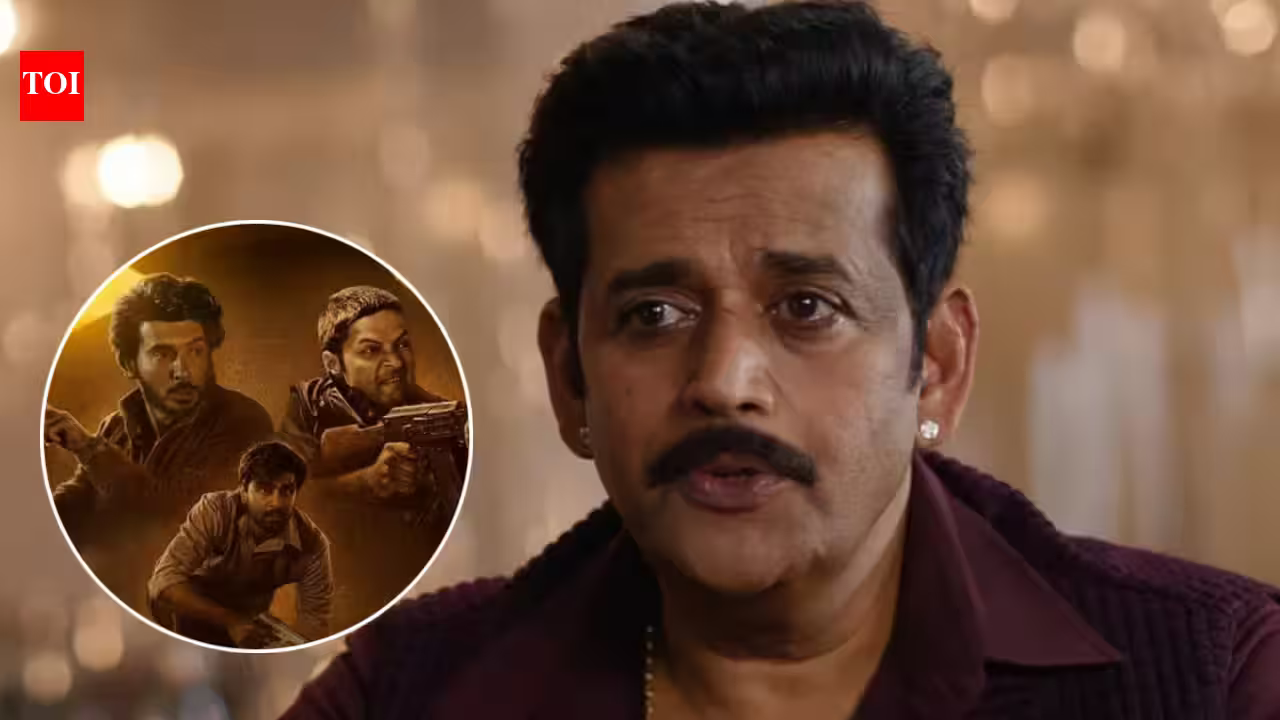
The landscape of Indian streaming is defined by its anti-heroes. We have spent years watching the chaotic streets of Purvanchal descend into blood-soaked anarchy, anchored by the volcanic tempers of Guddu Bhaiya and the cold, calculated ambition of Kaleen Bhaiya. But when Mirzapur: The Movie finally hit the big screen this past September, it wasn’t just the familiar faces that commanded the audience’s attention. Instead, a seismic shift occurred in the fan narrative, centered entirely around one man: Ravi Kishan’s Babban Babua Yadav.
In an industry where the protagonist is usually the undisputed center of gravity, the creative team behind Mirzapur found themselves in an enviable, yet deeply uncomfortable, position. They had created a monster—not in the sense of his criminal enterprise, but in his overwhelming charisma. Ravi Kishan, a veteran of the screen, imbued Babban with a nuance that the writers hadn’t fully anticipated, turning a side character into the most talked-about “green flag” in a world of red-flag tyrants.
The Unlikely Rise of the ‘Green Flag Gangster’
To understand why audiences fell for Babban, one has to look at the toxicity that defines the Mirzapur universe. It is a world where loyalty is transactional and violence is the preferred currency of communication. Against this bleak backdrop, Babban stood out not because of his aim or his arsenal, but because of his heart.
Writer Puneet Krishna recently peeled back the curtain on this phenomenon during a conversation with The Hollywood Reporter India. He noted that the term “green flag gangster” started trending among the show’s younger female demographic—a descriptor that seems oxymoronic when applied to a man in the life of crime. Yet, it stuck.
“Many young girls have said that Babban is a very ‘green flag gangster’,” Krishna laughed. “He’s so devoted that he even sews clothes for his Mumtaz. Forget being a gangster; how many men would do that?”
It is a testament to Ravi Kishan’s performance that the audience looked past the criminal exterior to find the domestic devotion underneath. In a franchise defined by betrayal, Babban’s simple act of tailoring for his partner acted as a profound anchor for viewers, transforming a henchman into a romantic archetype in the eyes of the public.
When Character Arc Overwhelms Narrative Purpose
The success of Babban presented the Mirzapur production team with a genuine crisis of narrative balance. When you build a cinematic climax, you rely on the audience’s moral compass being calibrated toward your leads—Guddu, Bablu, and Munna. If the audience suddenly finds their sympathies shifting entirely toward a supporting player, the structural integrity of the finale begins to crack.
Puneet Krishna confessed that the team became genuinely anxious as they realized the depth of the audience’s emotional investment in Babban. “We actually started getting scared that people will feel for him so much in that climax scene that they may stop rooting for Guddu, Bablu, and Munna,” Krishna admitted.
This is a rare challenge in high-stakes action filmmaking. Usually, a creator fears their villain is too one-dimensional or their hero is too invincible. But fearing that a supporting character is too likable is the ultimate compliment to both the writer and the actor. It forced the production to recalibrate their final act on the fly, realizing that a character meant to be a stepping stone had become a pillar of the story.
The Balancing Act: Trimming the Pathos
The director of the film, Gurmeet Singh, faced the heavy lifting of translating these narrative concerns into visual language. He revealed that the original vision for Babban’s exit had to be significantly altered to prevent it from stealing the spotlight from the core trio.
“We even had to ‘water down’ her death,” Singh explained, referring to the pivotal moment involving Babban. “It was very emotional and was almost working against the film. We had to really amp up the Chandu Puncture (Satendra Soni) death and make that feel cruel to balance it out, because people fell in love with Ravi Kishan’s character.”
This maneuver is a masterclass in editorial pragmatism. By intensifying the cruelty of another character’s demise, the directors were able to steer the audience’s emotional volatility back toward the central conflict. It highlights the delicate ecosystem of Mirzapur; you cannot have too much empathy for the supporting cast, or the visceral, violent stakes of the main battle lose their impact.
The Challenge of a Known Universe
Directing a film that functions as a sequel or expansion to a cult-favorite series comes with a unique set of obstacles. The audience isn’t just arriving to watch a story; they are arriving with a checklist of expectations. Gurmeet Singh acknowledged that the biggest hurdle was creating tension when the audience already knows the mythos of these characters inside and out.
“The brutal thing was we knew a lot of the audience would know the story, and we had nobody to kill off in terms of our guys,” Singh noted. “So, just keeping that fight engaging was the biggest challenge that I faced.”
One of the most debated moments in the film—the “Guddu getting-up” sequence—served as a litmus test for the film’s success. It was a high-wire act of staging and performance, designed to reinvigorate the stakes even if the outcome felt somewhat predestined. That the audience “went mad” for it suggests that the creative team succeeded in turning the familiarity of the Mirzapur brand into an asset rather than a limitation.
Looking Back at the Mirzapur Phenomenon
With the dust settled on the September 2026 release, Mirzapur: The Movie stands as a pivotal moment in Indian crime drama. It managed to bring together a heavyweight ensemble—Pankaj Tripathi, Ali Fazal, Divyenndu, Ravi Kishan, and Jitendra Kumar—and deliver a story that felt grand enough for the silver screen.
However, the real legacy of this installment may well be the lesson in character development it provided. Ravi Kishan’s Babban served as a reminder that in a genre often obsessed with the grit of the underworld, the audience is always looking for a flicker of humanity. By creating a character so magnetic that the writers themselves had to fear his popularity, the team behind Mirzapur proved that they aren’t just masters of violence, but masters of the emotional tug-of-war that keeps audiences coming back to the theater, even when they think they’ve seen it all before.
Disclaimer: This content is auto-generated for informational purposes only.
Source: Read Original News