








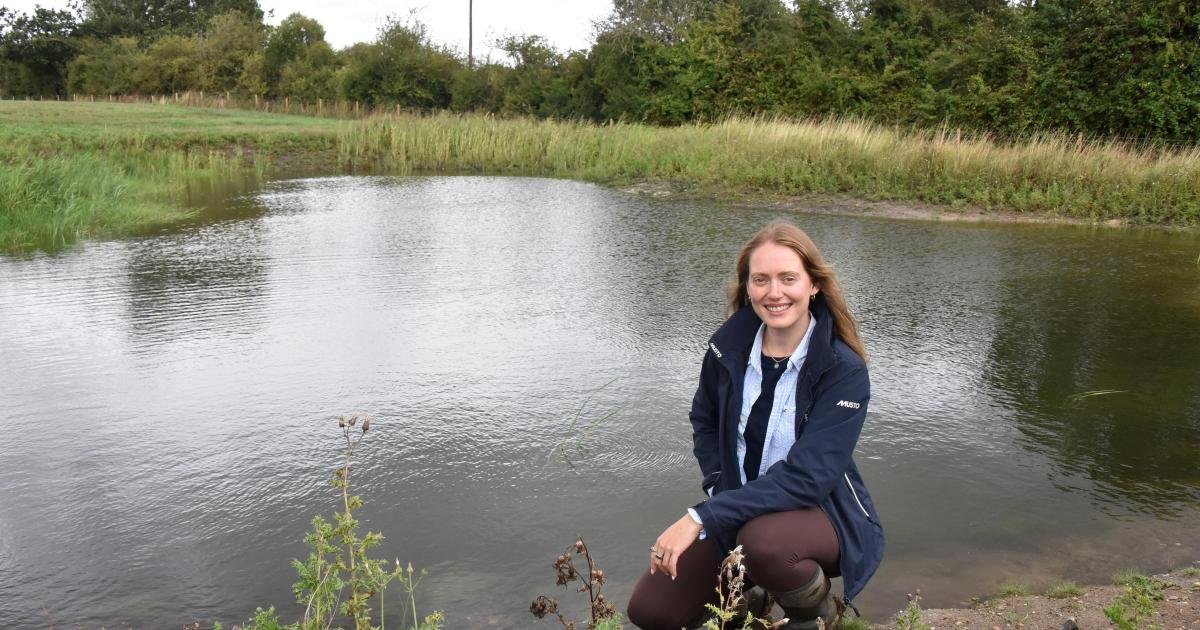
A long-lost historic pond on a farm near Wymondham has been successfully revived, offering a vital lesson in how landscape restoration can bolster resilience against an increasingly volatile climate.
The site, located on Stephen Richardson’s farm, was first identified by ecologists through a tiny, hand-drawn reed symbol on an agricultural map dating back to 1800. Despite the land having been subject to intensive farming for decades, experts discovered that the underlying natural hydrology remained surprisingly intact. In partnership with ecologists at Environment Bank, the project—part of the Wymondham Habitat Bank—undertook a rigorous scientific process to resurrect the feature.
The restoration team conducted detailed hydrological investigations and analyzed core samples of the substrate. By excavating the area down to its original peat base and removing modern land drains that had previously diverted water away from the site, they were able to restore the pond to its historic water levels.
The success of the project was put to an immediate test this summer during the UK’s record-breaking heatwaves and widespread drought. Against expectations, the pond remained full of water. It has already begun to serve as a hub for biodiversity, attracting pond skaters, dragonflies, and the natural recolonization of aquatic plants such as water starwort and horsetail.
Eleanor Walker, a senior ecologist at Environment Bank, described the results as a “significant demonstration” of the importance of restoring functional wetlands in the right locations.
“Wetlands are one of the UK’s most valuable forms of natural climate infrastructure,” Walker said. “They help us cope with both sides of the climate spectrum; they collect increasingly intense rainfall and mitigate flooding, but they also provide vital moisture during longer, hotter, and drier periods. This pond provides a cooler refuge for wildlife, livestock, and people, which is particularly important in Norfolk.”
Beyond providing a sanctuary for local flora and fauna, the restored wetland acts as a sponge within the landscape. According to ecologists, such features give the environment the necessary room to absorb changes, retain carbon, and offer wildlife more options in an era of unpredictable weather.
The Wymondham project is part of a growing national network of nature recovery sites funded by private developers under the government’s new Biodiversity Net Gain (BNG) regulations. These rules require that new developments must leave the natural environment in a better state than they found it, providing a financial mechanism for landowners to transition low-yielding farmland back into wildlife-rich habitats.
Work on the farm continues to progress, with contractors currently clearing and coppicing trees around a secondary woodland pond. Plans for the site include the planting of native black poplar trees, the establishment of a traditional orchard, and the seeding of new grassland. The team expects the area to function as a fully established habitat by Christmas, serving as a blueprint for future landscape-scale restoration projects across the country.
Disclaimer: This content is auto-generated for informational purposes only.
Source: Read Original News