









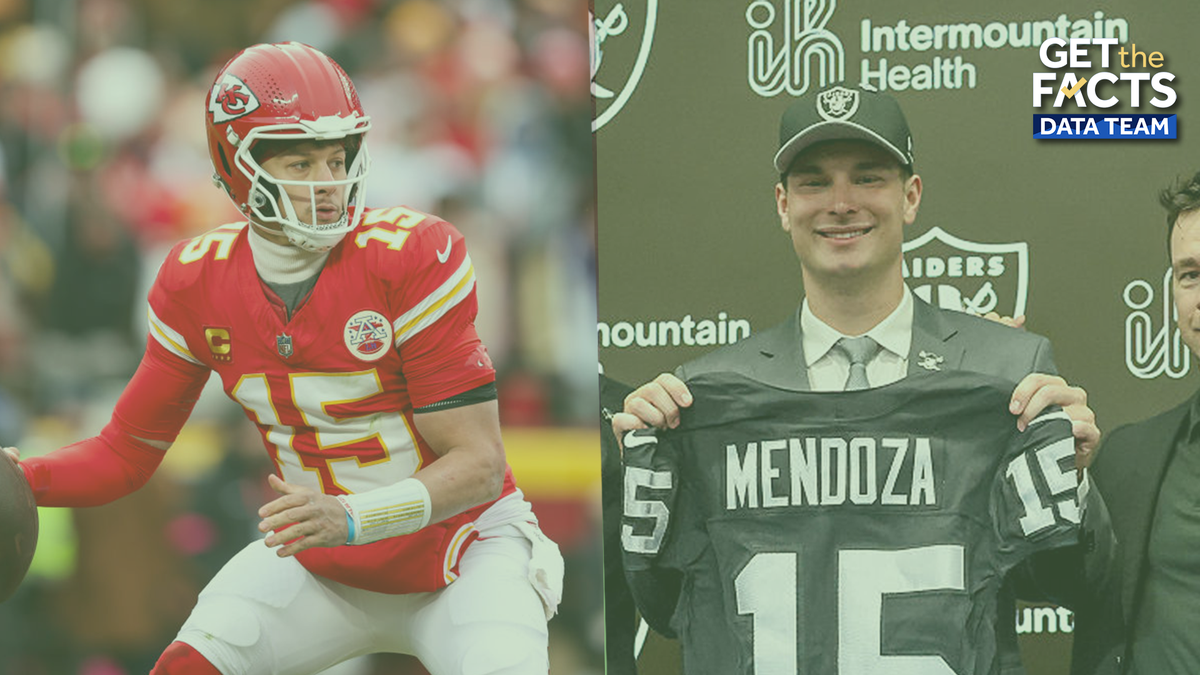
WASHINGTON — The landscape of NFL compensation has officially entered the era of the half-billion-dollar athlete. Kansas City Chiefs quarterback Patrick Mahomes has reclaimed the top spot on the league’s pay scale for the 2026 season, securing a historic reworked contract valued at $504.7 million.
The deal, which spans eight years, marks the first time in NFL history that a player contract has eclipsed the $500 million threshold. With an average annual value (AAV) of $63.1 million, Mahomes comfortably surpasses Dallas Cowboys signal-caller Dak Prescott, who previously held the league’s highest AAV at $60 million.
This astronomical figure highlights the rapidly accelerating market for elite quarterbacks, a trend that stands in stark contrast to the pay scale for the league’s newest entrants. According to recent data from Spotrac, the gap between veteran superstars and the incoming class of rookies has reached unprecedented levels. This season’s No. 1 overall draft pick, Fernando Mendoza, signed a rookie contract valued at $57.27 million over four years, resulting in an AAV of $14.3 million—less than one-quarter of Mahomes’ annual earnings.
Analysts note that this divide is a byproduct of structural changes within the league. Prior to 2011, NFL teams held the freedom to negotiate both the length and the financial terms of contracts for top draft picks. This often led to massive deals for unproven talent, such as the six-year, $78 million contract awarded to Sam Bradford by the St. Louis Rams in 2010.
However, the 2011 collective bargaining agreement implemented a rigid rookie wage scale, standardizing contract lengths and salary values for first-year players. While this change provided teams with cost certainty, it simultaneously decoupled the salaries of high-draft picks from the surging market rates enjoyed by established franchise quarterbacks.
The disparity has grown exponentially over the last two decades. In 1983, when Denver Broncos legend John Elway became the league’s highest-paid player with a $1 million annual salary, that figure would be worth approximately $3.4 million in today’s inflation-adjusted dollars. By 2020, the gap had widened significantly; while Joe Burrow’s rookie deal carried an AAV of $9 million, Mahomes was already sitting at the top of the league with an AAV of $45 million—five times that of the incoming No. 1 pick.
As the NFL continues to see record-breaking revenues, the contract landscape suggests that the ceiling for elite veteran compensation will only continue to rise. For now, Mahomes remains the gold standard, his record-breaking deal serving as both a testament to his value on the field and a reflection of the modern economic realities of professional football.
Disclaimer: This content is auto-generated for informational purposes only.
Source: Read Original News