








BRITISH COLUMBIA – British Columbia’s forestry sector is teetering on the edge of collapse, prompting a coalition of 15 provincial industry associations to issue an urgent demand for a government-led crisis action group. As timber companies grapple with an unforgiving combination of soaring operational costs and punitive U.S. trade barriers, industry leaders are warning that the province’s most iconic economic engine is at a “breaking point.”
In a formal letter sent to the provincial government this week, the coalition—which spans major corporate representatives and the B.C. Community Forests Associations—outlined a stark list of requirements. They are calling for an action plan within 30 days that includes an immediate suspension of new sector taxes, the implementation of a “permitting triage” process to slash regulatory red tape, and a concrete pathway to stabilize fibre supply by increasing the economically viable harvest to 45 million cubic metres.
“The mandate should be clear: get economically viable wood moving, reduce costs, remove regulatory barriers, stabilize fibre supply, protect operating businesses, and retain—not retrain—British Columbia’s skilled forestry workforce,” the letter stated.
While provincial officials have frequently pointed to external pressures as the primary culprit, the coalition argues that the most existential threats are “homegrown.” They contend that while international trade disputes are largely out of their control, the regulatory and operational conditions set by the provincial government are failing to keep pace with the harsh economic reality.
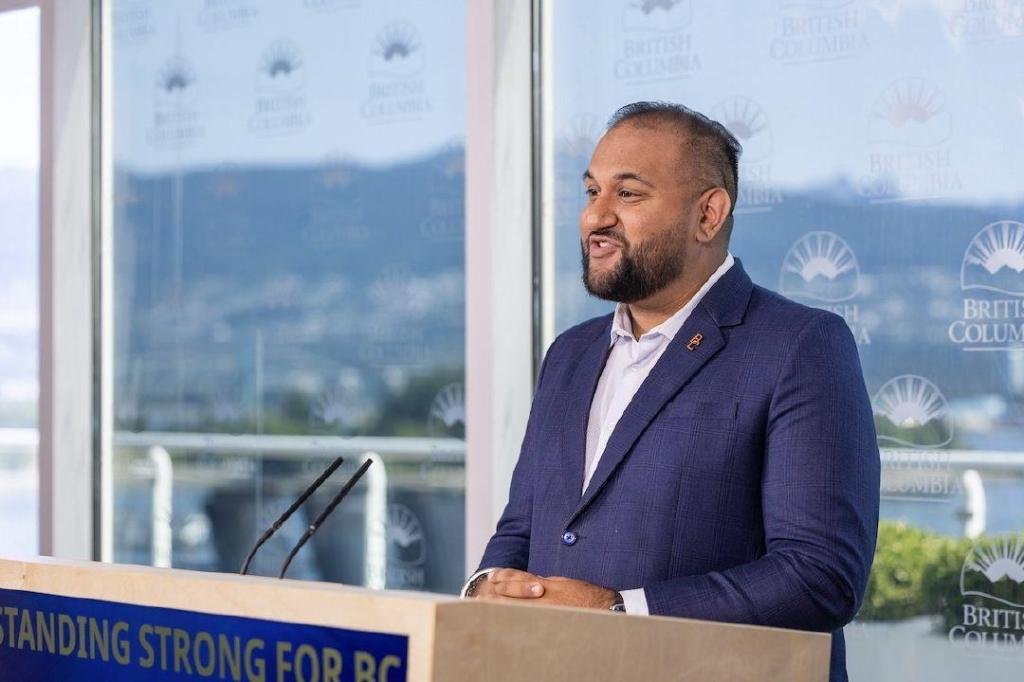
Forests Minister Ravi Parmar acknowledged the severity of the situation, characterizing it as a “perfect storm” and “arguably the most challenging period in forestry’s history.” Parmar noted that Canadian exporters are currently reeling from a 50 per cent levy on products like plywood, pulp, and paper, compounding the existing 45 per cent combined duties and tariffs on dimensional softwood lumber.
However, the Minister also admitted that structural domestic issues remain a primary concern. With easily accessible timber near mills largely depleted, the cost of harvesting has skyrocketed. Parmar suggested that the province’s historical “boom and bust” cycle is no longer sustainable and requires a shift toward long-term certainty. To address this, the government is looking toward regional forestry plans that would categorize land based on harvesting permissions.
“There are no quick and easy wins to address this issue, but there are things that we can do together to put it in a better position so we can deliver for workers and deliver for communities,” Parmar said.
In response to the coalition’s letter, Minister Parmar and Premier David Eby have committed to meeting with the signatories to discuss a path forward. The government intends to convene a broad table of stakeholders to balance immediate survival measures with the necessary, and often difficult, structural changes required to save the industry from further decline.
Disclaimer: This content is auto-generated for informational purposes only.
Source: Read Original News