







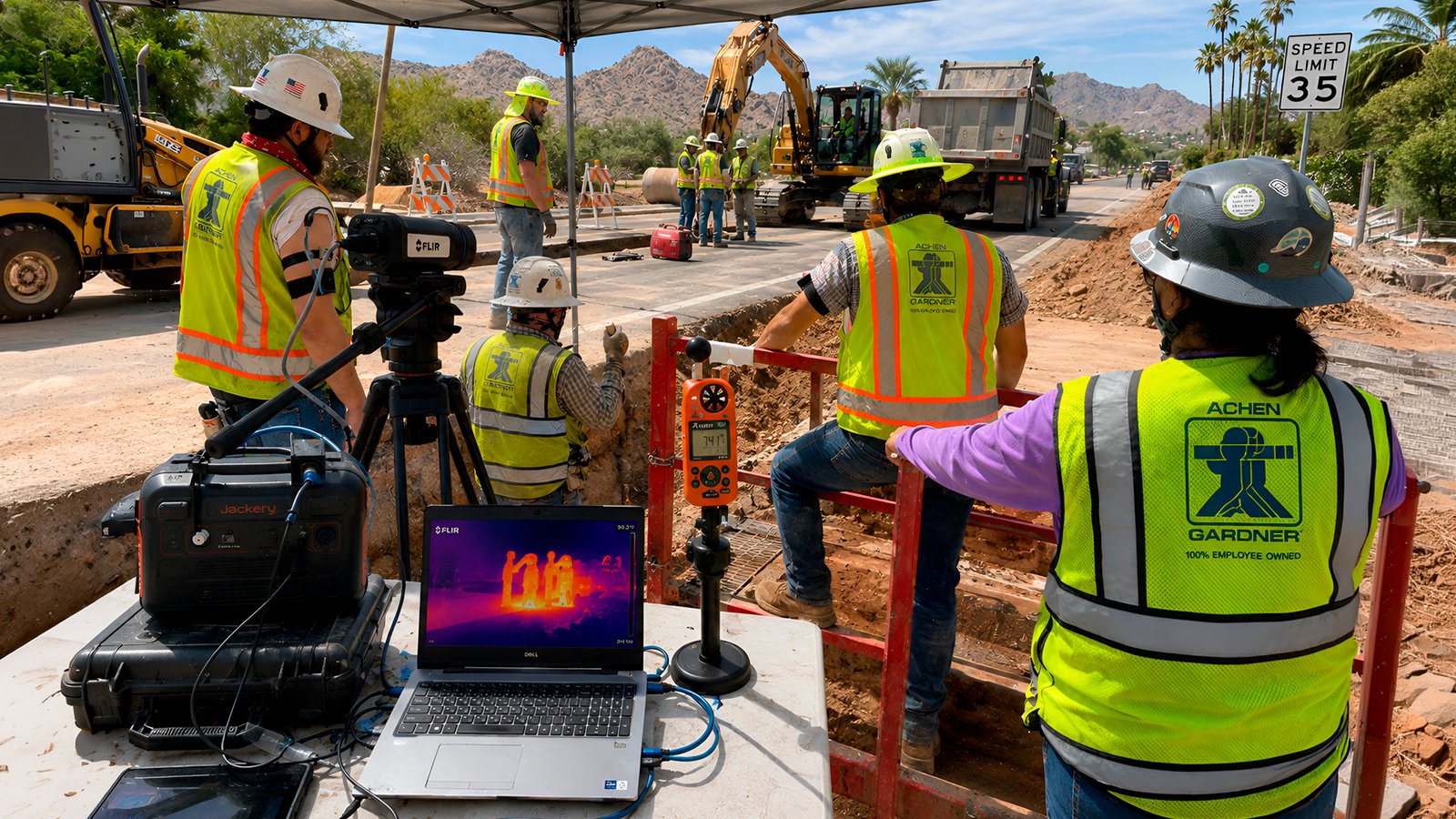
As summer temperatures in the “Valley of the Sun” reach punishing levels, the construction industry faces a growing crisis: how to protect workers from the lethal effects of extreme heat. Traditional safety measures often rely on reactive protocols, but a new frontier in artificial intelligence is shifting the paradigm toward prevention. Researchers at Arizona State University’s Ira A. Fulton Schools of Engineering are spearheading this change, utilizing AI-driven early-warning systems to detect physical strain before it escalates into a medical emergency.
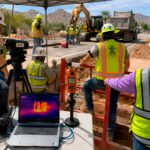
The technology, developed by the Safety Automation and Visualization Environment (SAVE) Lab in collaboration with construction firms Achen-Gardner Construction, Willmeng Construction, and CHASSE Building Team, utilizes wearable biosensors and environmental monitors. By analyzing real-time data, the AI identifies early signs of fatigue and heat stress unique to each individual.
“Each of these is difficult to observe until it becomes dangerous, and that is exactly where AI helps,” says Siyuan Song, an associate professor of construction engineering who leads the SAVE Lab. “It monitors conditions no human observer could track, recognizes that two construction workers in identical conditions can respond differently, and shifts safety management from reacting to incidents toward preventing them.”
The integration of AI into construction extends well beyond heat safety. Within the School of Sustainable Engineering and the Built Environment, faculty are leveraging robotics, computer science, and cognitive science to create “human-centered” technologies. For instance, the Pooladvand Research Group is using multimodal data—capturing both human movement and environmental inputs—to better understand decision-making patterns on active job sites. By identifying behaviors that lead to risk, the team is developing more personalized, effective safety interventions.
Education is also being reshaped by these advancements. At the Construction Workforce and Technology Lab, Assistant Professor Ricardo Eiris combines AI with virtual reality (VR), drones, and digital twins. This allows students and professionals to train for hazardous scenarios in immersive, controlled environments that surpass the limitations of a traditional classroom. These tools provide a safe space for workers to experience and respond to hazards, drastically improving their performance and preparedness for real-world conditions.
This technological evolution was on full display at the recent AI for Construction 2026 Contractors Summit. The event, hosted by the Del E. Webb School of Construction and the AI in Construction Consortium, served as a bridge between academia and industry. Leaders discussed practical applications of AI in business development, virtual design, and project controls, emphasizing a collaborative approach to solving complex industry challenges.
However, as AI tools become more prevalent, the faculty at ASU are careful to emphasize the necessity of foundational knowledge. As these technologies become capable of completing a significant portion of academic assignments—sometimes up to 60%—professors are redesigning curricula to ensure students remain the masters of their tools.
“In many ways, AI makes that foundational knowledge even more important,” says Kenn Sullivan, a professor of construction management. Students are now trained not only to use AI but to verify its outputs through engineering judgment.
This emphasis on responsibility is particularly vital in construction, where the stakes involve physical lives rather than just digital data. Song notes that while an error in an AI-generated essay might result in an academic penalty, an unverified AI output in a safety plan or cost estimate represents a tangible hazard to people and infrastructure. By blending rigorous training in construction methods with cutting-edge AI fluency, ASU is preparing a new generation of leaders to navigate the intersection of human safety and technological advancement, ensuring that workers return home healthy, even in the harshest of climates.
Disclaimer: This content is auto-generated for informational purposes only.
Source: Read Original News