








For over two decades, labor migration to Russia has functioned as the bedrock of Kyrgyzstan’s economy. Between 2012 and 2021, remittance inflows were equivalent to roughly 30 percent of the nation’s GDP. However, the landscape of this reliance is undergoing a fundamental transformation. Following Russia’s 2022 invasion of Ukraine, the share of remittances in Kyrgyzstan’s GDP fell to approximately 17.6 percent by 2024. While the absolute volume of money flowing home remains high, the volatility of these figures signals that the long-standing, predictable migration system that once anchored the Kyrgyz economy is collapsing.
The shift is evident in the movement of people. In 2022, approximately 854,000 Kyrgyz citizens were working in Russia. By 2026, that figure had dropped to roughly 502,000. While Russia remains the dominant destination, the institutional framework that once facilitated this movement—centered on Eurasian Economic Union (EAEU) membership—has been hollowed out. Unlike past crises, such as the 2008 financial crash or the COVID-19 pandemic, the current upheaval is not merely an economic cycle; it is a structural change driven by the securitization of migration within Russia.
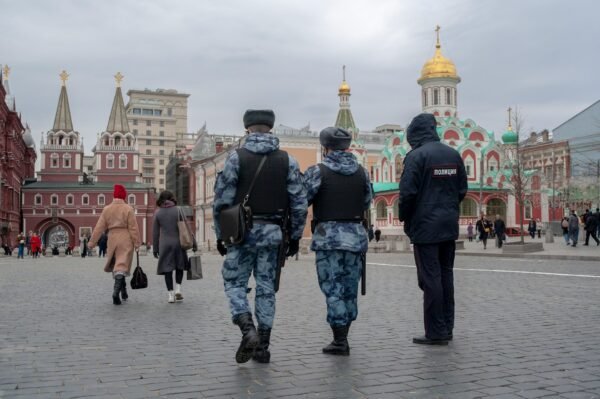
In the current geopolitical climate, Russian authorities increasingly treat migrants as objects of national security rather than merely labor inputs. This transformation is two-fold: while Russia faces acute labor shortages, it also views Central Asian migrants as a source of military manpower. Administrative pressures, police raids, and the linking of simplified citizenship to military service have created a volatile environment. For Kyrgyz migrants, the rules governing registration, documentation, and residence have become increasingly opaque, rendering the traditional practice of seasonal, circular migration—where families planned their livelihoods around predictable cycles—nearly impossible to sustain.
This instability has accelerated a “gendered transformation” of the workforce. Historically, male-dominated industries like construction formed the core of Kyrgyz migration. However, faced with the prospect of military mobilization and intense security sweeps, men are increasingly avoiding the Russian market. Consequently, women have become a more significant, yet highly vulnerable, presence in the migration corridor. This shift is reshaping household roles and care responsibilities back in Kyrgyzstan, placing an increased burden on female workers who often find themselves confined to precarious roles within the service sector.
The impact of this policy shift is most damaging at the family level. Historically, a cornerstone of the Russia-Kyrgyzstan migration model was the ability for families to live together. New Russian regulations, however, now mandate strict language testing for migrant children to attend schools and have moved toward restricting free education for non-citizens altogether. The Russian State Duma’s recent move to mandate the sharing of data on migrant families with the Ministry of Internal Affairs has effectively dismantled the “family migration” model.
In response, the Kyrgyz government has been forced to pivot from a passive beneficiary of remittances to an active provider of social infrastructure. The establishment of the “Tunguch” online school in 2025 represents a critical institutional shift; by providing state-supported schooling to children in Russia who are being denied access to local classrooms, Kyrgyzstan is attempting to mitigate the social externalities of a migration system that no longer welcomes families.
Furthermore, the government has launched a formal Program for the Reintegration of Returning Migrants for 2026–2030. This initiative marks a turning point in national policy, shifting focus toward how the country can absorb the skills and capital of returnees. However, the ultimate success of this program hinges on whether the Kyrgyz economy can create enough productive, domestic employment to prevent returnees from simply seeking new, potentially equally risky migration routes.
As Russia becomes an increasingly hostile environment, Kyrgyzstan is looking elsewhere. Diversification is already underway, with the United Kingdom significantly increasing its seasonal work quotas for Kyrgyz citizens and South Korea expanding its employment permit programs. This movement toward new, more formal, and potentially more stable markets suggests that the Russia-centric era of Kyrgyz migration is entering a period of permanent decline. The transformation of this relationship will likely remain the most significant economic and social challenge facing Kyrgyzstan in the coming decade.
Disclaimer: This content is auto-generated for informational purposes only.
Source: Read Original News