







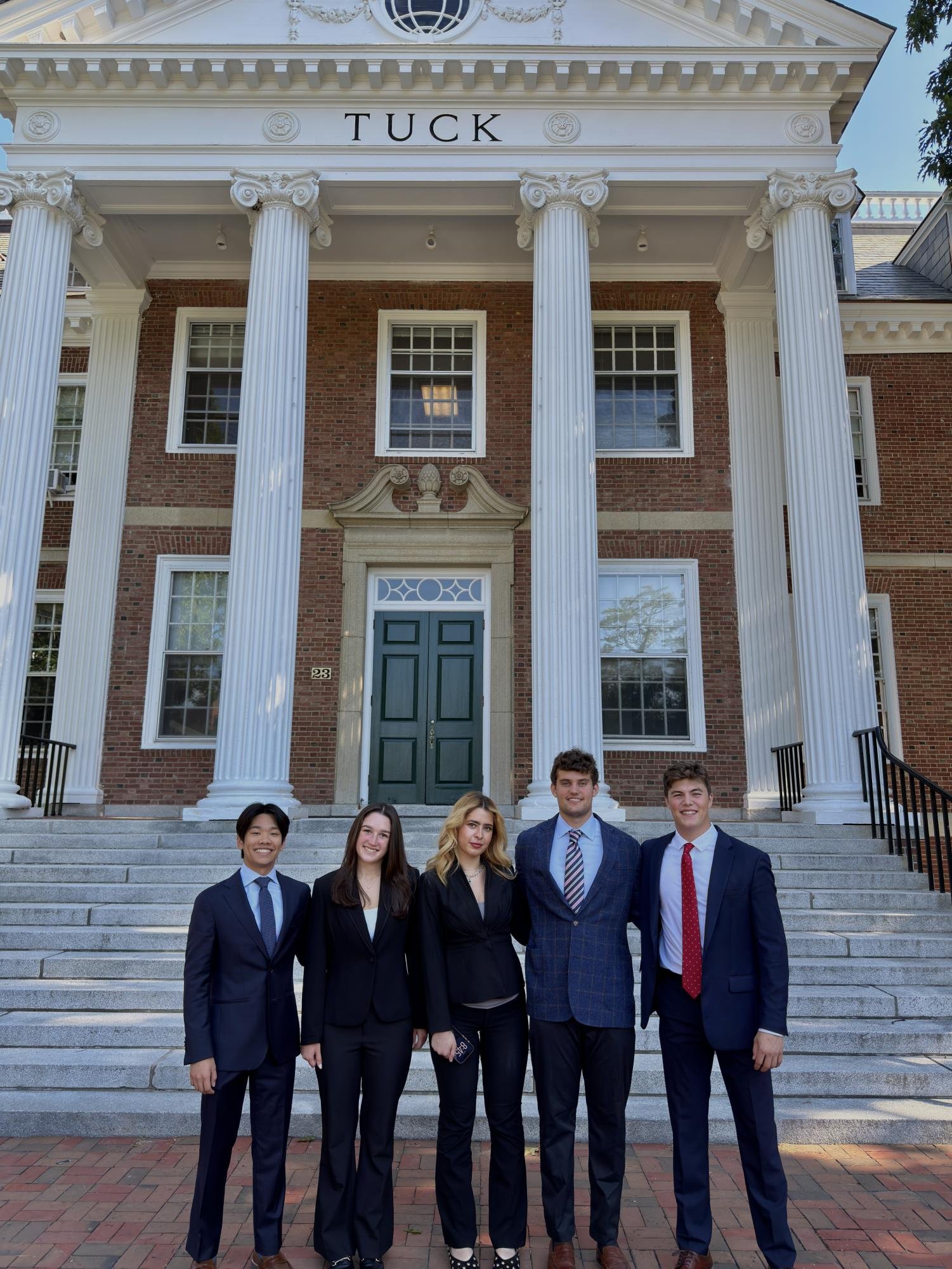
Colgate University junior Maggie Gibbons recently completed an intensive three-week immersion in the world of high-level finance and business strategy. Participating in Dartmouth College’s prestigious Tuck Business Bridge Program, Gibbons navigated a rigorous curriculum designed to bridge the gap between academic theory and the fast-paced realities of the modern professional landscape.
For a mathematical economics major, the program served as a vital testing ground. Gibbons, who first discovered the opportunity through Colgate’s Career Services and peer recommendations, sought to translate her classroom learning into practical experience. Her journey highlights the growing trend of students seeking specialized, industry-led certifications to complement their undergraduate studies—a trend that is increasingly defining the future of professional development.
Navigating a High-Stakes Curriculum
The Tuck Business Bridge Program is renowned for its intensity, and Gibbons’ experience was no exception. Days began promptly at 8:00 a.m. and often stretched until 6:00 p.m., packed with lectures and optional career-focused lunch sessions. The evenings, however, were reserved for the program’s cornerstone: collaborative project work.
Among the various modules, a standout course in entrepreneurship—taught by Professor Daniella Reichstetter—caught Gibbons’ attention. The elective allowed students to design, launch, and pitch their own business ventures. By integrating fundamental financial concepts with real-world scenarios, the course challenged students to adopt a leadership mindset. This focus on “learning by doing” mirrors the current shift in business education, where institutions are increasingly leveraging AI and data-driven tools to simulate the complexities of market dynamics for students before they ever step into a corporate office.
The Evolution of Collaborative Work
A significant takeaway for Gibbons was the shift from independent academic work to the highly interdependent nature of modern business. Her six-person project team consisted of peers from across the country, each bringing a unique set of skills and backgrounds. Managing these diverse viewpoints while working under strict deadlines forced Gibbons to adapt her personal working style.
“I improved on my ability to be a team player,” Gibbons noted. She highlighted how the peer-review process, which involved critiquing and refining one another’s contributions, was instrumental in her growth. This emphasis on collaborative intelligence is becoming a hallmark of top-tier business programs, moving away from solitary study toward a model that mimics the cross-functional nature of global firms.
Refining Career Paths in a Changing Landscape
As the financial services sector evolves, students are faced with an overwhelming array of career choices. For Gibbons, the program served as a necessary filter. By gaining firsthand exposure to various niches within finance, she was able to narrow her focus while simultaneously uncovering new, previously unconsidered avenues for her career.
The program provided more than just networking; it provided clarity. In a job market where technical skills are rapidly supplemented by AI-powered workflows, having a foundational understanding of both human collaboration and strategic decision-making is more critical than ever. As Gibbons returns to her studies at Colgate, she does so with a sharpened perspective on how her mathematical background can be effectively deployed.
Her experience serves as a microcosm for the broader collegiate experience today: students are no longer content to wait until graduation to engage with the industry. By engaging in high-intensity, short-form bridge programs, they are essentially “beta-testing” their futures, ensuring that when they do enter the workforce, they arrive with the tools to innovate and lead.
Disclaimer: This content is auto-generated for informational purposes only.
Source: Read Original News