








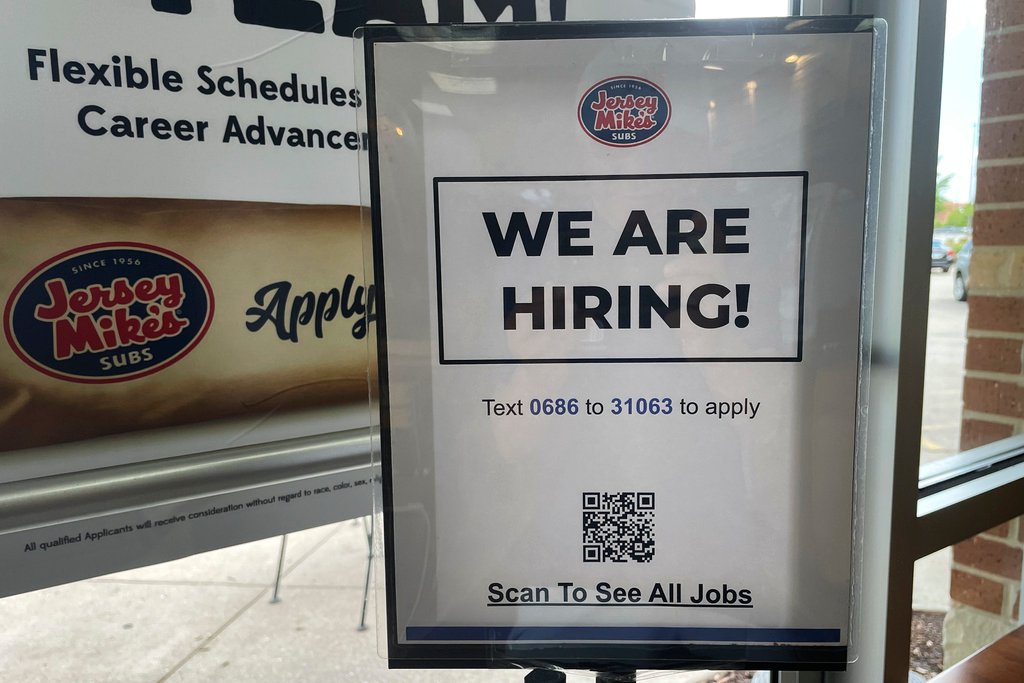
MONTGOMERY, Ala. — As the summer season winds down, America’s small business sector is showing signs of a cooling labor market. According to the latest jobs report from the National Federation of Independent Business (NFIB), hiring activity and future employment projections dipped in August, signaling a cautious approach from Main Street entrepreneurs as they navigate an economy defined by lingering uncertainty and persistent talent shortages.
## Hiring Trends Shift as Summer Concludes
Data from the NFIB reveals that 56% of small business owners actively hired or attempted to recruit new staff last month, representing a 5-percentage-point decline from July. This trend extends to the near future, with seasonal projections for employment growth over the next three months falling by 3 points to 17%.
NFIB Chief Economist Bill Dunkelberg noted that this deceleration is a natural response to the end of the summer cycle. “Small businesses are slowing down their hiring efforts as the summer comes to an end, with fewer owners reporting job openings or plans to create new positions,” Dunkelberg said.
Despite the cooling, the challenge of finding talent remains acute. While fewer owners cited labor quality as their primary business hurdle compared to the previous month, the metric remains 11 points higher than its long-term historical average. Approximately 35% of owners currently report job vacancies they are unable to fill, with 82% of those firms citing a lack of qualified applicants.
## The Role of Tech and AI in Modernizing Recruitment
As small businesses grapple with these persistent labor gaps, many are increasingly turning to digital solutions to optimize their operations. In an era where “qualified applicants” are increasingly scarce, the integration of smart recruiting software and AI-driven screening tools has become a critical pivot for small firms.
Google, through its specialized tools for small business—such as Google for Small Business and integrated features in Google Workspace—has become a frontline resource for owners trying to navigate this landscape. Many businesses are using AI-powered search optimization to better reach local candidates, while others are leveraging Google Cloud’s data analytics to forecast staffing needs more effectively during volatile periods.
While the cost of labor has become less of a primary burden—dropping to its lowest level since 2021—the pressure to offer competitive compensation packages remains. To offset these costs, business owners are leaning on tech-forward workflows to increase internal productivity, essentially asking fewer employees to achieve more through the adoption of automated administrative tasks and AI-assisted communication tools.
## Navigating a Landscape of Uncertainty
The NFIB’s latest Small Business Optimism Index fell to 98.7 in August, down from a high of 99.8 in July. Even with this dip, the index remains slightly above its 52-year average, suggesting that while owners are wary, they are not necessarily pessimistic.
A significant factor in this outlook is the Uncertainty Index, which, despite a slight decline, remains well above its historical average of 68. This elevated state of apprehension is attributed to a “triple threat” of challenges: sluggish sales, ongoing supply chain complications, and persistent inflation.
Rosemary Elebash, the NFIB State Director for Alabama, emphasized that these national figures are consistent with the struggles reported by local entrepreneurs. “Finding qualified workers is still the No. 1 challenge for many small business owners in Alabama and across the country,” Elebash noted. “Owners need good employees so they can serve their communities and grow their businesses.”
As the year progresses, the resilience of the small business sector will likely hinge on its ability to balance traditional operational demands with the rapid integration of new technology, helping to bridge the gap between a high demand for labor and the limited pool of available, qualified talent.
Disclaimer: This content is auto-generated for informational purposes only.
Source: Read Original News