









The Physics of Warp Speed Visuals
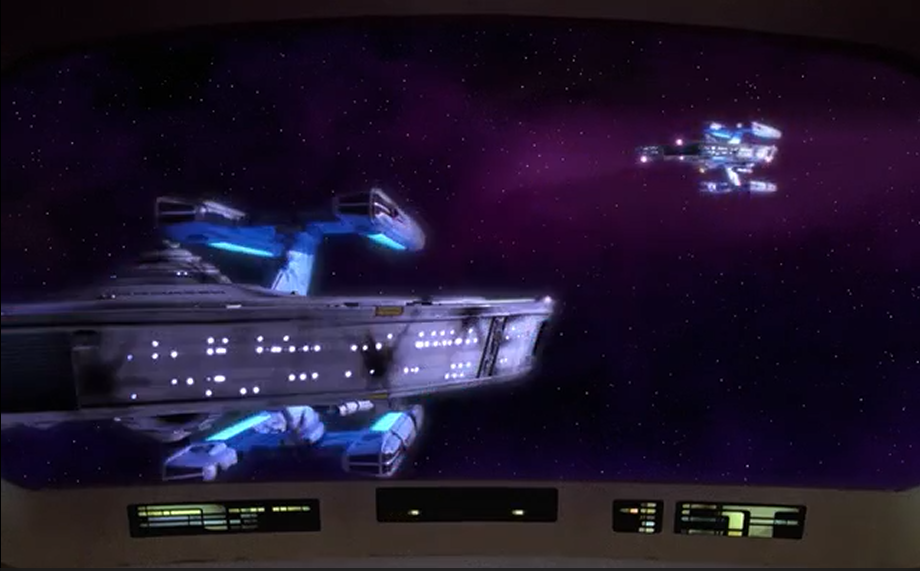
In the realm of speculative physics and science fiction, few concepts are as iconic as the “Picard Maneuver” from the Star Trek franchise. Recently, physicist Níckolas de Aguiar Alves revisited this classic narrative device to analyze the underlying mechanics of faster-than-light (FTL) motion. While the maneuver is often depicted as a simple strategic trick—the Stargazer ship accelerating into warp speed to briefly appear in two places at once—the mathematical reality is far more complex and visually intricate.
By applying relativistic principles to the movement of a vessel exceeding the speed of light, de Aguiar Alves discovered that the standard interpretation of the maneuver misses a critical detail. Rather than the observer ship seeing two images, a properly executed FTL trajectory involving acceleration would produce three distinct images. This revelation highlights how narrative dramatization often simplifies the chaotic visual phenomena that would result from actual FTL travel, even within a controlled theoretical framework.
Revisiting the Mathematics of Light
The core of this investigation lies in how light reaches an observer from a source that is moving faster than light itself. If a ship maintains a constant FTL speed, an observer at rest would perceive two distinct images of the vessel, each corresponding to different points in time when the emitted light could arrive at the observer’s position. This occurs because the ship effectively “outruns” its own visual data.
However, the Picard Maneuver requires the Stargazer to accelerate into warp and then decelerate to a stop. By charting the path of the ship during these specific phases of acceleration, de Aguiar Alves demonstrated that the geometry of the light cones changes. The ship is not just appearing at two points; the fluctuating velocity creates an additional temporal perspective for the observer. When plotted as a series of diagrams, the trajectory proves that an enemy ship would witness three images of the Stargazer simultaneously. Furthermore, should the pilot perform additional bursts of acceleration, this count could theoretically climb to five or more, creating a fractured visual field of the ship’s path.
From Science Fiction to Cherenkov Radiation
While faster-than-light space travel remains firmly in the domain of fiction, the mathematical logic underpinning it has direct applications in particle physics. Scientists routinely observe particles traveling faster than the speed of light within specific mediums, such as water. Because light propagates more slowly through water than in a vacuum, high-energy particles can easily outpace light waves.
This phenomenon results in Cherenkov radiation—the distinct, eerie blue glow observed in nuclear reactor cooling pools. The math required to calculate the shockwaves generated by particles exceeding the local speed of light is essentially the same as that used to map the visual artifacts of a hypothetical warp-speed ship. By studying the “Picard Maneuver” through this lens, researchers are essentially modeling how light organizes itself in the wake of an object moving through a medium at superluminal speeds.
The Memory Effect and Electromagnetic Waves
The inspiration for this study originated from a pursuit of the “memory effect,” a phenomenon theorized in the study of gravitational waves. In this scenario, when a wave passes a particle, it leaves a permanent, measurable alteration in the particle’s position or momentum. While gravitational memory has been a subject of theoretical physics for years, applying this to electromagnetic waves is significantly more challenging due to the need for precise detection conditions.
Recent scholarship from the Niels Bohr Institute suggests that the memory effect could manifest more dramatically in environments where the speed of light is limited, such as in refractive media. De Aguiar Alves utilized his studies of the Picard Maneuver as a way to visualize how an electron influenced by such a memory effect might appear to a detector. The ability to map these interactions through simple diagrams allowed him to draw intuitive connections between high-energy particle physics and the logic of cinematic space battles.
The Utility of Schematic Intuition
The research underscores the profound power of basic visualization in theoretical physics. Despite the high-level computational tools available to modern scientists, there is an enduring value in manual sketching and geometrical diagramming. For de Aguiar Alves, the act of “doodling” the Picard Maneuver provided an immediate sense of clarity that might have been buried under layers of complex data processing.
This approach demonstrates that even complex, counter-intuitive phenomena—like multi-image visual artifacts created by non-constant velocity—can be demystified through fundamental geometry. The “Picard Maneuver” may have originated as a plot point for television, but in the hands of a physicist, it serves as an excellent pedagogical tool. It provides a relatable case study for understanding how light behaves when conventional velocity limits are broken, whether in the deep reaches of space or within the confines of a specialized laboratory medium. As research into the memory effect continues to evolve, these simple diagrams stand as a testament to the importance of maintaining an intuitive grasp on the fundamental laws of motion and light.
Disclaimer: This content is auto-generated for informational purposes only.
Source: Read Original News