







Maratha Quota Stir: Manoj Jarange Announces Indefinite Hunger Strike in Mumbai
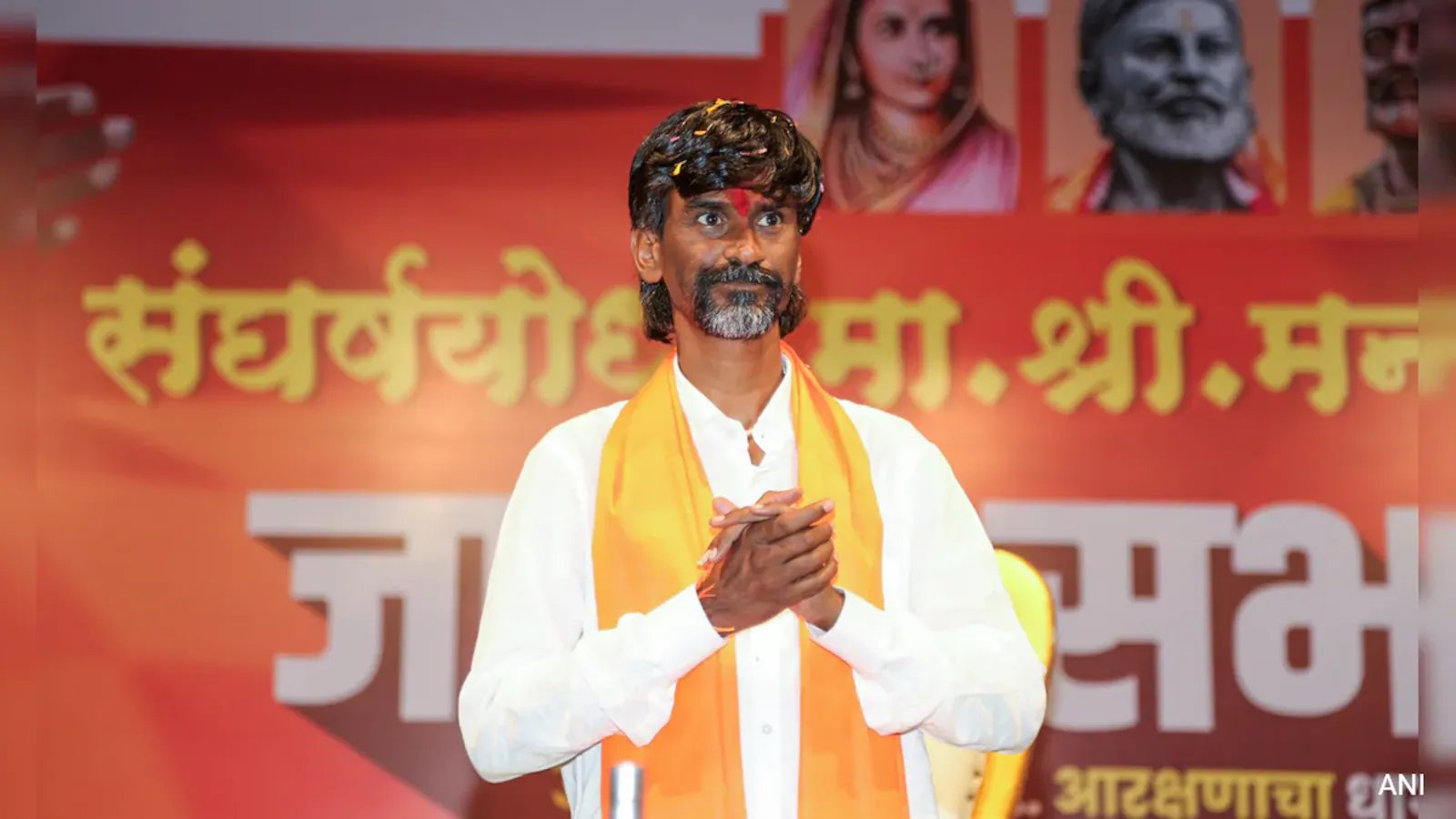
ANTARWALI SARATI: Activist Manoj Jarange has set the stage for a massive confrontation with the Maharashtra government, announcing an indefinite hunger strike at Mumbai’s Azad Maidan starting September 19. The protest, aimed at securing reservations for the Maratha community in government jobs and education, is set to take place during the high-profile Ganpati festival period.
Jarange, speaking from his base in Antarwali Sarati as his current agitation reached its 15th day, confirmed that he will commence a march toward the state capital on September 15. The activist revealed a detailed itinerary for his supporters, who are expected to cover approximately 100 kilometers daily. The protest caravan will pass through several key districts, including stops in Patoda (Beed), Srigonda (Ahilyanagar), Hadapsar (Pune), and Khopoli (Raigad), before reaching Navi Mumbai for a final regrouping.
A Call for ‘Final Fight’
Addressing his supporters, Jarange framed this upcoming march as the “final fight” for the community. He issued a stern plea for discipline, urging protesters to avoid any acts of violence, stone-pelting, or property damage. “We must remain peaceful,” Jarange stated. “Our objective is to use democratic avenues to achieve our legitimate demands. I expect every Maratha to join this cause.”
The activist specifically addressed Deputy Chief Minister Devendra Fadnavis, urging the government not to impede the movement of protesters. Jarange warned that if police resort to using barricades to stop the march, supporters should opt to sit on the roads rather than confront law enforcement, but he placed the moral responsibility for any potential escalation directly on the shoulders of the state leadership.
Contentious Demands and Government Stance
At the core of the agitation is the demand for the state government to issue a formal Government Resolution (GR) that validates the inclusion of the Maratha community under the Kunbi category. This would effectively grant them access to existing Other Backward Class (OBC) reservations, a proposal that has faced fierce opposition from existing OBC groups who fear their quota benefits will be diluted.
Jarange accused the administration of failing to deliver on previous promises, specifically citing the non-issuance of caste certificates tied to the 58 lakh Kunbi records already identified by the state.
Legal and Logistical Challenges
The planned protest has already seen legal scrutiny. Just days before the march, the Bombay High Court declined to issue an urgent order to restrain the protest. The bench underscored that the right to protest is fundamental, noting that it could not curtail an agitation based merely on the apprehension of potential law and order disruptions.
Logistically, the timing of the protest—coinciding with the Ganpati festivities from September 14 to 25—poses a significant challenge for Mumbai’s police and municipal authorities. Last year, a similar hunger strike by Jarange brought parts of the city near the Chhatrapati Shivaji Maharaj Terminus (CSMT) to a standstill, and officials are bracing for similar disruptions this time around.
In a unique tactical pivot, Jarange also called for women supporters to engage in peaceful “haldi-kumkum” ceremonies at the residences of prominent government figures, including the wives of the Chief Minister and Deputy Chief Minister, as a traditional means of keeping their reservation demands in the public eye during the festive season.
Disclaimer: This content is auto-generated for informational purposes only.
Source: Read Original News